

Minneapolis is getting a new face of federal power, and the timing is the story.
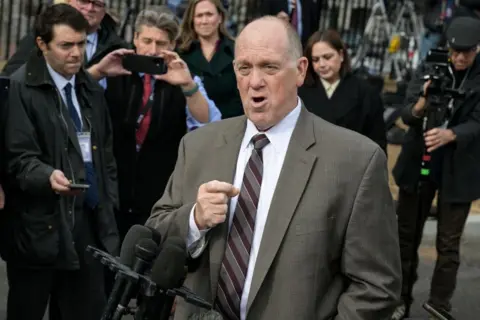
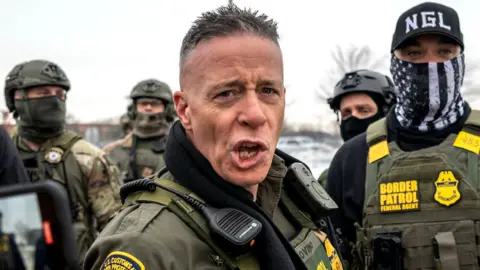
After a second fatal shooting of a US citizen by federal officers, the Trump administration is expected to pull Border Patrol Commander Gregory Bovino out of the city and send in Tom Homan, the president’s combative border enforcer turned crisis manager. If this is a de-escalation, it is a very particular kind: fewer agents, new leadership, and the raids reportedly still rolling.
The White House is now talking like it wants the temperature lowered. Local leaders are talking like they want control of the investigation. And Republicans, some of whom usually keep their critiques private, are suddenly asking for daylight.
A Leadership Switch With Blood on the Timeline
According to BBC News, Bovino is expected to leave Minneapolis as Homan begins leading on-the-ground efforts after the fatal shooting of Alex Pretti on January 25, 2026. Pretti’s death followed another killing earlier in the month, when another US citizen, Renee Good, was shot dead by a federal agent.
Two deaths in one city in the span of weeks changes the math for everyone involved. For federal officials, it means operations that were pitched as enforcement start looking like liability. For Democratic leaders in Minnesota, it is leverage. For Trump, it is the kind of story that can swallow a crackdown whole if the administration cannot contain the narrative and the paperwork.
The administration has not publicly described Bovino’s expected departure as a disciplinary move. The optics still land the same way: the commander at the center of a high-conflict operation is leaving, and the White House is dispatching its best-known hardliner to manage what happens next.
Trump’s Softer Tone, Same Muscle on the Street?
The contradiction humming under this entire episode is simple: the White House is signaling a shift, while activity on the ground appears to be continuing.
BBC News reported that online tracking showed immigration raids continuing despite the leadership change and a reduction in federal agents. If the administration is trying to dial back its posture, it is doing it without fully stepping off the gas.
At the same time, the president has leaned into a more cooperative public posture with Minnesota’s Democratic leadership. Trump reportedly held phone calls with Minnesota Governor Tim Walz and Minneapolis Mayor Jacob Frey, and both sides characterized the talks as positive after days of public sparring.
Trump, who has criticized Walz and Frey in recent weeks, described the calls positively, BBC News reported. That alone is a shift in tone, particularly after a weekend that escalated tensions. The practical question is whether the shift is about policy or about fallout control.
The Investigation Fight Is the Real Power Play
Control over the investigation into Pretti’s death is shaping up as the next standoff, and it is a familiar one in federal-local clashes: who gets the evidence, who gets access, and who writes the initial narrative that the public later treats as fact.
Walz has been pressing for an independent investigation, and he got a verbal opening from Trump. In Walz’s account of his call with the president, he said Trump agreed to explore reducing the number of federal agents and to talk to the Department of Homeland Security about independent investigative access.
“The president agreed to look into reducing the number of federal agents in Minnesota and to talk to DHS about ensuring the Minnesota Bureau of Criminal Apprehension is able to conduct an independent investigation, as would ordinarily be the case,” Walz said, according to BBC News.
That line, “as would ordinarily be the case,” is doing heavy work. It implies that ordinary procedure has not been in place. And BBC News reported that after Good’s shooting earlier this month, local and state authorities said they were kept out of the investigation by federal immigration officials.
After Pretti’s death, local authorities reportedly obtained a judicial warrant to access the crime scene to preserve evidence. That is not a routine vibe. That is a sign of distrust, formalized.
Republicans Start Saying the Quiet Part Out Loud
The political pressure is not coming only from Democrats.
Some prominent Republicans have reportedly joined calls for a wide-ranging investigation. Senator Ted Cruz, speaking on his podcast, urged a more careful approach.
“I would encourage the administration to be more measured, to recognise the tragedy,” Cruz said, according to BBC News.
That is not a legal admission, but it is an internal warning shot. It signals concern that the administration is losing the frame, and once that happens, enforcement turns into a story about competence, oversight, and accountability.
Other Republicans are trying to convert the same moment into a case for smarter optics. BBC News reported that Senator Lindsey Graham, a Trump ally, called the decision to send Homan to Minneapolis “a very smart move.” Another Republican senator, John Curtis of Utah, called for a “transparent, independent investigation” and said, “Those responsible, no matter their title, must be held accountable.”
When senators start using phrases like “no matter their title,” they are not just talking about one officer on one street. They are talking about command structure, supervision, rules of engagement, and, inevitably, who signed off on what.
The Crackdown’s Origin Story Keeps Colliding With Its Outcome
The White House reportedly launched its Minneapolis crackdown in December after some Somali immigrants were convicted in a massive fraud of state welfare programs. Minnesota is home to the largest Somali immigrant community in the US, according to BBC News.
That origin story matters because it is the administration’s public justification for heavy federal attention: a fraud case becomes a broader enforcement push, which becomes a city-level confrontation, which now includes two fatal shootings and an intensifying fight over investigative control.
Even if the administration argues that enforcement is aimed at criminals, it is now operating under the shadow of deaths that have drawn calls for independent oversight from both parties. That kind of scrutiny does not stay neatly confined to one incident. It tends to sprawl into procedures, training, chain of command, and the metrics used to judge success.
Homan Arrives as a Fixer, Not a Fresh Start
Homan’s job in Minneapolis is not just to run operations. It is to manage an enforcement campaign that has become politically radioactive while keeping the White House’s core promise intact.
BBC News reported that White House Press Secretary Karoline Leavitt said it is the president’s “hope and wish and demand for the resistance and chaos” in Minneapolis to end. That line frames the problem as disorder in the streets, not questions inside the federal operation. It is a familiar posture: restore order first, litigate oversight later.
But Minneapolis leaders are not treating this as a simple order problem. Frey said he hoped to meet Homan on January 28, 2026, to discuss next steps, BBC News reported. Translation: the city wants terms, and it wants to be seen demanding them.
The administration’s challenge is that sending Homan can read two opposite ways at once. To supporters, it signals seriousness and discipline. To critics, it looks like a clampdown after bloodshed. Either way, it raises the stakes for what happens next: every raid, every arrest, every body camera decision, and every line in an after-action report becomes part of a larger argument about legitimacy.
What to Watch Next
Three things will tell the real story in the coming weeks.
- Whether federal officials actually reduce their footprint, or whether leadership changes simply repackage the same operational tempo.
- Who controls the investigation, including access to the crime scene evidence, interviews, and the timeline for releasing findings.
- How far Republican scrutiny goes, because bipartisan pressure is the one thing that can force transparency even when an administration would rather manage internally.
Minneapolis started as a stage for a high-visibility crackdown. It is now a stress test of federal authority, local resistance, and the administration’s ability to sell strength without looking reckless.