

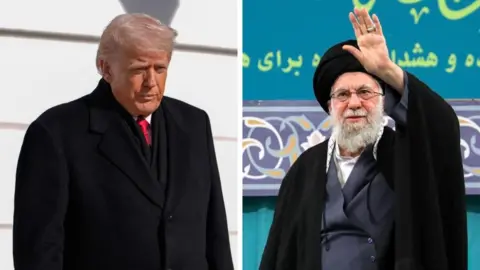
The US looks close to pulling the trigger on Iran. The targets are the easy part. The aftershocks are where careers, alliances, oil prices, and lives get traded.
BBC News recently sketched out seven scenarios for what could happen if President Donald Trump orders US forces to strike Iran. Read them like a menu, and you miss the point. The real story is leverage, because Washington can choose the opening move, but Tehran can still choose where the pain lands.
In the BBC account, US air and naval forces would likely aim for limited, precision strikes against Iran’s Islamic Revolutionary Guards Corps (IRGC), associated units like the Basij, ballistic missile infrastructure, and parts of Iran’s nuclear program. That reads like a controlled operation. Iran’s leadership, meanwhile, has spent decades building a different kind of control: the ability to retaliate in ways that force everyone else in the region to do math they do not want to do.
The Strike Plan Looks Clean on Paper
Start with the appeal of the limited strike. It is legible. It can be framed as deterrence. It can be sold as proportionate. According to BBC News, the predictable target set includes IRGC military bases, missile launch and storage sites, and nuclear facilities tied to the program.
The contradiction is that a limited strike does not guarantee a limited war. It guarantees a limited first day.
Iran’s argument, repeated for years in different forms, is that it can absorb damage and still impose costs. The US, in contrast, has global obligations and regional partners who will want to know, immediately, whether Washington can protect them when the retaliation comes back over the fence.
Iran’s Retaliation Script Is About Geography
Iran has said it would respond to a US attack. BBC News reported one of the most blunt versions of that message.
“Its finger is on the trigger.”
That kind of line is not aimed at the Pentagon. It is aimed at the wider audience with skin in the game, including Gulf governments hosting US forces, energy markets, shipping insurers, and voters who remember how quickly a limited mission can become a long one.
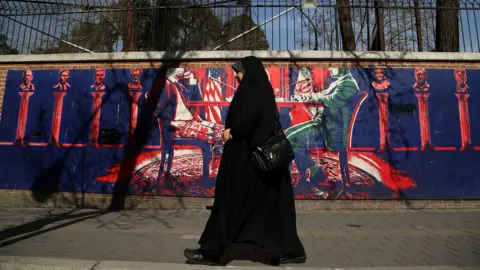
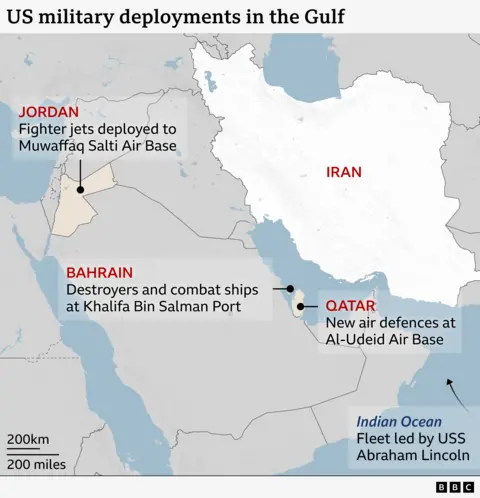
BBC News notes the regional map of exposure: US bases and facilities along the Arabian side of the Gulf, including in Bahrain and Qatar. Even if Iran cannot match US air and naval power head-to-head, it has missiles and drones, and it has options for where those systems could be pointed.
The point is not that Iran can win a conventional fight. The point is that Iran can complicate the politics of continuing one.
The Quiet Panic Sits With US Partners
The most anxious actors in a US-Iran strike scenario are often the ones who cannot vote in the US election and cannot dictate Tehran’s decisions. They can only brace for splash damage.
BBC News described Gulf Arab neighbors as “extremely jittery” about the possibility that US military action rebounds on them. That is not paranoia. It is a rational read of geography and precedent.
One reason is the region’s infrastructure reality: critical oil and gas processing sites are fixed, visible, and difficult to defend perfectly. BBC News pointed to the 2019 attack on Saudi Aramco facilities, widely attributed at the time to an Iranian-backed militia in Iraq, as a demonstration of vulnerability. Even when attribution is contested in public, the lesson for regional capitals is the same. Expensive defenses do not erase exposure.
If the US strikes Iran, allied governments will face two simultaneous pressures. One is physical, whether their bases, ports, and energy facilities get threatened. The other is political, whether their populations blame them for being staging grounds, or for being too close to Washington when the missiles start moving.
Regime Change Is the Fantasy Scenario for a Reason
BBC News includes an optimistic outcome in which an already weakened Iranian regime is toppled and Iran transitions to a genuine democracy. It is the kind of scenario that gets floated because it is emotionally tidy. It also collides with the historical record.
The US and its partners have seen how removing a dictatorship can be the beginning of instability, not the end of it. BBC News explicitly invoked Iraq and Libya as examples where Western intervention ended brutal rule but was followed by years of chaos and bloodshed. That reference is doing quiet work. It is reminding readers that “what comes next” is not a footnote.
Iran’s internal power structure is not just a government. It is a security ecosystem. BBC News describes a pervasive security deep state with a vested interest in the status quo, and it notes that significant defections have not materialized even after waves of protests.
That is the regime’s durability, and it is also its trap. A state built on coercion can last longer than outsiders predict. It can also overreact when it feels cornered.
Trump’s Real Problem: Owning the Timeline
Trump’s decision point, as framed by BBC News, is about whether there is a last-minute deal with Tehran or a decision to attack. But the deeper political reality is that once strikes start, the timeline no longer belongs to the White House alone.
If Iran retaliates in a way that kills Americans, hits a partner’s critical infrastructure, or threatens shipping, the pressure to respond increases. If the US responds harder, Iran’s incentive becomes finding new vectors. A spiral can form without either side publicly choosing the word “war.”
There is also a second contradiction that matters in Washington. Military planners love clear objectives. Politics loves clear endings. A limited strike can satisfy neither if it triggers a months-long sequence of counterstrikes, proxy activity, cyber disruption, or energy-market panic.
And unlike some past crises, the audience is not only foreign. It is domestic, too. The question becomes whether the administration can sell escalation control as a victory while absorbing the costs that show up on the nightly news and at the gas pump.
What to Watch if the US Moves From Threat to Action
BBC News emphasizes that outcomes are not predictable, even if targets are. That uncertainty is the headline risk. Still, a few measurable pressure points tend to reveal where the crisis is headed.
- Signals around US bases: Publicly visible force protection steps often precede a wider cycle of retaliation and response.
- Regional government messaging: Watch for the gap between private cooperation and public distancing by Gulf partners trying to avoid becoming Tehran’s chosen example.
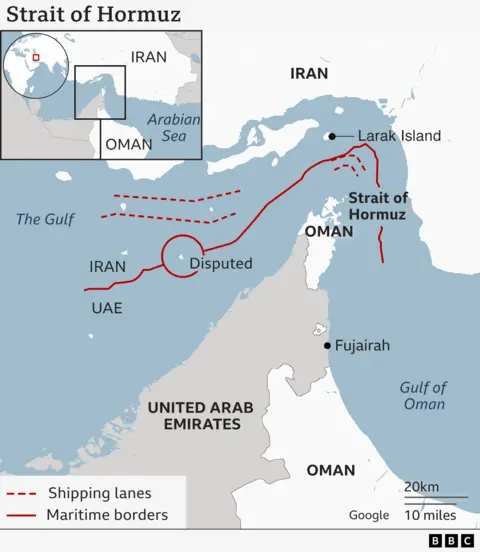
- Energy and shipping nerves: Even without a formal closure, any threat to Gulf transit routes can move prices and insurance costs quickly.
- Iran’s choice of target type: Hitting US assets is one kind of statement. Hitting allied infrastructure is another. Each choice changes coalition politics.
BBC News laid out seven scenarios. The through-line is simpler. In a US-Iran clash, the first strike is about capability. The second act is about consequences, and consequences are the one weapon both sides can deploy.