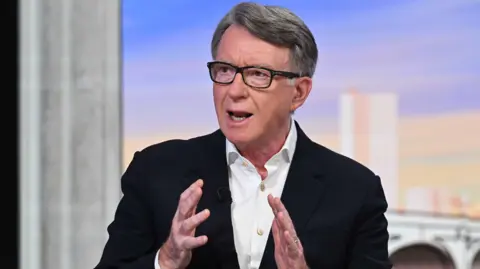
Peter Mandelson’s first apology was careful. His second one was personal, direct, and aimed at the people he says he failed to believe.
The shift matters because it lands on top of a political consequence he already could not outrun. He was dismissed as the UK’s ambassador to the US in September 2025 after Downing Street said new information emerged about his friendship with Jeffrey Epstein, according to BBC reporting.
Now Mandelson is trying to draw a sharper line between what he says he did not know and what he admits he should have done once Epstein’s criminal conviction was already on the record.
The apology that went from systems to victims
In a BBC interview aired over the weekend, Mandelson offered what critics described as a limited apology, focused on “system failures” that allowed women to be let down, rather than an apology for his own decision to keep up a relationship with Epstein after Epstein’s conviction.
By the following night, in a statement carried by BBC Newsnight, Mandelson’s tone and target changed. He addressed victims directly and accepted personal error for continuing the association.
Peter Mandelson’s statement to #Newsnight in which he offers a personal apology to Jeffrey Epstein’s survivors @BBCNewsnight pic.twitter.com/RaidU8jFgi
— Nicholas Watt (@nicholaswatt) January 12, 2026
“I was wrong to believe him following his conviction and to continue my association with him afterwards. I apologise unequivocally for doing so to the women and girls who suffered.”
That language does two things at once. It acknowledges the moral argument against maintaining any friendship after a conviction for soliciting underage girls. It also positions Mandelson’s continuing contact as the result of deception, not complicity.
The emails that made this about more than optics
The story is not simply that Mandelson once moved in the same elite circles as a wealthy financier. It is that emails showed continued contact after Epstein’s first conviction in 2008, including Mandelson advising Epstein to “clear his name” in supportive messages, as reported by the BBC.
That timeline is the sticking point. Epstein was not merely a man with rumors attached. In 2008, he reached a plea deal in Florida and was sentenced to 18 months in prison after pleading guilty to two charges, including soliciting girls as young as 14 for prostitution, according to the BBC’s summary of the case.
When emails show continued warmth after that, it undercuts the classic escape hatch of powerful people who say they did not know. Mandelson’s new statement tries to narrow the focus to what Epstein told him and to argue that Mandelson was misled about the full extent of the crimes.
“Yesterday, I did not want to be held responsible for his [Jeffrey Epstein’s] crimes of which I was ignorant, not indifferent, because of the lies he told me and so many others,” Mandelson said in his Newsnight statement, as reported by the BBC.
That is a political defense and a reputational one. It says: I should not be treated as if I participated. But it also concedes: I made choices that look indefensible in hindsight, and victims are owed an apology for that.
Mandelson’s line in the sand: not complicit, but wrong
Mandelson has repeatedly denied wrongdoing and, in the new statement, again denied any involvement in Epstein’s crimes.
“I was never culpable or complicit in his crimes. Like everyone else I learned the actual truth about him after his death,” he said in the Newsnight statement, according to the BBC.
That phrasing is carefully constructed. It is an absolute denial of criminal involvement. It also implies there was a bigger “actual truth” than what was publicly understood in 2008, when Epstein’s plea deal and conviction were already widely reported.
The unavoidable contradiction, and the reason this story still has legs, is that many critics argue a conviction should have been enough. The question is not just what Mandelson knew, but what any prominent public figure should have considered disqualifying once the conviction existed.
What he said on television, and what he later regretted
In his weekend BBC interview, Mandelson did not apologize for continuing the friendship. He argued he would have apologized if he were “in any way complicit or culpable,” according to the BBC’s account of the interview.
He also said he believed he was kept separate from Epstein’s sexual behavior because he is gay and denied seeing young girls at Epstein’s properties, the BBC reported.
Those lines matter because they reveal how Mandelson tried, at first, to resolve the public puzzle. He offered an explanation for why he did not witness what victims later described, and he emphasized a lack of complicity rather than the judgment call of maintaining contact after a conviction.
Newsnight’s statement, by contrast, turns the spotlight away from what he saw at properties and toward the central charge against him. Why did he keep the link alive at all?
The political price already paid: dismissal as US ambassador
This is not a purely reputational affair. Mandelson lost a significant public role.
The government dismissed him as its ambassador to the United States in September 2025. Downing Street said new information had emerged related to his friendship with Epstein, according to the BBC.
That “new information” framing is a classic government move. It implies an employment decision based on updated facts, not a sudden moral awakening. But it also leaves an opening for critics to ask why the relationship was manageable until it was not, and what exactly changed when the emails became part of the public picture.
Either way, the dismissal raises the stakes for Mandelson’s apology. A former cabinet minister and senior political figure is not only defending his past. He is also trying to reestablish credibility for any future role that relies on judgment, trust, and access.
Pushback from inside the establishment
The pressure is not only coming from online commentators or political opponents. It is coming from within the political and legal establishment.
Labour peer Baroness Kennedy criticized Mandelson for not apologizing earlier. “Somebody like Peter Mandelson should have known better than to go on television and not to be apologising to those women who have suffered so terribly,” she told Newsnight, according to the BBC.
Kennedy also acknowledged what Mandelson appeared to be trying to accomplish with his wording, saying, “I am glad he’s come out tonight and at least now is saying that his preoccupation was that people should understand that he did not himself know and had been persuaded,” as reported by the BBC.
Her remarks capture the tightrope Mandelson is walking. He wants the public to accept two ideas at once: that he was not part of Epstein’s crimes, and that his loyalty after a conviction was a harmful error that deserves a direct apology.
Epstein’s timeline, and why it keeps dragging others into view
Epstein’s case keeps reaching into other people’s stories because it spans years, circles, and stages of the legal process.
After the 2008 plea deal and conviction in Florida, Epstein returned to public life. In 2019, he died in a New York prison cell while awaiting trial on sex trafficking charges, according to the BBC. The combination of an early conviction, later federal charges, and a death before trial has fueled continuing scrutiny of who stayed close to him and why.
Mandelson’s statement to Newsnight takes a position on that scrutiny. He argues that many people learned “the actual truth” only after Epstein’s death, while also admitting that victims’ voices were not heard when they should have been.
“But his victims did know what he was doing, their voices were not heard and I am sorry I was amongst those who believed him over them,” Mandelson said in the Newsnight statement, according to the BBC.
What to watch next
The practical question is whether Mandelson’s more personal apology closes the story or resets it.
If more correspondence or documentation surfaces, the public will re-litigate the same central issue. What did powerful friends do once Epstein’s criminal conviction was already established, and did they treat that conviction as disqualifying?
For Mandelson, the statement may be his attempt to put the most damaging admission in his own words, rather than have it dragged out line by line through leaked emails and hostile questioning.
But the final line in his Newsnight statement, the one about believing Epstein over victims, is also the one that will be hardest to outrun. It is specific, it is moral, and it is now on the record.