

The Security Council was supposed to be the emergency brake. Instead, it became the microphone where every side tried to stamp its version of the law onto a widening regional war.
What You Should Know
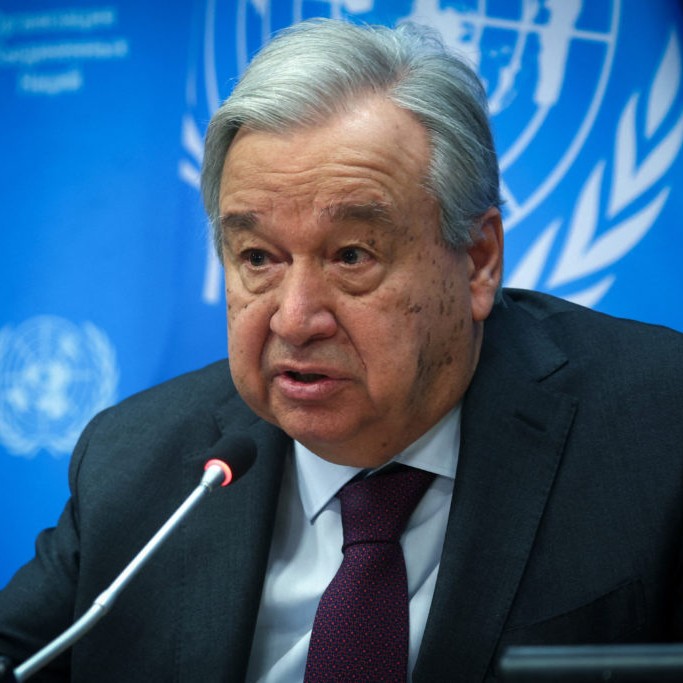
On February 28th, 2026, UN Secretary-General Antonio Guterres condemned US-Israeli airstrikes on Iran in an emergency Security Council meeting, calling for a return to negotiations as the US and Israel defended the strikes as lawful.
The session put three power centers on the record at once: the UN, Washington, and Jerusalem, while Tehran demanded consequences, and rival veto powers, including Russia and China, pressed competing scripts for what happens next.
Legality Becomes the Battlefield
According to PBS NewsHour’s publication of an Associated Press report, Guterres told the council the US and Israeli strikes violated international law, including the UN Charter, and warned the alternative to de-escalation could be a wider conflict with grave consequences for civilians.
US Ambassador Mike Waltz pushed back with a blunt standard that has been used for decades to justify extraordinary action: “Iran cannot have a nuclear weapon,” he said, calling the US actions lawful. Israel’s UN Ambassador Danny Danon framed the strikes as necessary to stop an existential threat.
That is the tension the chamber cannot resolve on its own. One side argues legality flows from preventing a catastrophic capability. The other argues legality is the capability, the rules themselves, and that breaking them sets the region on fire.
Iran Claims Civilian Toll, While Succession Questions Hang
Iran’s UN Ambassador Amir Saeid Iravani told the council the strikes killed and injured hundreds of Iranian civilians, calling the attack a war crime and a crime against humanity, and accusing the Security Council of ignoring what he described as prior warnings.
He also pressed a bigger charge about power, not weapons, asking whether any member state, including a permanent member, can use force to determine another country’s political future or impose control over its affairs.
Meanwhile, the AP report noted Iravani did not address public claims from President Donald Trump and Israeli Prime Minister Benjamin Netanyahu that Iran’s Supreme Leader Ayatollah Ali Khamenei was killed in the strikes, a statement with obvious implications if true in a system with no designated successor.
Diplomacy Is the Word, but Not the Same Plan
Russia’s UN Ambassador Vassily Nebenzia demanded the US and Israel cease what he called aggressive actions, while China’s UN Ambassador Fu Cong said Beijing was very concerned by the escalation and supported a return to negotiations, a familiar split between sharp condemnation and measured caution.
European leaders, including Britain and France, along with Germany, called for renewed US-Iran talks on Tehran’s nuclear program, while also strongly condemning Iran’s regional strikes, a contrast that leaves Tehran hearing restraint, but not equal blame.
The last procedural twist is also the most political: the emergency meeting landed on the final day of the United Kingdom’s rotating Security Council presidency, with the United States set to take over in March, which means the next phase of this argument may be managed by one of the countries now under scrutiny.