One side says a 26-year-old clothing seller was given a death sentence. The other says that report is a fabrication, and the worst he faces is prison. Somewhere in the middle, his family is chasing answers through blackout conditions and closed doors.
The name at the center of the tug of war is Erfan Soltani, an Iranian shopkeeper whose case exploded into international view as protests spread across Iran in early January. The catalyst was a stark claim from a rights group: that Soltani had been sentenced to die for alleged involvement in the demonstrations. Iran’s government pushed back publicly, insisting he is not facing execution.
A Death Penalty Rumor, a Denial, and a Clock That Keeps Ticking
According to CBS News, Iranian authorities said Soltani is not facing execution and could only be sentenced to prison if convicted of the charges currently described by the judiciary. That statement came after activists said Soltani’s family had been told an execution was imminent.
The competing accounts are not minor details. In Iran, a death sentence can move quickly, and families often learn crucial information late, if at all. That fear is amplified when the state frames a crackdown as a national security matter, not a normal criminal case.
The semi-official Tasnim news agency, which is associated with Iran’s Islamic Revolutionary Guard Corps, cited the government’s Judiciary Media Center as denying that Soltani was ever sentenced to death, CBS News reported.
What Iran Says Soltani Is Charged With
Iran’s Judiciary Media Center, as quoted by Tasnim and relayed by CBS News, said Soltani was arrested on January 8 during the height of the protests. The judiciary described the charges as “assembly and collusion against national internal security” and “engaging in propaganda activities against the system.”
Crucially, the judiciary’s public line is that those charges carry possible prison time, not execution. The same statement acknowledged he was being held at Karaj Central Prison, outside Tehran, according to CBS News.
That should settle the panic. It has not. The reason is simple: activists and relatives have described a very different sequence of events, including claims of an already issued death sentence and a planned execution date.
What Hengaw Says, and Why Verification Is So Hard
Hengaw, a human rights group that monitors events in Iran through contacts inside the country, told CBS News it had been in touch with Soltani’s family and that he had been convicted of participating in protests and sentenced to death. Hengaw then said it was informed the execution had been postponed.
Hengaw’s phrasing on the delay was blunt. It told CBS News that Soltani’s execution “has not been implemented and has been postponed.”
But even Hengaw pointed to a major obstacle: an internet blackout that makes timely confirmation difficult. CBS News noted the blackout was hampering efforts to get a clear picture of Soltani’s status and of events across the country more broadly.
That leaves observers with an uncomfortable reality. In a system where information is restricted, both the state and outside groups can claim momentum, while independent verification moves slowly.
The Family’s Claims: No Lawyer, No Contact, No Paperwork
Hengaw representative Awyar Shekhi told CBS News that officials told the family Soltani “was arrested because of the protest,” but Shekhi also added a key caveat: “we don’t know if actually he participated in the protest because there is absolutely no information about that or evidence.”
Shekhi described Soltani as a clothing seller with family near Tehran, and said the family did not consider him a political activist, though they said he opposed the country’s current situation.
Shekhi also alleged serious due process problems. He told CBS News that Soltani was deprived of basic rights, including contacting family and having a lawyer. He further claimed that four days after detention the family learned their son had received a death sentence without being told clear charges or when a trial took place.
In another detail that raised alarms, Shekhi told CBS News that Soltani’s sister is a lawyer who tried to pursue legal avenues but was told there was no case to review and she would not be allowed access.
The ‘Final Meeting’ Signal That Terrifies Families
One of the darkest markers in capital cases is the suggestion that relatives can visit for a last goodbye. Shekhi told CBS News the family was informed they would be allowed a “final meeting” with Soltani, which activists described as a procedure typically associated with impending executions.
Hengaw said it could not confirm the meeting happened, CBS News reported. A source close to the family told Hengaw that some relatives were heading toward the Ghezel Hesar prison complex in Karaj late Tuesday night.
Iran’s government, meanwhile, publicly rejected the idea that a death sentence exists in this case at all.
Why the Stakes Are Bigger Than One Shopkeeper
Soltani’s case is resonating because it sits inside a larger, contested story about the crackdown on protests. CBS News reported that Iranian security forces launched a violent crackdown to end the unrest. Sources inside the country, cited by CBS News, said deaths may have reached about 12,000, with the possibility of more. Rights groups cited by CBS News said more than 2,600 people were detained after protests began on Dec. 28.
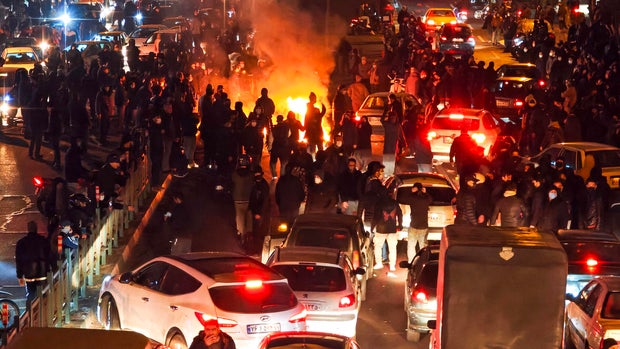
Those numbers are difficult to independently confirm, especially amid communications restrictions. Still, they help explain why a single name can become a global pressure point. If even one detained protester is executed, activists fear it will open a pipeline of fast-tracked hangings. Iranian officials have not publicly provided comprehensive clarity on whether executions would be carried out against detainees, CBS News reported.
Trump Enters the Picture, and Tehran Hears the Noise
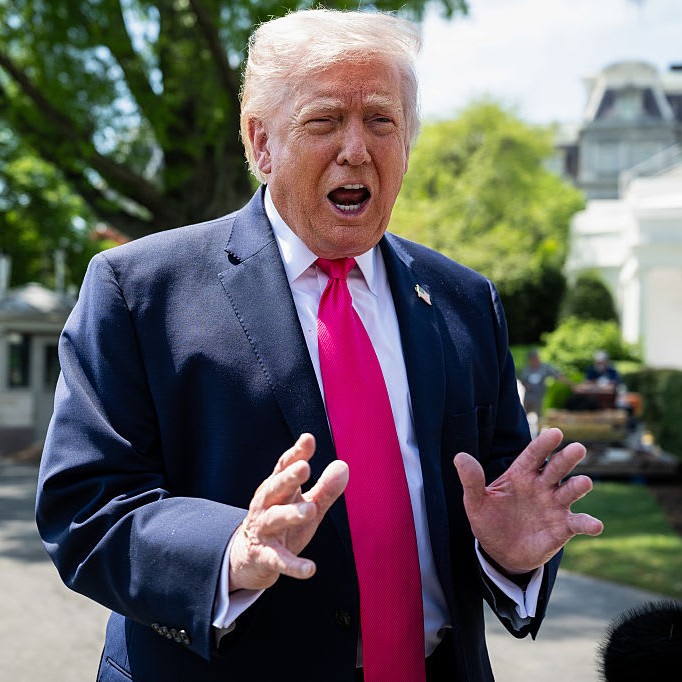
The uncertainty around Soltani’s fate also collided with Washington’s rhetoric. CBS News reported that President Trump threatened “strong action” against Iran if it hanged detainees from the protests. Trump later said he had heard on “good authority” that the “killing in Iran is stopping” and that “there’s no plan for executions.”
That is a powerful claim, but it is also hard to test. Iranian officials had not clearly confirmed or denied Trump’s statement about no executions, CBS News reported.
Still, the timing matters. Hengaw said the execution was postponed amid intense pressure from Washington, CBS News reported. Iran’s judiciary, for its part, did not frame any decision as a response to outside threats. Instead, it denied a death sentence ever existed.
The Judiciary Chief’s Message: Speed Matters
In a separate but telling on-air moment, Iran’s judiciary chief Gholamhossein Mohseni-Ejei was shown on state television discussing how quickly detained protesters’ cases should be handled. His words, reported by CBS News, carried a clear theme: haste as deterrence.
“If we want to do a job, we should do it now. If we want to do something, we have to do it quickly,” Mohseni-Ejei said in the broadcast video. “If it becomes late, two months, three months later, it doesn’t have the same effect. If we want to do something, we have to do that fast.”
Iran’s government can argue that speed means order. Critics can argue it looks like a system built for pressure, not due process. Either way, it is the kind of statement that makes families of detainees listen for footsteps in the hallway.
What To Watch Next in Soltani’s Case
There are a few concrete checkpoints that could clarify the fog. First, whether Iran’s judiciary releases formal documentation of charges, access to counsel, and the status of any court proceedings. Second, whether Soltani’s family is permitted consistent contact and legal representation. Third, whether independent human rights monitors can confirm where he is being held and under what conditions, despite blackout challenges.
For now, the public record is a standoff: activists say the family heard “execution,” the state says “prison,” and the outside world is left matching fragments under restricted communications.
The last word, at least on Iranian television, was a reminder that the system prizes speed. “If we want to do something, we have to do that fast,” Mohseni-Ejei said. In cases like Soltani’s, that is not reassurance. It is the suspense.