

For decades, Europe treated the U.S. security guarantee like a fixed asset. Now, leaders flying into Munich are acting like it is a variable-rate loan, and they are reading the fine print.
What You Should Know
As the Munich Security Conference approaches, European officials are questioning how reliably the United States would honor NATO’s collective defense pledge. The debate has intensified after a year of Trump-era policy shocks and sharper U.S. demands that Europe fund more of its own defense.
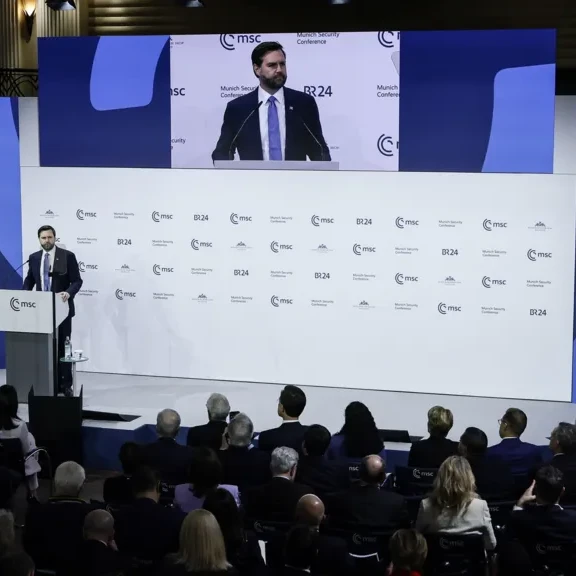
The backdrop is blunt: one year after U.S. Vice President JD Vance lit up the Munich stage with a speech criticizing Europe on migration and free speech, the transatlantic relationship is still intact, but it is operating with new friction, new tests, and new price tags.
The Question Hanging Over Every Panel
In the official language of NATO, Article 5 is the simple sentence that keeps the peace: an attack on one ally is treated as an attack on all. In the political language of 2026, it is the sentence everyone keeps rereading.
According to the BBC, the conference opens with U.S. Secretary of State and National Security Adviser Marco Rubio leading the American delegation, alongside more than 50 other invited world leaders. The choreography is familiar. The mood is not.
European governments are watching a Washington that has mixed alliance talk with punitive tariffs, an uneven approach to ending the war in Ukraine, and a habit of treating long-standing partners as negotiating counterparts.
That is not just style. It changes incentives. It also changes what smaller NATO states, especially those closest to Russia, think they can count on in a real crisis.
Greenland Was Not a Side Plot
The fastest way to understand the new anxiety is to look north, at a place most NATO press releases used to treat as geography, not politics.
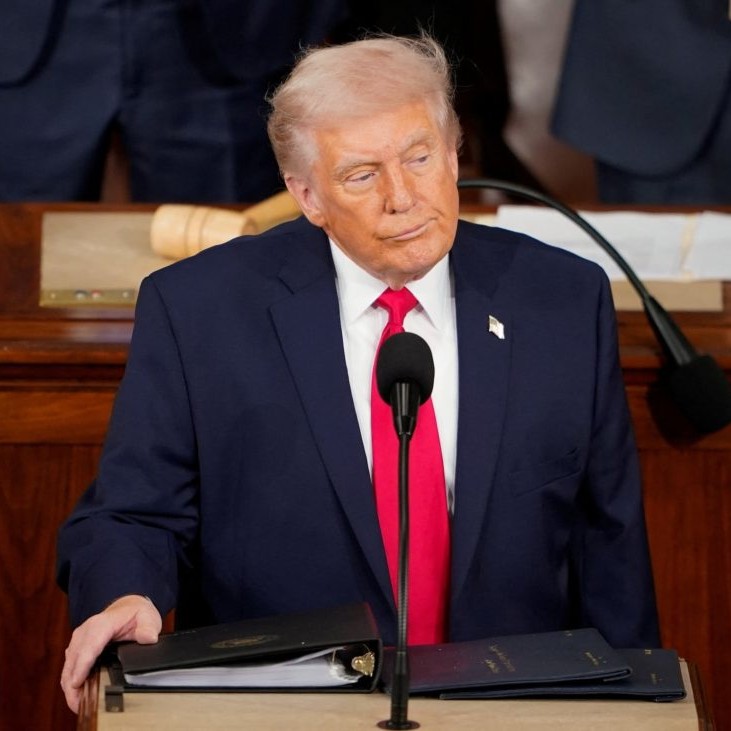
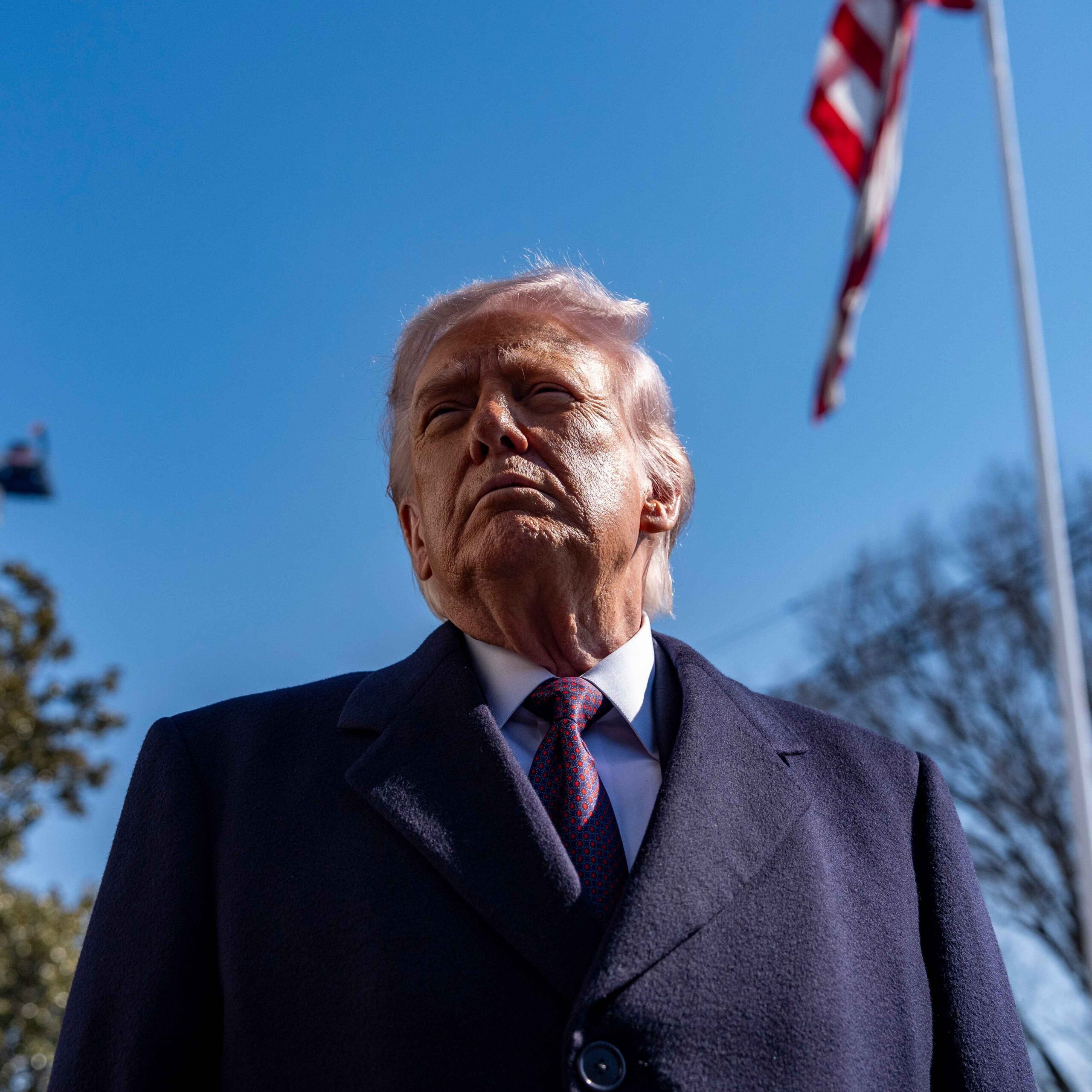
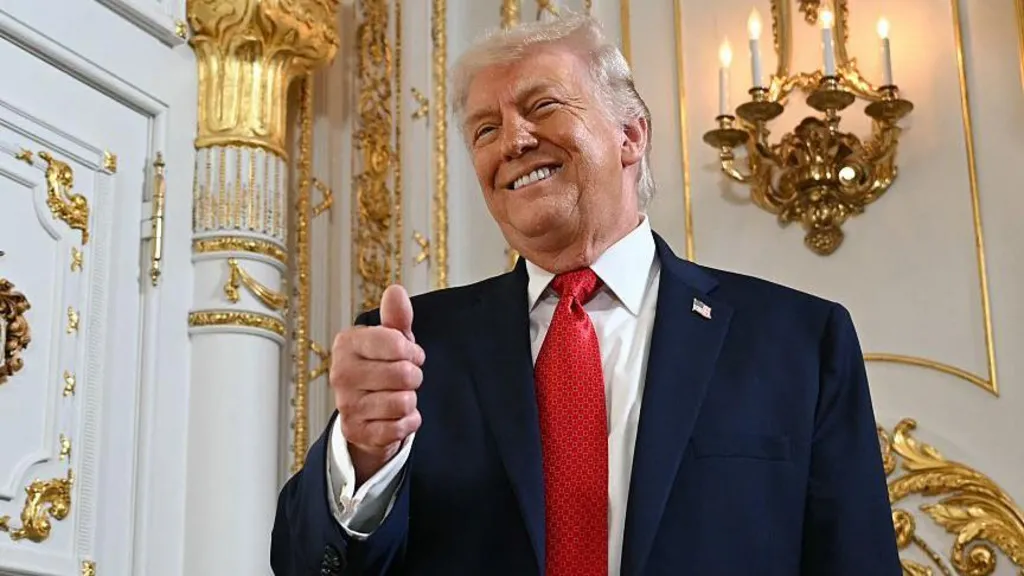
The BBC reports that President Donald Trump has repeatedly said he “needs to own” Greenland for security, and that he did not, for a time, rule out force. Greenland is a self-governing territory within the Kingdom of Denmark, which means the idea immediately landed inside NATO’s most sensitive category: ally versus ally.
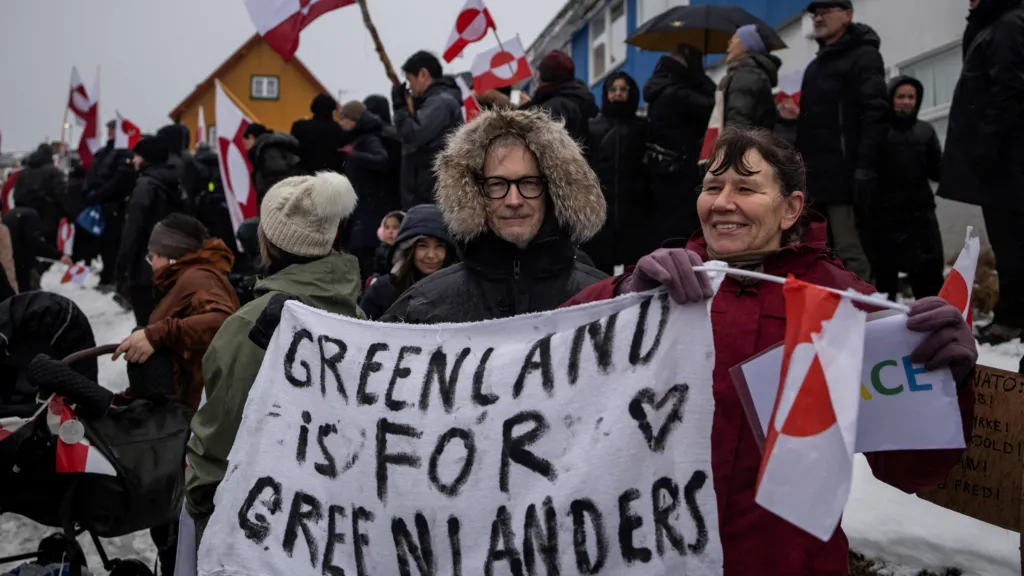
Denmark’s prime minister, per the BBC account, warned that a hostile U.S. takeover would effectively end the alliance. Even if the immediate crisis cooled, the damage was already done in a very specific way: it put an allied territory into a scenario where the threat people were gaming out involved the United States.
That kind of hypothetical used to be unthinkable. Now it is a paragraph in the broader file of doubts.
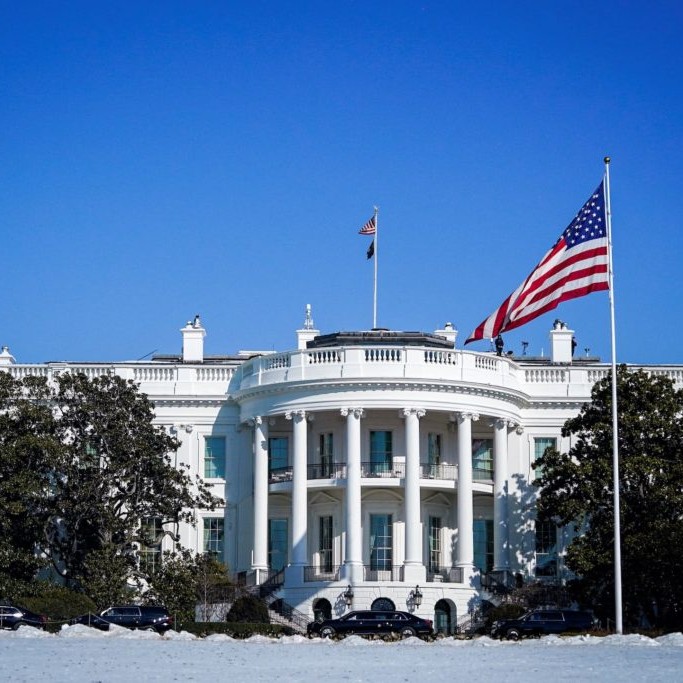
The White House, the BBC notes, has since been pulled toward other priorities, and the Greenland situation has been averted for now. For Europe, the lesson was not about Greenland alone. It was about how quickly an American president can turn a red-line topic into an opening bid.
The Money Fight Behind Article 5
Under the surface, the confrontation is about numbers. Under the numbers, it is about leverage.
Former MI6 chief Sir Alex Younger told the BBC that the alliance is changing, but not broken, and he laid out the imbalance in plain math. “You’ve got a continent of 500 million [Europe], asking a continent of 300 million [US] to deal with a continent of 140 million [Russia]. It’s the wrong way around,” he said.
That quote does two jobs at once. First, it captures the Trump administration’s core argument: Europe is big enough and rich enough to defend itself more seriously. Second, it frames U.S. support less as a duty and more as a subsidy.
The BBC points to the long-running NATO spending dispute, with some countries, including Spain, criticized for failing to meet the alliance’s 2% of GDP defense guideline. It also notes Russia’s spending level is higher, at more than 7%, while Britain is just under 2.5%.
Europe hears those figures and sees pressure. Washington cites those figures and sees bargaining power. The difference matters because deterrence depends on certainty. Bargaining depends on conditionality.
Trade, Speech, and Ukraine, All Rolled Into One Test
Europe’s problem is that the dispute is no longer contained to defense budgets. The BBC describes sharp transatlantic differences on trade, migration, and free speech, with European leaders also alarmed by Trump’s relationship with Russian President Vladimir Putin and his tendency to cast blame toward Ukraine for being invaded.

When those arguments get bundled, they start to sound less like allied debate and more like a running scorecard of grievances. That is where NATO’s security pledge starts to feel entangled in everything else.
Even if U.S. officials insist the pledge stands, allies are trying to interpret a pattern: when disputes multiply across trade and values, does the military guarantee stay isolated?
The Munich Security Conference organizers, the BBC reports, published an advance report arguing there has been a fundamental break with the post-World War II U.S. strategy built on multilateral institutions, economic integration, and the idea that democracy and human rights are strategic assets. Research director Tobias Bunde put it this way, according to the BBC: “Under the Trump administration, all three of these pillars have been weakened or openly questioned”.
That is not a moral argument. It is a structural one. If Washington questions the institutions and assumptions that held the alliance together, then Article 5 stops being a sentence on paper and becomes a matter of political will in real time.
The Narva Test, Small Town, Huge Stakes
The BBC account highlights the question many officials are too careful to ask directly: Does Article 5 still work?
It sketches a scenario sometimes called the Narva Test, centered on Narva, a majority Russian-speaking town in Estonia along the border with Russia. The hypothetical is not about Narva alone. It is about speed, clarity, and credibility.
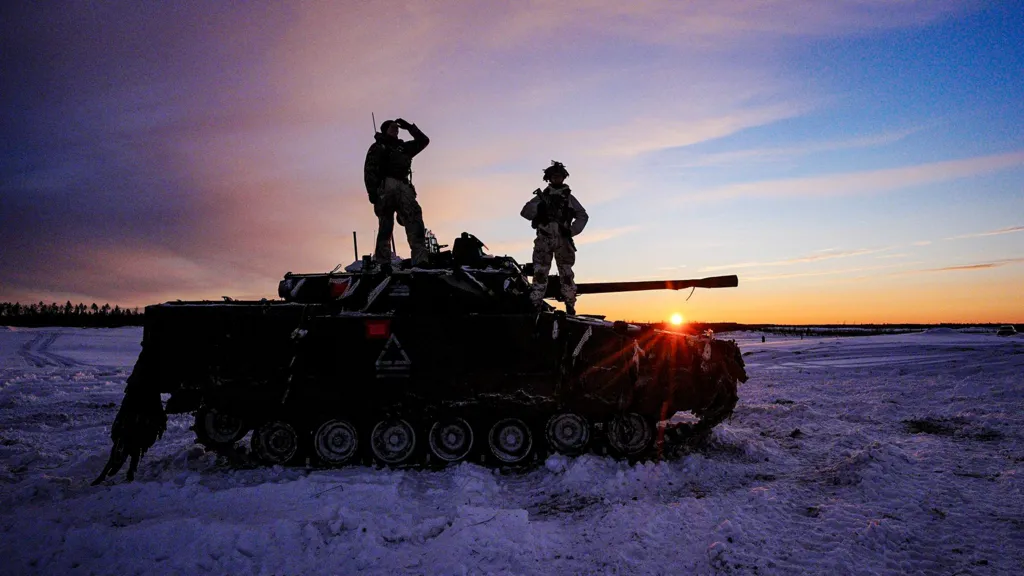
If Russia were to stage a limited incursion under a pretext like protecting Russian speakers, would the alliance respond immediately, and would the United States treat the attack as automatic grounds for collective defense?
NATO’s entire deterrent posture depends on Moscow believing the answer is yes. Europe’s fear is that unpredictability, even without formal policy change, can blur the answer just enough to invite miscalculation.
That is why European officials keep talking about resilience, industrial capacity, and spending targets. Those are not just policy goals. They are a way to reduce dependency on U.S. decision-making in the critical first days of any crisis.
Europe’s New Reality: The Guarantee Comes With Politics
There is an uncomfortable irony in Europe’s current posture. Many European leaders want Washington to sound more committed, while also trying to build the capabilities that would make Washington less central.
That is not hypocrisy. It is a hedge.
It is also an admission that the old arrangement, where the U.S. underwrote European security, and Europe focused its political energy elsewhere, is no longer a safe assumption. The BBC notes that the latest U.S. National Security Strategy called on Europe to “stand on its own feet” and take “primary responsibility for its own defence”.
For Europe, that line can be read as either a push toward maturity or a warning of withdrawal. The practical consequence is the same: more spending, more coordination, and more domestic political fights over what gets cut to pay for it.
What To Watch in Munich
Munich will not produce a treaty rewrite. It will produce signals.
Watch whether U.S. officials frame Article 5 as unconditional, or whether they keep tying security to spending, trade, and political alignment. Watch which European leaders talk about rapid rearmament, and which still talk like the U.S. is a permanent backstop.
And watch for the quiet countries, the frontline states, the defense planners, and the intelligence officials, who are less interested in speeches than in one practical question: if the Narva Test ever stops being a thought experiment, how many hours pass before the alliance acts?
That answer is not written in the conference program. It is written in the balance of power, the credibility of commitments, and how much doubt is allowed to linger.