

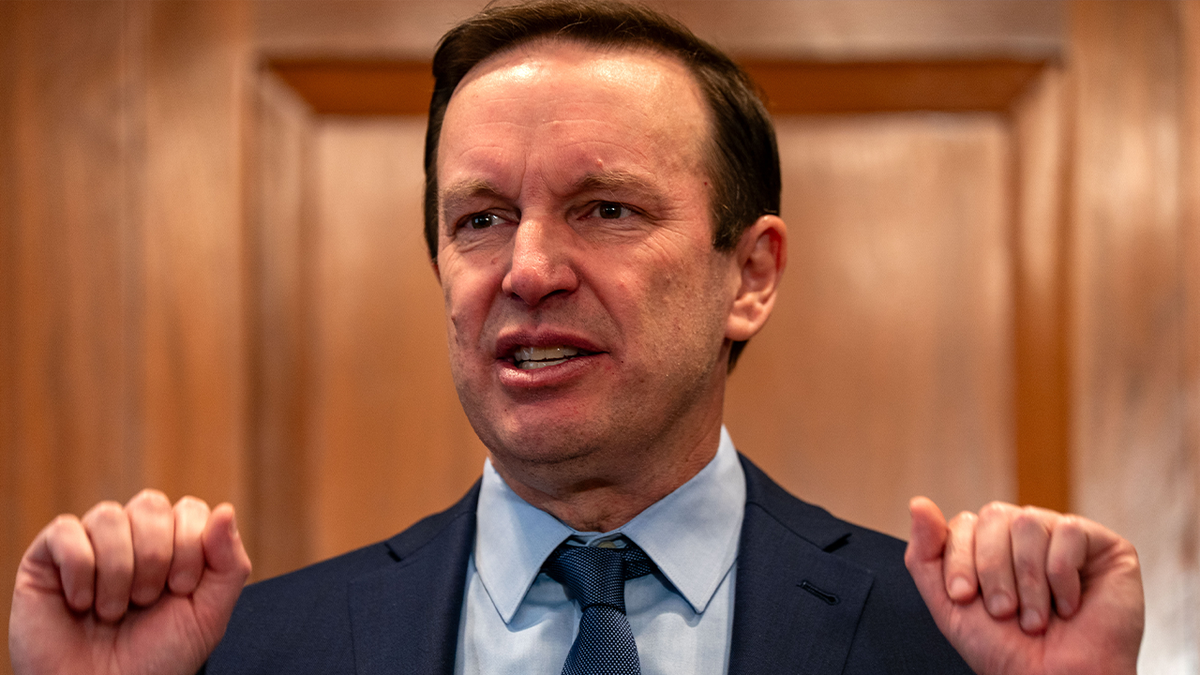
In the Senate, the loudest signal is sometimes the sentence that never arrives. When Connecticut Sen. Chris Murphy got asked about a future after Chuck Schumer, he did not slam the door. He kept it on the chain.
What You Should Know
Sen. Chris Murphy, a Democrat from Connecticut, declined to directly answer a question about whether he might replace Sen. Chuck Schumer as Senate Democrats’ leader. Schumer, a New York Democrat, has led the Senate Democratic caucus since 2017.
The exchange matters because Senate leadership is not decided by vibes or cable-news segments. It is decided by colleagues in a closed-door vote, and every non-denial gets heard as math.
The Question He Would Not Answer
According to The Hill, Murphy was pressed on whether he could be a potential successor to Schumer. Murphy did not embrace the idea, but he also did not foreclose it, leaning into the safe Washington dodge: “I’m not going to get into that.”
That line is small, but the setting is not. Murphy is a high-visibility senator with a national profile, a frequent voice on foreign policy, and a Democrat who has built relationships across the caucus, across advocacy groups, and across the party’s donor ecosystem.
Why Schumer’s Succession Talk Has Teeth
Schumer’s position is strong by design. The Senate Democratic leader controls floor strategy, committee deals, message discipline, and the schedule that determines which bills live, die, or get quietly traded away.
At the same time, the Senate is an ambition factory with a long memory. Leaders survive by holding their coalition together, and challengers rise by proving they can build a bigger one. Even hint-level chatter forces senators to choose between loyalty, leverage, and staying off the record.
The contradiction is the point: public unity, private counting. When a would-be contender refuses to rule anything out, it can be read two ways inside the caucus. It can mean respect for the current leader, or it can mean an open lane that is not ready to be announced.
What To Watch in the Next Caucus Test
If this becomes more than a hallway parlor game, the signals will be procedural before they are personal. Watch who gets plum assignments, who becomes the go-to negotiator in high-stakes talks, and who racks up public praise from colleagues who rarely hand it out.
Murphy’s non-answer does not make him a candidate. It does, however, keep every ambitious senator’s favorite currency in circulation: option value. In Washington, that is how leadership races start without anyone admitting there is a race.