The fight is not over what Canada signed. It is over what Washington thinks it means, and what it can threaten next.
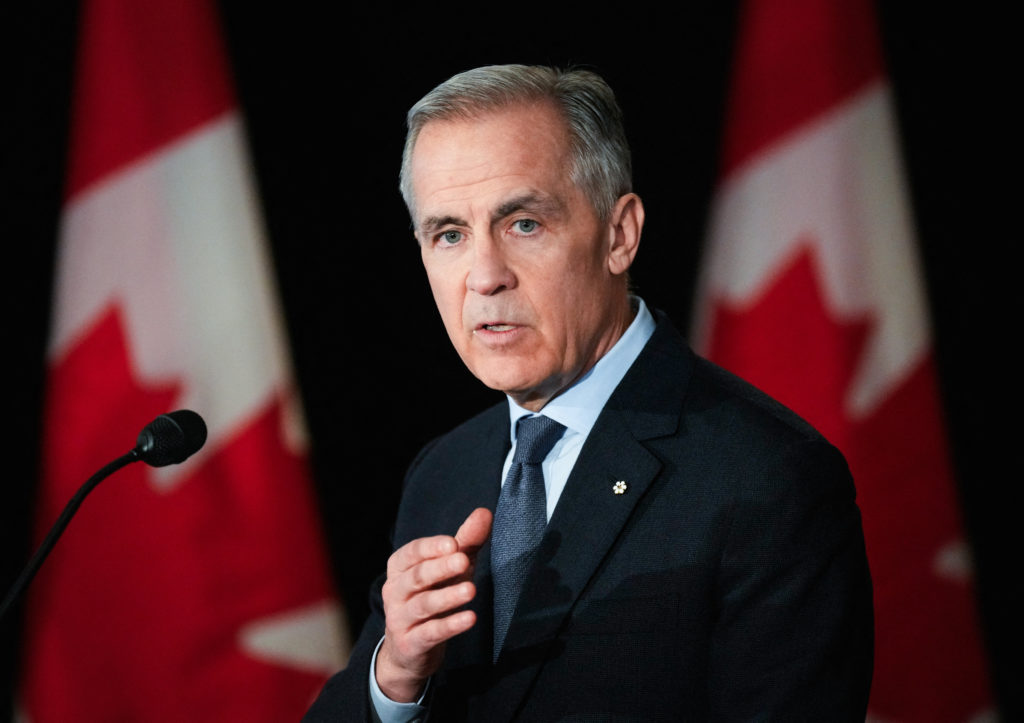
Canadian Prime Minister Mark Carney says Canada has “no intention” of pursuing a free trade deal with China, after President Donald Trump warned he would slap 100% tariffs on Canadian goods if Ottawa went ahead with a broader deal with Beijing. The clash, reported by the Associated Press in a PBS NewsHour story, lands at the intersection of tariffs, auto jobs, and an already personal, cross-border war of words.
The line Carney drew, and the one Trump refuses to see
Carney’s message is deliberately narrow. He says the recent Canada-China agreement “merely cuts tariffs on a few sectors that were recently hit with tariffs,” not a sweeping free trade pact.
Trump, posting online, frames it as something bigger and more ominous, writing: “China is successfully and completely taking over the once Great Country of Canada. So sad to see it happen. I only hope they leave Ice Hockey alone! President DJT”
🚨BREAKING: CANADIAN PRIME MINISTER MARK CARNEY SAYS CANADA HAS NO PLANS TO PURSUE A FREE TRADE AGREEMENT WITH CHINA AFTER PRESIDENT TRUMP THREATENS 100% TARIFFS.#Canada #TradeNews #MarkCarney #China #USChinaRelations #Tariffs pic.twitter.com/o9REhw1Y9k
— Catie Bristow (@Catiebristow_X) January 26, 2026
Those two descriptions cannot both be true in the same way. That is the tension Carney is trying to manage: make a limited tariff adjustment, but avoid looking like he is building a new economic lane to Beijing that could reroute goods into the U.S.
The fine print that matters: USMCA and “nonmarket economies”
Carney points to commitments inside the U.S.-Mexico-Canada trade framework. He said that under the free trade agreement with the U.S. and Mexico, there are commitments not to pursue free trade agreements with “nonmarket economies” without prior notification.
He made the refusal explicit. “We have no intention of doing that with China or any other nonmarket economy,” Carney said, adding, “What we have done with China is to rectify some issues that developed in the last couple of years.”
On the U.S. side, the administration is already signaling that trade terms are about to be used as leverage. Treasury Secretary Scott Bessent, appearing on ABC’s “This Week,” warned against Canada becoming a channel for Chinese goods, saying: “We can’t let Canada become an opening that the Chinese pour their cheap goods into the U.S,” according to the PBS report.
Bessent also flagged the calendar pressure point: “We have a (United States-Mexico-Canada Agreement), but based off — based on that, which is going to be renegotiated this summer, and I’m not sure what Prime Minister Carney is doing here, other than trying to virtue-signal to his globalist friends at Davos.”
EV math, tariff math, and the gamble on investment
Carney’s argument is that this is less a China embrace than a targeted unwind of a retaliation cycle.
In 2024, Canada mirrored the United States by imposing a 100% tariff on electric vehicles from China and a 25% tariff on steel and aluminum, the PBS report says. China responded with steep import taxes on Canadian products, including 100% on canola oil and meal and 25% on pork and seafood.
This month, during a trip to China, Carney cut Canada’s 100% tariff on Chinese electric cars in return for lower tariffs on those Canadian products, according to the same report. That is the “rectify some issues” part of his pitch.
But the details show why the U.S. is watching closely. Carney said there would be an initial annual cap of 49,000 vehicles on Chinese EV exports into Canada at a 6.1% tariff rate, rising to about 70,000 over five years. He also said the initial cap would be about 3% of the 1.8 million vehicles sold in Canada annually. In exchange, China is expected to begin investing in the Canadian auto industry within three years, per PBS.
To critics, those numbers are not calming. They sound like a blueprint for a new supply chain route, and a test of how porous North American trade borders can become when domestic politics heat up.
Trump’s “Drop Off Port” warning and the auto industry pressure point
Trump has framed Carney’s move as a backdoor to the U.S. market. In another post cited by PBS, Trump said that if Carney “thinks he is going to make Canada a ‘Drop Off Port’ for China to send goods and products into the United States, he is sorely mistaken.”
Trump warned he’d impose 100% tariffs on all Canadian goods if “Canada makes a deal with China” – a major escalation in the brewing trade war with Mark Carney’s government.
More Here → https://t.co/6z1zSNCABD pic.twitter.com/MPz6baaCfx
— PiQ (@PiQSuite) January 26, 2026
PBS also reports that Trump posted a video in which the chief executive of the Canadian Vehicle Manufacturers’ Association warns there will be no Canadian auto industry without U.S. access, while noting the Canadian market alone is too small to justify large-scale manufacturing from China.
Trump amplified that framing in a longer post, calling the China arrangement “a disaster” and warning about business flight south, saying: “A MUST WATCH. Canada is systematically destroying itself. The China deal is a disaster for them. Will go down as one of the worst deals, of any kind, in history. All their businesses are moving to the USA. I want to see Canada SURVIVE AND THRIVE! President DJT,” according to PBS.
Whatever the economic reality, the political pressure is obvious: autos are a shared North American industry, and the U.S. market is the gravity field. When Trump says 100% tariffs, he is not just threatening Canadian exports. He is threatening the premise that Canada can make any China-facing adjustment without U.S. permission.
Why this story is also about Greenland and the global stage
The tariff fight is unfolding amid a broader feud. PBS reports that Trump’s threat came alongside escalating rhetoric with Carney as Trump’s push to acquire Greenland strained NATO ties.
Carney has also positioned himself as a spokesman for “middle powers” trying to coordinate against coercion by major powers. PBS cites remarks Carney delivered in Davos: “Middle powers must act together because if you are not at the table, you are on the menu.”
Trump has repeatedly needled Canada over sovereignty and even suggested it be absorbed into the United States as a 51st state, the PBS report notes. It also says Trump posted an altered image showing a U.S. map that included Canada, Venezuela, Greenland, and Cuba as part of its territory.
In that context, trade becomes a proxy for something bigger: who gets to set the rules in North America, who can cut side deals, and who gets publicly disciplined for trying.
What to watch next
Carney is trying to keep the dispute boxed into tariffs and sector fixes. Trump is trying to expand it into a loyalty test, with a 100% tariff threat as the enforcement mechanism.
Two near-term pressure points are clear in the PBS report. First, how the U.S. interprets Canada’s China adjustments under USMCA commitments. Second, the looming renegotiation Bessent referenced, which gives Washington a formal venue to tighten rules on what Canada can do with Beijing.
Carney says it is not free trade. Trump says it is a takeover. The policy details will matter, but the next move is likely to be made in public, in posts, in interviews, and in the tariff number that gets repeated until it feels inevitable.