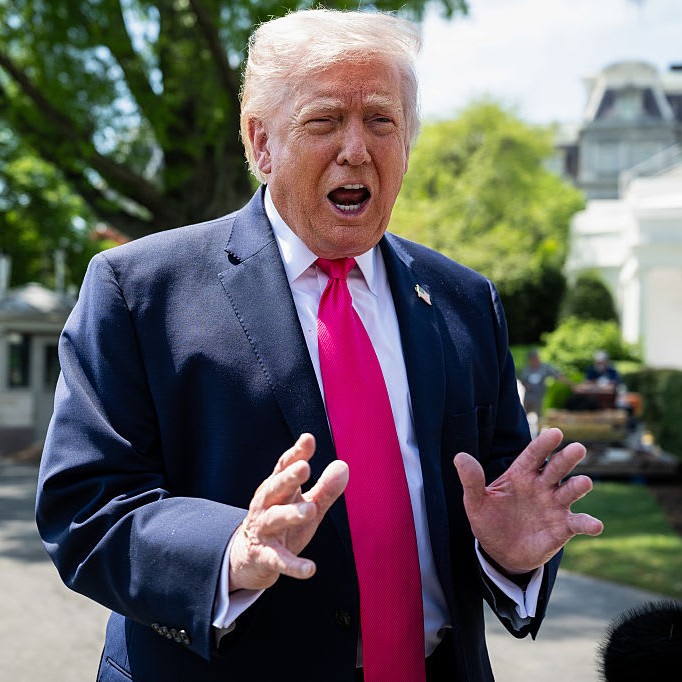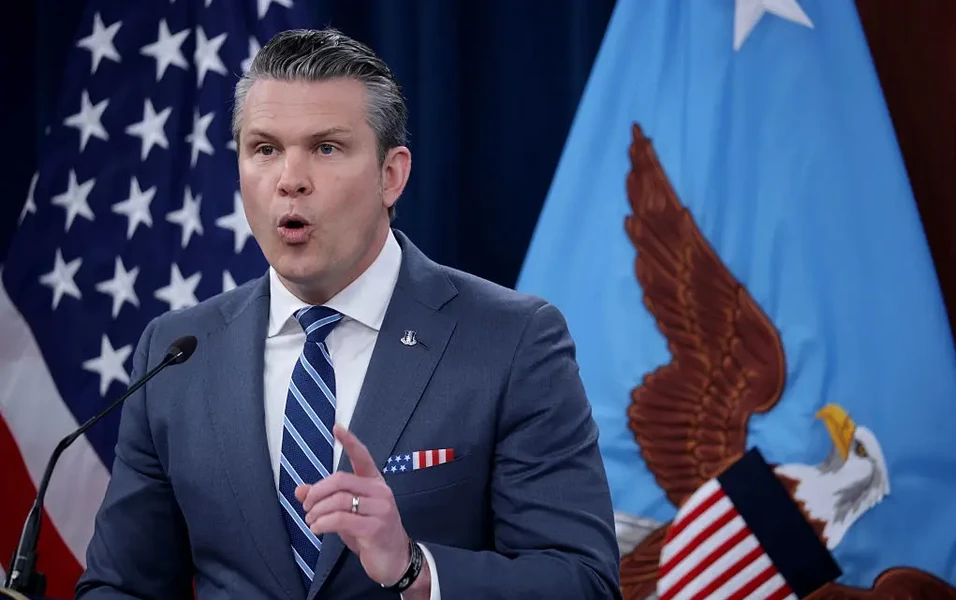
Tom Homan says he does not like ICE masks. He just wants you to understand why he thinks agents need them, and why a shutdown fight is turning that argument into a national loyalty test.
What You Should Know
In a CBS News interview, White House border czar Tom Homan said ICE agents wear masks for protection, as Democrats press for DHS reforms tied to funding. He rejected accusations of racial profiling and said current federal law does not require judicial warrants in some enforcement situations.
The immediate pressure point is money. A partial government shutdown centered on the Department of Homeland Security has put immigration enforcement tactics, agent accountability rules, and basic public visibility into one bargaining pile, with Homan and House Democrats describing the same reality in radically different terms.
The Masks Argument Is Not Really About Masks
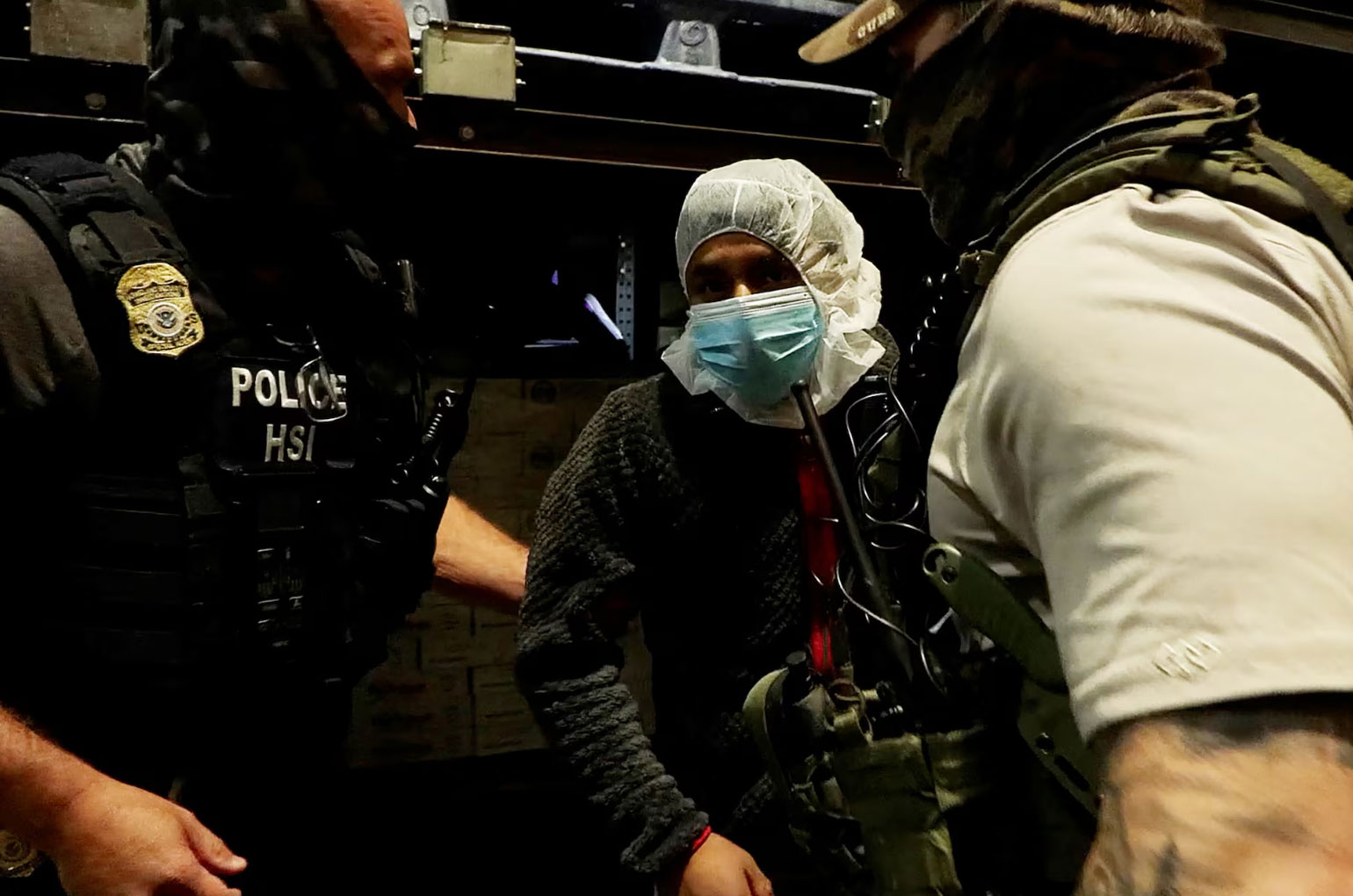
Homan’s on-air posture, as described by CBS News, was careful. He did not celebrate masked agents as a symbol of power. He framed them as a defensive response to rising threats.
“I don’t like the masks either,” Homan said on “Face the Nation with Margaret Brennan,” according to CBS News.
That line matters because it tries to split the difference between two audiences that rarely share a room. One side sees masked federal agents as a public-safety measure in a hostile environment. The other side sees masks as a permission slip for aggressive tactics with less accountability, especially during neighborhood enforcement actions.
When Democrats demand a ban on masks, they are not just talking about fabric. They are trying to force a visual rule that makes it easier to identify who did what, and when, if something goes wrong.
When Homan pushes back, he is not just defending a uniform choice. He is defending the discretion to decide, in the moment, whether visibility is a risk.
The Numbers Are Big, the Timeline Is Not
Homan said assaults against Immigration and Customs Enforcement officers increased by 1,500%, and threats increased by 8,000%, CBS News reported. Those are attention-grabbing figures, and they land exactly where they are supposed to land, which is on the public’s fear of political violence.
However, CBS News also noted a key gap: neither Homan nor the cited Department of Homeland Security messaging provided a timeframe or sourcing for the broader claims about assaults and threats.
That is the contradiction sitting in the middle of the shutdown fight. The pro-mask argument depends on danger levels rising. The anti-mask argument depends on the public being able to evaluate what agents are doing and why. Without a clear time window and documentation behind those surge claims, both sides get to treat the numbers as a weapon rather than a shared set of facts.
Homan’s moral frame was blunt, CBS News reported. “These men and women have to protect themselves,” he said.
The Democrats’ frame is procedural. If you want extraordinary power in neighborhoods, on doorsteps, and in transit hubs, they argue, you should accept extraordinary visibility.
Shutdown Leverage Turns Policy Into a Hostage Note
CBS News reported that a partial shutdown began early Saturday, with congressional Democrats and the White House deadlocked over reforms affecting ICE and Customs and Border Protection. Democrats are tying DHS funding to a package of enforcement constraints: body cameras, clear identification, bans on masks, limits on racial profiling, and judicial warrants for arrests on private property.
In that setup, each side gets a clean villain.
Democrats can argue they are funding the department, but not underwriting tactics they claim are unaccountable.
The White House, or at least its enforcement-facing messengers, can argue Democrats are putting operational safety, and possibly national security capacity, into the same pile as optics and politics.
Congress leaving town without a deal, as CBS News reported, raises the stakes because it makes the fight less about negotiation and more about patience. If lawmakers are not expected back until February 23rd, the pressure migrates to cable hits, press conferences, and selective stories that make one side look reckless.
Homan Calls the Demands Unreasonable, Democrats Call Them Common Sense
Homan said some of the Democrats’ asks were “unreasonable,” CBS News reported, and he went straight at two of the most politically flammable ones: racial profiling rules and judicial warrants.
On profiling, Homan rejected the premise. “They want to say, stop racial profiling. That’s just not occurring,” he said, according to CBS News. He added that ICE detains and questions based on “reasonable suspicion,” and concluded, “There is no racial profiling.”
That is a categorical public claim, and it is built for a shutdown showdown. It leaves almost no room for oversight reforms that imply current behavior is suspect. It also sets up a simple question Democrats will keep asking: if there is no profiling, why fight guardrails against it?
On warrants, Homan argued the law is not what Democrats want it to be. “If Congress wants that change, then Congress can legislate,” he said, according to CBS News.
That argument tracks with the reality that immigration enforcement has a distinct legal framework, including statutory powers for immigration officers that differ from standard criminal arrest procedures in some contexts. The details can be fact-heavy and technical, but the political translation is simple: Homan is saying ICE is already operating under rules Congress wrote, and Democrats are trying to rewrite them mid-fight by holding funding.
House Minority Leader Hakeem Jeffries, speaking separately on the same CBS program, took the opposite posture. CBS News reported that he said “dramatic change” was needed “before any DHS funding bill moves forward.”
“These are common sense things,” Jeffries said, according to CBS News.
That phrase, common sense, is doing a lot of work. It suggests Democrats are not asking for a radical redesign of enforcement, just basic accountability infrastructure. Homan’s unreasonable label suggests the opposite, that Democrats are demanding constraints that make the job harder or riskier.
Minnesota Raises the Temperature
CBS News reported that DHS enforcement conduct has faced increasing scrutiny since federal agents fatally shot Renee Good and Alex Pretti in Minnesota in January. In the middle of a funding standoff, incidents involving lethal force tend to accelerate demands for identification rules, body-worn cameras, and stricter arrest standards.
At the same time, Homan, as described by CBS News, is trying to recast the enforcement environment as one where agents are under siege, including by what he called “agitators” in describing crowd situations.
Those are competing pictures of power.
In one, federal agents are the danger, moving through communities with too much anonymity.
In the other, federal agents are the target, and anonymity is a protective measure.
Why the Minnesota Pullback Matters
One of the most concrete developments in the CBS News report was operational, not rhetorical. Homan said more than 1,000 immigration agents had left Minnesota, with several hundred more expected to leave soon. He said a “small force” would remain “for a short period of time,” and that they would respond when agents “get surrounded” and “things got out of control,” according to CBS News.

If those numbers hold, the implications cut both ways.
For Democrats, a large drawdown can look like a tacit acknowledgment that the operational footprint has become politically toxic, or that the safety situation is as unstable as Homan claims.
For the White House, it can look like a tactical redeployment driven by threats, and a warning shot about what happens when enforcement becomes a public spectacle.
For local communities, it means the same department can argue it needs more freedom to operate quietly, and can also scale back dramatically when the quiet operation breaks down.
What to Watch Next
The shutdown dynamic makes this fight unusually binary: either Democrats get enforceable visibility rules, or the White House keeps operational discretion, including mask use, largely intact.
Watch for three pressure points.
- Whether DHS or the White House produces clearer public documentation supporting the claimed spikes in assaults and threats, including the time period and the underlying data.
- Whether any compromise separates funding from the mask ban, for example, requiring identification and body cameras without a blanket prohibition on face coverings.
- Whether lawmakers who have criticized ICE tactics, including Republicans mentioned by Rep. Robert Garcia, start putting specific language on paper instead of expressing generalized concern.
Garcia, the top Democrat on the House Oversight Committee, tried to turn that last point into a dare. “You begin to hear some Republicans show some concern, but they need to show more courage,” he said, according to CBS News.
In a shutdown, courage is often measured in votes, not sound bites. Masks are just the symbol. The actual fight is over who has to show their face when power shows up at the door.