A $600 million fight over public health money just turned into a test of who gets to set the rules after Congress has already cut the check.
What You Should Know
On February 13th, 2026, U.S. District Judge Manish Shah temporarily blocked the Department of Health and Human Services from rescinding $600 million in public health grants to California, Colorado, Illinois, and Minnesota. The order pauses the cuts for 14 days while the states challenge the move in court.
The Trump administration says it is reordering federal priorities and ending grants that no longer align with the Centers for Disease Control and Prevention. The states say the administration is rewriting the deal after the fact, and, in their telling, punishing political opponents who have fought Trump on immigration enforcement.
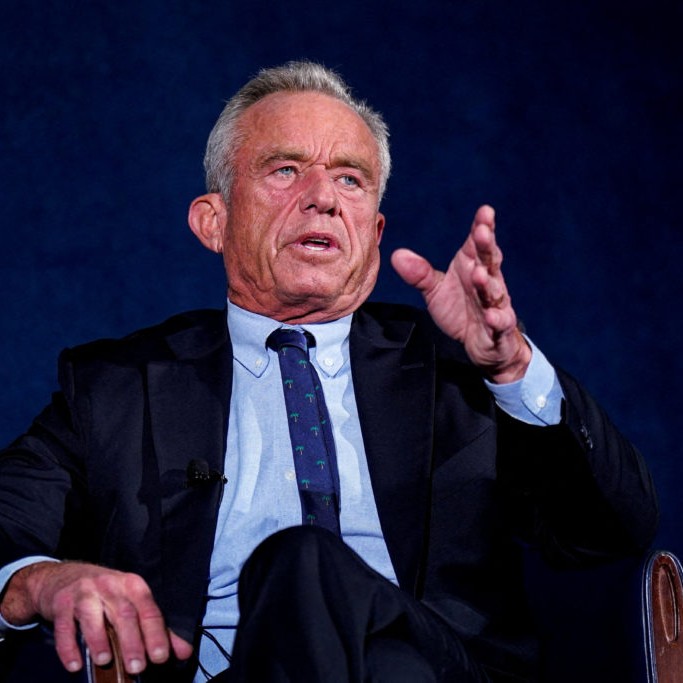
FILE PHOTO: Health and Human Services Secretary Robert F. Kennedy Jr. speaks during an event in Washington, D.C., Feb. 2, 2026. Photo by Al Drago for Reuters.
Why $600 Million Became a Political Trigger
This case is not just about a line item. It is about leverage.
The grants at issue were tied to public health work that state and city health departments treat as core infrastructure, including tracking disease outbreaks and studying health outcomes among LGBTQ+ people and communities of color in major cities, according to the states and the reporting on the lawsuit.
Much of the money, the states say, supports programs aimed at curbing HIV and other sexually transmitted infections. That includes efforts focused on gay and bisexual men, adolescents, and ethnic minority communities, which is where public health officials often see concentrated risk and where the politics around funding can get combustible fast.
The immediate stakes are operational. The attorneys general say losing the grants would force layoffs of public health workers and disrupt ongoing programs. Once that workforce disappears, states argue, the harm is not easily reversible, even if they win months later.
That is the logic Judge Shah signaled when he temporarily stopped the cuts. In his order, he said the states showed they would suffer irreparable harm if the terminations took effect while the case plays out.
The Administration’s Pitch: Priorities, Not Payback
HHS says this is a policy reset, not a political hit.
According to the administration, the grants are being terminated because they do not reflect CDC priorities, which were revised to align with an administration shift away from health equity, the idea that certain populations may need additional support to eliminate health disparities.
On paper, that framing tries to keep the argument in bureaucratic territory: priorities, metrics, and where the agency wants to aim its limited resources. The administration did not immediately respond to requests for comment on the judge’s order, according to the reporting.
But the choice of targets matters, and the administration is not making this move in a vacuum. California, Colorado, Illinois, and Minnesota are not just any states. They are frequent antagonists in Trump-era policy fights, and they have clashed with the administration over immigration enforcement, among other issues.
The States’ Counter: Retroactive Rules and Retaliation
The lawsuit, led by Illinois Attorney General Kwame Raoul, argues the cuts violate the Constitution by imposing retroactive conditions on money that Congress already awarded.
That is the legal spine of the case: the states say the federal government cannot award funds under one set of terms and then yank them back because the politics changed or because an agency decided the underlying mission statement should be rewritten midstream.
Then there is the political muscle behind it. The states say the pattern looks like payback for defiance on immigration enforcement, and they point to a broader string of federal cuts they have faced, including to food assistance programs, child care subsidies, and electric vehicle infrastructure.
Raoul put the allegation in blunt terms, arguing that the selection of four Democratic-run states is not subtle. “Targeting four Democrat-run states that are standing up to immigration policies is a transparent attempt to bully us into compliance,” he said, according to the reporting. “The president may be playing politics with critical public health funding, including more than $100 million to Illinois, but residents pay the price.”
Colorado Attorney General Phil Weiser added a timeline detail that underlines how fast this was moving. He said the first batch of grants could have been pulled on February 13th, 2026, if the judge had not stepped in.
Minnesota Attorney General Keith Ellison said the states will seek to extend the pause for the duration of the lawsuit, which is a reminder of what this 14-day order really is: a time-out, not a verdict.
What the 14-Day Pause Really Does
Judge Shah’s order does not decide who wins. It decides who bleeds first.
By freezing the terminations for 14 days, the court keeps grant money flowing from the CDC to state and city health departments and partner organizations while the states press their challenge. That matters because grant-funded work can break quickly once staff contracts get cut, vendors get dropped, and program obligations get paused.
The legal standard here is also telling. Courts generally reserve emergency relief for situations where the damage cannot be fixed later. The states argued that pulling the grants would cause immediate disruption that money, months later, cannot fully repair. The judge agreed enough to halt the cuts temporarily.
For the administration, the pause is a warning light. If the court sees the states’ constitutional theory as strong, the government may face a longer block. If the court views the cuts as a legitimate exercise of agency control over discretionary grants, the administration could regain the ability to terminate funding.
A Familiar Courtroom Pattern for This Administration
The states are not arguing in a vacuum, and the judge is not ruling in a vacuum, either.
Courts have temporarily blocked similar efforts by the Trump administration to cut funding streams, including a plan to cut off billions for child care subsidies and other programs for low-income families affecting the four states plus New York, according to the reporting.
That history matters for both sides. For the states, it is proof that judges are willing to step in when they think federal agencies are moving too aggressively or too abruptly. For the administration, it is a sign that big, fast funding reversals can turn into serial litigation, with judges setting the tempo.
What Happens After the Clock Runs
The next fight is about whether the pause becomes a longer blockade.
Expect the states to push hard on two claims at once: the constitutional argument about retroactive conditions, and the practical argument about immediate disruption to disease surveillance and targeted public health programs.
Expect the administration to keep pressing its priorities argument, insisting that grant dollars are not an entitlement and that agencies can redirect funds when programs no longer match federal goals.
What to watch is not just the legal outcome, but the precedent. If states can force federal agencies to keep money flowing after a political shift, that limits Washington’s ability to use grants as a steering wheel. If the administration wins, it expands the executive branch’s ability to reshape public health programming through funding terminations, even when Congress already appropriated the money.