Wes Moore is not just criticizing Washington on immigration. He is also naming the missing piece, and it is not another speech, raid, or slogan. It is a bill that never seems to get written.

What You Should Know
Maryland Gov. Wes Moore said the U.S. has failed to fix immigration for years and argued only Congress can do it. He also said that with Republicans controlling the White House and Congress, President Trump could quickly get a comprehensive bill passed, but he has not.
Moore made the comments in an interview tied to a CBS News town hall moderated by Norah O’Donnell, stepping into one of the most weaponized issues in American politics while aiming for both parties’ track records.
Moore’s Two-Front Attack Has a Target
Immigration is usually a partisan script. Democrats talk about humanity, Republicans talk about enforcement, and both sides talk about Congress like it is a separate planet.
Moore did something a little different. He framed immigration as a long-running failure that the country has, in his words, “punted on for a very long time,” then turned around and said former President Joe Biden “did not have this right,” according to CBS News.
That is the first tension. Moore is a prominent Democratic governor, but he is not offering a clean defense of the last Democratic administration.
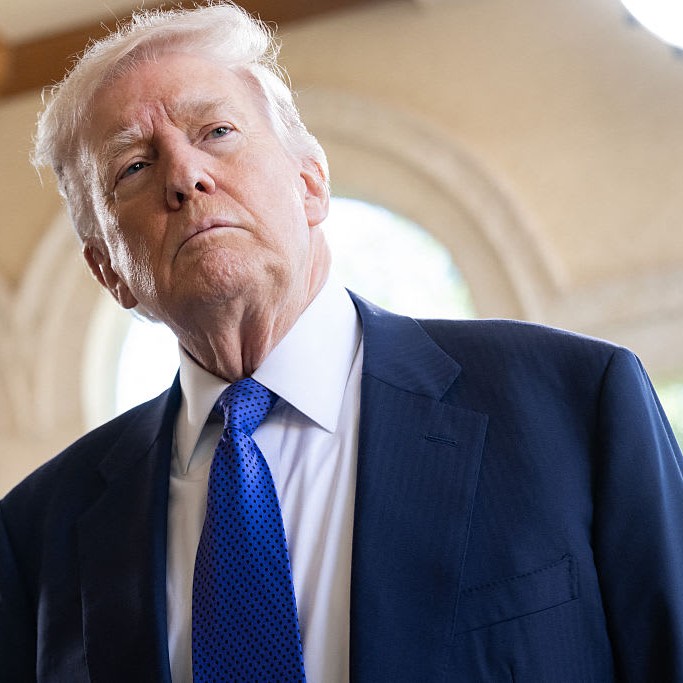
The second tension lands harder. Moore noted that Republicans control the White House and both chambers of Congress, then suggested President Trump could have a comprehensive immigration reform bill “on his desk next week” if he actually pushed for it.
“Because they have the votes. And that’s not happening,” Moore said, according to CBS News.
It is a neat trap. If Republicans say they want to fix the system, Moore is asking why the fix is not moving while they have full control. If Democrats say Republicans are the obstacle, Moore is pointing out that the obstacle currently wears the majority.
The Numbers War Behind the Rhetoric
Immigration arguments almost always boil down to competing dashboards. How many people crossed? How many were stopped? How many were removed? How dangerous they were. How much the system can handle.
CBS News reported that during the Biden administration, Border Patrol recorded record numbers of migrant apprehensions at the southern border, with daily totals reaching thousands and climbing to about 10,000 on peak days in late 2023.
Those kinds of peak-day figures became political fuel. Trump made immigration central to his 2024 campaign, promising sweeping changes and what he described as the largest deportation operation in U.S. history, according to CBS News.
But Moore’s argument is less about who can claim the best month on the chart and more about why the chart keeps becoming the substitute for policy. He is saying the system stays broken because leaders keep choosing leverage over legislation.
Public federal data shows how volatile the situation can be. U.S. Customs and Border Protection posts monthly encounter statistics that swing sharply across time, seasons, and policy changes, which is part of why politicians can cherry-pick a window and declare victory or crisis.
That reality makes Moore’s line about Congress important. A spike can be blamed. A dip can be bragged about. Either way, the incentives to avoid a durable compromise remain intact.
What Moore Is Really Accusing Congress of Doing
Moore did not say the system is hard, so Washington should lower expectations. He said Washington is ducking the job.
“And this is the frustrating thing for me with this Congress right now, where I feel we are just watching a continued abdication of responsibility,” he said, according to CBS News.
That word, abdication, is doing the heavy lifting. It suggests lawmakers are not merely failing. It suggests they are choosing not to govern because the issue is more useful as a campaign weapon than as a solved problem.
It also shifts the spotlight away from border agents, migrants, and mayors, and toward the people who write the laws, fund the agencies, and set the legal standards for asylum and removals.
Enforcement Optics, Reform Reality
One reason immigration stays politically hot is that enforcement produces visuals. Buses. Detention photos. Court dockets. The optics are immediate, and the messaging is simple.
Comprehensive reform is the opposite. It is slow, technical, and full of trade-offs that can be attacked from the left and the right. If you want to run on immigration, a messy status quo can be more convenient than a compromise that angers part of your base.
CBS News also reported that some public support for the Trump administration’s deportation efforts had started to decline, and that recent polls showed more Americans view ICE operations as “too tough.”
Then came another datapoint with real stakes. CBS News reported that an internal Department of Homeland Security document it obtained showed less than 14% of those arrested by ICE in Trump’s first year back in office had violent criminal records.
Moore did not cite that figure in the quote CBS published, but it hangs over the debate he stepped into. If the political promise is to target serious criminals, but internal data suggests a different profile dominates arrests, the next question is whether the strategy is shaped by public safety, quotas, deterrence, or television-ready numbers.
Why a Democratic Governor Is Talking Like This
Moore is the governor of Maryland, not the secretary of DHS, not a Senate negotiator, and not a border-state executive. That is part of what makes his framing interesting.
Governors live downstream from federal immigration failures. Local budgets, school systems, health care networks, and law enforcement coordination all feel the impact, but governors cannot rewrite asylum law or visa caps. They can complain, coordinate, and litigate, but they cannot pass a comprehensive federal fix.
So when Moore says only Congress can fix it, he is also explaining his own limits while daring Washington to do the one thing it claims is impossible.
He also positioned himself against easy partisanship. Condemning Trump’s policies as “cruel and reckless” while also saying Biden “did not have this right” is a way to signal independence. In a national Democratic bench that is constantly being evaluated for its ability to survive a general-election crosswind, that posture is not accidental.
What To Watch Next
Moore’s challenge creates a clean test for the next phase of the immigration fight. If Republicans say the border is an emergency, do they spend their governing capital on a comprehensive bill or on enforcement-only moves that keep the issue alive?
It also pressures Democrats to answer a different question. If the last administration did not get it right, what exactly is the plan now, and how much of it requires bipartisan lawmaking that everyone says they want but nobody seems to schedule?
Moore put the timeline in brutal terms: next week, not next year. That is the kind of deadline politicians hate because it exposes priorities fast. Either there is a real legislative push, or there is another season of talking points, executive actions, court fights, and campaign ads.
References