Washington has a familiar habit: wait until the cliff edge, then argue about who put the guardrail there. This time, the cliff is the Department of Homeland Security, and the guardrail is a list of demands aimed straight at ICE.
What You Should Know
Senate Democrats voted against a DHS funding bill, 52-47, leaving the department headed for a shutdown when funding expires Saturday unless a deal emerges. Democrats are tying their votes to new restrictions on immigration enforcement and officer conduct.
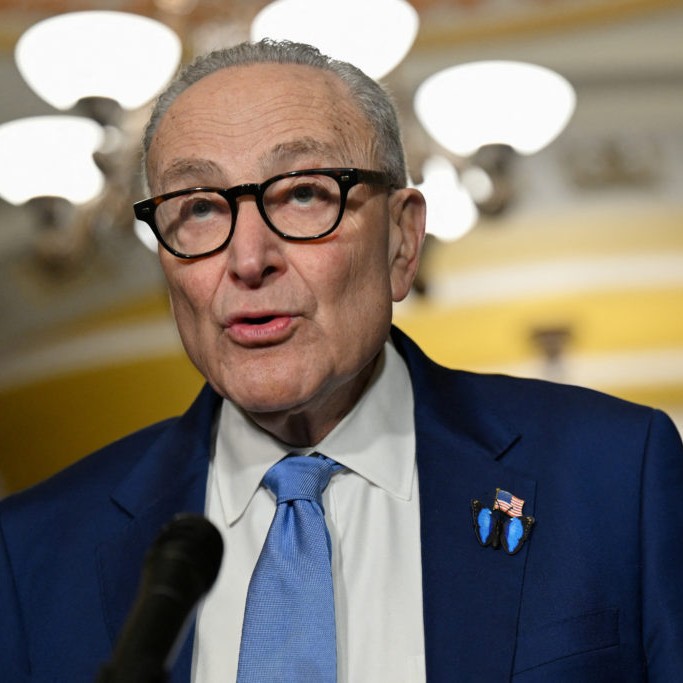
The pressure campaign is being led by Senate Democratic leader Chuck Schumer and House Democratic leader Hakeem Jeffries, both of New York, as Republicans and the White House insist they are offering movement but decline to put the details in public.
At the center of the standoff is a basic question with a very specific price tag: Will Democrats fund DHS while President Donald Trump expands immigration enforcement, or will they use the funding deadline to force rules that make enforcement harder to do, and easier to scrutinize?
The Leverage Play Is the Bill, Not the Border
Democrats are not pretending this is just about keeping the lights on. They are treating DHS funding like the only steering wheel left on an immigration enforcement machine, they say is operating with too little transparency and too much force.
Schumer tried to make the stakes feel concrete, not theoretical. “We need legislation to rein in ICE and end the violence,” he said, warning that without law, the administration’s actions “could be reversed tomorrow on a whim.”
Republicans hear something else: a shutdown threat being used as a policy weapon, with the country as collateral.
The immediate procedural problem is simple. Democrats voted down the DHS funding bill, and it fell short of the 60 votes needed to advance. Lawmakers were also staring at a planned 10-day break, meaning the window for a negotiated fix is tight, and the politics are loud.
Thune Says There Were ‘Concessions’ and Then Stops Talking
Senate Majority Leader John Thune, a South Dakota Republican, said the White House sent an offer late Wednesday that included what he called “concessions.” Then he declined to say what they were.
That omission matters because it is the tell in the whole negotiation. If the concessions are meaningful, Democrats can claim they forced movement. If the concessions are thin, Republicans can claim Democrats demanded the impossible. Keeping the details private lets both sides keep their talking points intact.
Thune also acknowledged how far apart the sides remain, even as the Senate lined up for another vote on DHS funding. In other words, the majority leader is advertising progress while simultaneously describing a stalemate.
The Warrant Fight Is the Real Tripwire
One of the biggest friction points is the Democratic demand for more judicial warrants. Thune put it plainly: “The issue of warrants is going to be very hard for the White House or for Republicans.”
That is not a throwaway line. It is the core of the Democratic argument that enforcement has drifted from court-supervised policing into something closer to administrative muscle.
In a list of demands sent to the White House, Schumer and Jeffries said DHS officers should not be able to enter private property without a judicial warrant, and they called for improved warrant procedures and standards. They also said they want an end to “roving patrols” that they argue are targeting people in public spaces and at home.
Under longstanding practice, many immigration arrests are carried out under administrative warrants, internal documents issued by immigration authorities. Administrative warrants can authorize an arrest of a specific person, but they are not generally treated the same as a judge-signed warrant for forcing entry into private homes or other nonpublic spaces without consent.
The dispute got sharper after an internal ICE memo, reported by The Associated Press, authorized ICE officers to use force to enter a residence based on a narrower administrative warrant to arrest someone with a final order of removal. Advocates cited in the reporting argued the move collides with Fourth Amendment protections.
This is where the fight stops being abstract. Democrats are effectively saying, put the rules in statute, and make agents show their work. Republicans are effectively saying, do not tie enforcement to judge-signed paperwork that could slow operations, and do not negotiate enforcement authority under a shutdown threat.
The Trigger Was Violence, and Both Parties Noticed
Democrats framed their demands as a response to specific incidents. They pressed for new restrictions after ICU nurse Alex Pretti was shot and killed by a U.S. Border Patrol officer in Minneapolis on January 24th, and after Renee Good was shot by ICE agents on January 7th, according to the AP report carried by PBS NewsHour.
The political significance is not just the tragedies. It is the fact that the incidents gave Democrats a clean narrative hook for demands that were already simmering: identification, accountability, and limits on force.
Some Republicans, according to the same reporting, suggested new restrictions were necessary. That detail complicates the usual script and hints at private concern about tactics, even if the public posture is resistance.
The White House, Notably, Stayed Quiet
For a negotiation that centers on a president’s enforcement agenda, Trump himself has been relatively silent about the talks, according to PBS NewsHour’s reporting. Silence can be strategy. It can also be a sign that the White House prefers Congress to absorb the blame for a shutdown while enforcement continues on other funding streams.
Congress is renegotiating DHS spending after Trump agreed to a Democratic request to separate DHS funding from a larger spending measure that became law and extended DHS funding at current levels only through Friday. Democrats won the separation, then used the new standalone bill as leverage.
That is the contradiction both sides are managing. Democrats demanded the split, then used the split as a pressure point. Republicans agreed to the split, then accused Democrats of manufacturing a crisis.
Why a DHS Shutdown Might Be Weirdly Uneven
Shutdowns sound total. They rarely are. DHS is a mega-department, and a lapse in appropriations hits different corners differently.
Schumer drew a hard line on temporary fixes, saying, “We will not support an extension of the status quo.” Republicans tried to temporarily extend the funding, and Democrats blocked that, too, according to the PBS NewsHour report.
But the practical fallout may not match the political rhetoric, at least at first. Immigration enforcement operations would not likely be blocked, according to the reporting, because a tax and spending cut bill passed last year gave ICE about $75 billion to expand detention capacity and bolster enforcement operations.
That single number changes the optics. Democrats are threatening a DHS shutdown to rein in ICE. Yet ICE has a major funding runway elsewhere, meaning a shutdown could bite parts of DHS that are not the headline villains in the current fight.
Over time, other agencies could take a bigger hit, including the Transportation Security Administration, the Federal Emergency Management Agency, the Secret Service, and the Coast Guard.
At a hearing, Gregg Phillips, an associate administrator at FEMA, warned that FEMA’s disaster relief fund has sufficient balances to continue emergency response activities during a shutdown, but could become seriously strained in a catastrophic disaster. He also said long-term planning and coordination with state and local partners is “irrevocably impacted.”
That is the DHS shutdown paradox: immigration enforcement may keep moving, while disaster planning and other operations start grinding down.
What to Watch Next
Lawmakers in both chambers were told to be ready to return to Washington if a deal materializes. That is a classic shutdown setup; everyone goes home, then everyone claims they are on standby for duty.
The key questions are not mysterious, just politically expensive. Are Democrats willing to take the blame for a shutdown to force statutory limits on ICE tactics? Are Republicans willing to concede anything concrete on warrants, identification, masks, use of force, or detention safeguards to keep DHS funded cleanly?
Thune’s vague “concessions” line suggests some offer exists, or at least a narrative that one does. Schumer’s insistence on real changes suggests Democrats think the moment is finally ripe to trade a must-pass check for enforceable rules.
If neither side blinks, the shutdown becomes less about immigration policy and more about which power center can tolerate heat: the White House, Senate Republicans, or Democrats betting that accountability language sells better than a clean funding vote.