In Munich, the line sounded simple enough: relax, Europe, this is temporary. But when American politicians start promising a countdown clock on another country’s nerves, the real question is who benefits from selling calm, and who is already positioning for the next opening.
What You Should Know
At the Munich Security Conference, several prominent Democrats told European leaders that Donald Trump will not define US foreign policy forever, even as the Trump administration pursues tariffs and other disruptive moves. The remarks landed alongside Secretary of State Marco Rubio’s effort to reassure allies.
The setting was the Munich Security Conference, a high-status stage where US officials try to project steadiness, and where European leaders listen for tells about Washington’s next swing. This time, the cast included Rubio, plus a parade of lawmakers and governors, some of whom are openly discussed as 2028 possibilities.
The Munich Pitch Was Reassurance, and a Warning Label
According to BBC News, Rubio drew heavy attention at the conference as European leaders tried to gauge what kind of Secretary of State he would be on their turf. His remarks were interpreted by some attendees as a sign that, even if relations fray under Trump, they are not destined to snap.
However, Democrats at the same summit were effectively running a second track. They were not negotiating policy, but they were trying to manage the emotional cost of policy for allies who have to plan budgets, deterrence, and elections around whatever Washington is doing next.
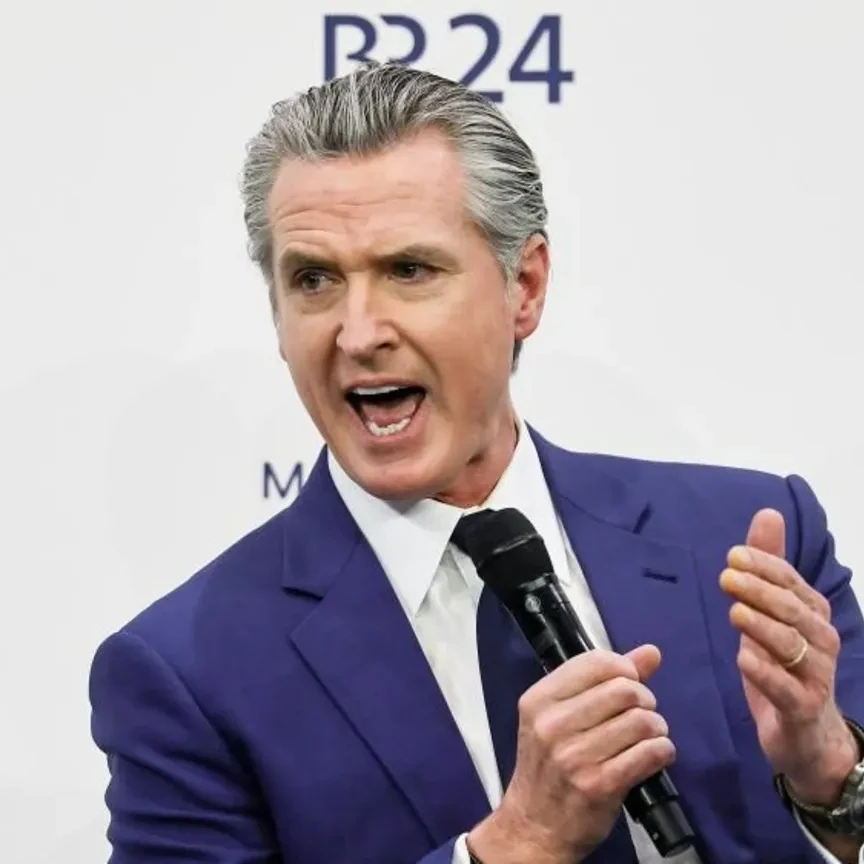
California Gov. Gavin Newsom put it in clean, campaign-ready language: “Donald Trump is temporary. He’ll be gone in three years.” The message was not subtle. The United States might be loud right now, but the Democrats wanted Europe to treat the noise as a season, not a permanent climate shift.
That is reassurance, but it is also a warning label. If your allies are being told not to overreact to the current president, they are also being told to discount the authority of the current president. That is an odd posture for a superpower that wants to be taken seriously abroad.
Rubio’s Reassurance Came With a Second Message
The BBC account describes Rubio’s comments as partly reassuring, even if they did not fully erase European concerns. The same report notes that other Americans at the conference were prepared to soften the impact if Rubio had gone in the opposite direction, for example, by sharply criticizing Europeans the way Vice President JD Vance did at the conference the year before.
That comparison mattered because it exposed the core problem for allies. They are not just tracking policy. They are tracking tone as a proxy for where power sits inside Washington, and whether there is a stable center that can override the next viral line, the next threat, or the next strategic surprise.
In Munich, Democrats tried to sell the idea that the center still exists. Democratic Sen. Jeanne Shaheen of New Hampshire framed the purpose as plain alliance maintenance, saying, “The reason we’re here is to provide reassurance that we understand how important our European allies are.”
Meanwhile, a Republican voice at the summit also played firefighter. Sen. Thom Tillis warned allies not to get pulled into what he called the “rhetoric of American politics,” and he argued the US and Europe were not in a “civil war,” per the BBC report.
The contrast was revealing. Democrats told Europe the storm will pass. A Republican told Europe not to watch the storm coverage too closely. Either way, the ask was the same: absorb the turbulence, and keep treating the US as dependable.
The Actions That Keep Europe Up at Night
Words are cheap at a security conference. What costs money is what governments do after the speeches end.
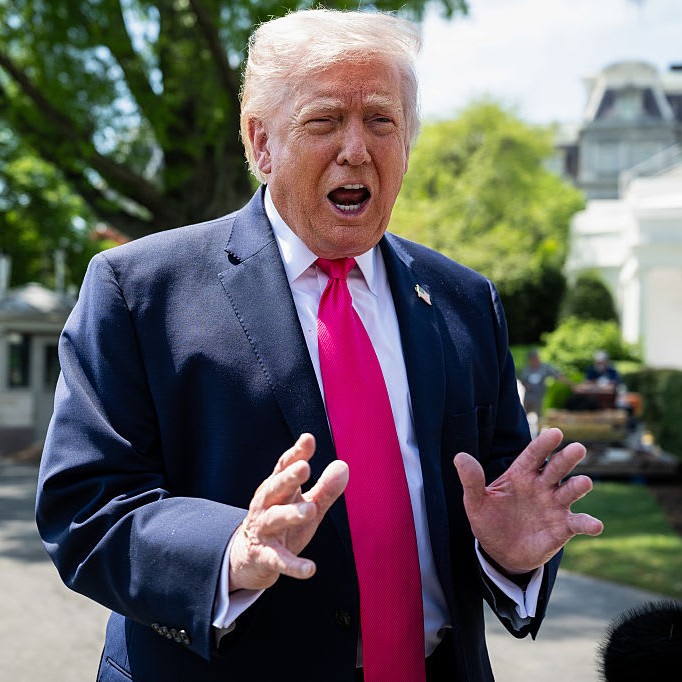
BBC News reported that Trump has imposed steep tariffs on many US trading partners, and that Trump and top aides have been blunt about a desire to reshape the international order, use American military power, and refocus foreign policy on the western hemisphere.
Then there is the kind of headline that does not sound like a negotiating position so much as a stress test. The BBC report points to Trump’s talk about Greenland as one of the most jarring examples of a shifting American outlook, including a repeat of that interest before leaving the White House for a weekend in Florida.
European leaders do not have the luxury of treating these signals as cable-news chatter. Tariffs move markets. Threats, even half-formed ones, move elections. And when the US floats new priorities, European capitals are forced to decide whether to spend more on defense, hedge with new partners, or brace for further fragmentation inside NATO politics.
This is why the Democrats’ “temporary” line is a double-edged tool. It can calm a room. It can also encourage hedging. If allies believe the US is a pendulum, they may start building a world where they do not have to stand under it.
The 2028 Subtext Was Sitting in the Front Row
Newsom was not the only American face in Munich. The BBC report describes dozens of American legislators and governors in attendance, including Democrats who may contend for their party’s 2028 presidential nomination.
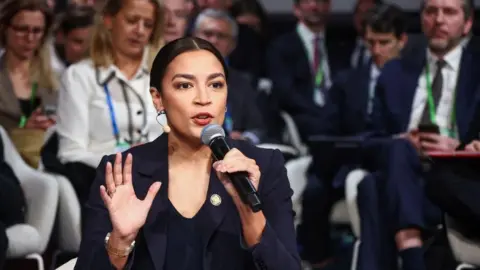
That is the quiet power dynamic of conferences like this. On paper, it is about security. In practice, it is also about validation. If a Democrat can look like an alternative commander in chief in front of an anxious alliance, that image travels back to donors, activists, and party power brokers.
And the incentives are obvious. If the Trump era is framed as an aberration, Democrats can offer themselves as a restoration. If the Trump era is framed as the new normal, Democrats have to offer something more radical than a reset button. Munich gave them a stage to try the restoration pitch on the most demanding audience possible: allies who have heard it before.
One more tension runs through the whole scene. Democrats can promise stability, but they cannot deliver it from overseas hotel ballrooms. The policy levers are still in the White House, the agencies, and Congress. Europe heard the reassurance. It also saw who actually holds the pen.
Domestic Anxiety Leaked Into the Foreign Policy Script
BBC News also reported that some Democrats used time in Munich to address domestic concerns about how far Trump will push, not just abroad but at home. The report describes Democrats highlighting anxieties about boundaries and power, even as Trump defends moves like the SAVE Act, which the BBC report says would implement a national voter identification requirement through legislation.
Two senators, Mark Kelly of Arizona and Elissa Slotkin of Michigan, also addressed being in the administration’s spotlight, after what the BBC report calls a recent unsuccessful indictment attempt by the DOJ tied to a video urging US soldiers to disregard “illegal” orders.
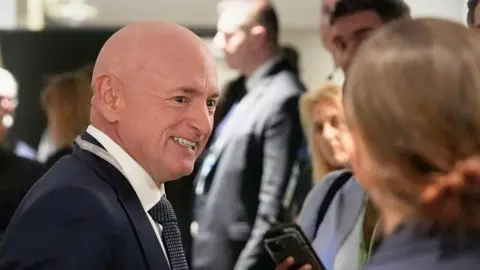
Slotkin summed up the mood in a line that did not sound like a travel-briefing for allies, but like a domestic status update exported overseas: America was “going through something profound,” and “We’ll get through it.”
For Europe, that kind of language can be reassuring, or it can be destabilizing, depending on what comes next. Profound changes do not always snap back cleanly. And allies who are told, repeatedly, that the US will “get through it” start asking how much collateral damage they are expected to absorb while Washington works out its internal fight.
What to Watch Next
The Munich message from Democrats was a bet on time. The message from the administration was a bet on endurance. Europe has to decide which bet to price into real-world commitments.
Watch for three tells in the months ahead. First, whether the White House pairs alliance language with predictable policy, or keeps allies guessing with sudden moves that force emergency meetings. Second, whether more US politicians use international stages to promise an after-Trump reset, which can be comforting but can also undermine the current government’s credibility. Third, whether European leaders start talking less about reassurance and more about autonomy, because that is what allies do when reassurance becomes a recurring need instead of a one-time repair.
Gavin Newsom’s Munich line was built for repetition. Europe heard it as comfort. Democrats heard it as positioning.