

The next round of Iran nuclear talks is scheduled for Geneva, but the loudest messages are coming from elsewhere: an aircraft carrier shifting theaters, a zero-enrichment demand Tehran rejects, and an ally pushing to bolt missiles and proxies onto a nuclear-only agenda.
What You Should Know
Iran and the United States are set for a second round of indirect talks on Iran’s nuclear program in Geneva, according to the Swiss Foreign Ministry. President Donald Trump has paired the talks with public threats, including a warning that failure to reach a deal would be “very traumatic.”
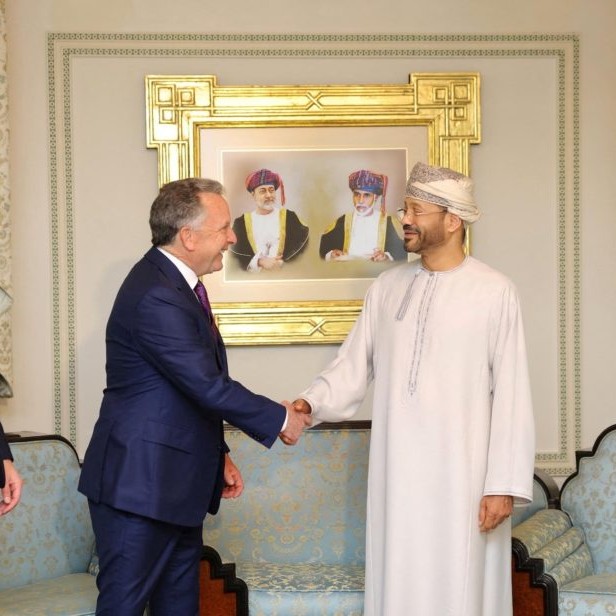
The talks, reported by The Associated Press and published by PBS NewsHour on February 14th, 2026, come after a first indirect round on February 6th, 2026, involving Iranian Foreign Minister Abbas Araghchi and US envoy Steve Witkoff, with Oman again playing host and facilitator.
Diplomacy in Geneva, Pressure Everywhere Else
Geneva is a familiar stage for high-stakes diplomacy, but this time the backdrop is unmistakably militarized. Trump has repeatedly said he is willing to use force to compel constraints on Iran’s nuclear program. Iran, for its part, has said it would respond with an attack of its own.
That is the core tension hanging over the meeting rooms: both sides are talking, and both sides are also warning. The talks are described as indirect, which matters because it signals how thin the trust is and how carefully each party wants to control optics and commitments.
After the first February round, Trump issued a blunt warning about the consequences if there is no agreement. His phrase, “very traumatic,” is the kind of language that is meant to land in Tehran, and in every capital watching the Persian Gulf for another miscalculation.
Gulf Arab nations, according to the same AP report, have warned that any attack could spiral into another regional conflict. That warning is not sentimental. It is a statement of self-interest from countries that sit close to the blast radius, literally and economically.
The Nonnegotiable That Is Not Negotiable
The Trump administration’s stated position is simple to say and hard to sell: Iran can have no uranium enrichment under any deal. Tehran’s response is equally simple: it will not agree to that.
This is not a minor policy dispute. It is the choke point. Enrichment is where Iran claims sovereignty and peaceful intent. It is also where the United States and its partners see breakout risk, because higher enrichment levels shorten the technical timeline to weapons-grade material.
Iran continues to insist its nuclear program is for peaceful purposes. However, Iranian officials have increasingly threatened to pursue a nuclear weapon, and the AP report notes that, before the June war referenced in the story, Iran had been enriching uranium up to 60% purity. That level is not weapons-grade, but it is a short technical step away.
If the US demand is zero enrichment, and Iran’s position is enrichment as a baseline right, then the immediate question for Geneva is not whether the sides want a deal. It is what each side is actually prepared to trade to move off the red lines without calling it a retreat.
The USS Ford Message and the Quiet Audience in the Region
On February 14th, 2026, Trump said the USS Gerald R. Ford, the world’s largest aircraft carrier, was being sent from the Caribbean to the Middle East to join other US military assets. In the same set of remarks, he also said a change in power in Iran “would be the best thing that could happen.”
Put those two points next to the Geneva talks, and the power dynamic becomes clearer. The US is not just negotiating terms. It is negotiating under the shadow of force, with a visible symbol of capability moving into place.
For Iran, that shift is not a background detail. It is part of the bargaining environment, and it feeds Tehran’s long-running argument that Washington’s real objective is not a nuclear compromise, but strategic subordination.
For US partners in the region, the carrier news can be read two ways at once. It can look like deterrence. It can also look like the opening chapter of a cycle they have seen before, where signaling escalates, timelines compress, and everyone insists they are acting defensively right up until the moment they are not.
Israel Wants More Than a Nuclear Deal
Even if Geneva produces momentum on a nuclear-only track, another pressure point is sitting in plain sight: Israel’s demand that any agreement deal with more than uranium.
Israeli Prime Minister Benjamin Netanyahu, who met with Trump in Washington in the week before the AP report, has pressed for any deal to include steps to neutralize Iran’s ballistic missile program and end its funding for proxy groups such as Hamas and Hezbollah.
This is where diplomatic branding collides with strategic reality. Iran has said it wants talks to focus solely on the nuclear program. Israel is effectively arguing that a nuclear deal that ignores delivery systems and regional proxies is a half-deal that leaves the threat architecture intact.
That gap matters because it can become an excuse for collapse later. If Washington signals openness to Israel’s broader demands, Tehran can frame it as moving the goalposts. If Washington keeps it narrow, Israel can argue the deal is incomplete and dangerous. Geneva, in other words, is not just a US-Iran negotiation. It is also a management test inside the US-led coalition.
The Last Breakdown Still Shapes the Room
The AP report points to a recent precedent: similar talks last year broke down in June as Israel launched what became a 12-day war on Iran, which included the US bombing Iranian nuclear sites. That history is doing work in the present.
For Iran, it reinforces the argument that diplomacy can be interrupted by force, even when talks are underway. For the Trump administration, it is a reminder that military action can reshape leverage quickly, but can also narrow the space for compromise, because it hardens political positions on both sides.
It also raises a practical question for negotiators: what, exactly, would be durable enough to survive the next regional flare-up? Narrow technical understandings can be easier to reach, but also easier to shatter. Broader political agreements can be harder to reach, but might reduce the odds of a one-strike collapse.
Who Is at the Table, and Who Is in the Room
The February 6th, 2026, indirect talks involved Araghchi and Witkoff, per the AP report, and a notable additional presence: the top US military commander in the Middle East was also present for the first time.
That detail is easy to glide past, but it signals something about the US approach. When senior military leadership is close to the diplomatic process, it can mean the White House is serious about deterrence. It can also mean the White House wants negotiators to understand, in real time, what escalation would look like.
For Iran, it can read as coercive theater. For US allies, it can read as reassurance that diplomacy is not untethered from security realities. For the negotiators themselves, it can raise the pressure to show progress, because the alternative is not abstract.
What to Watch Next
The Swiss Foreign Ministry said the second round would take place in Geneva, but did not specify the exact days. That vagueness is typical in sensitive diplomacy, but it also leaves room for delays, messaging fights, or tactical leaks designed to shape expectations before anyone sits down.
The key issue to watch is whether the two sides can design a formula that lets each claim victory on enrichment without triggering immediate domestic backlash. Another key issue is whether the nuclear-only frame survives outside pressure, particularly from Israel’s push to expand the terms.
And then there is the loudest variable of all: Trump’s public posture. When a president combines talks with warnings of trauma, carrier movements, and regime-change talk, it can create leverage. It can also create a trap, because it narrows the political space to accept incremental steps that look small compared to the rhetoric.
Geneva may produce headlines about the process. The real signal will be whether the parties can define a deal that is specific enough to verify, narrow enough to reach, and strong enough to survive the next shock in a region that rarely stays quiet for long.