

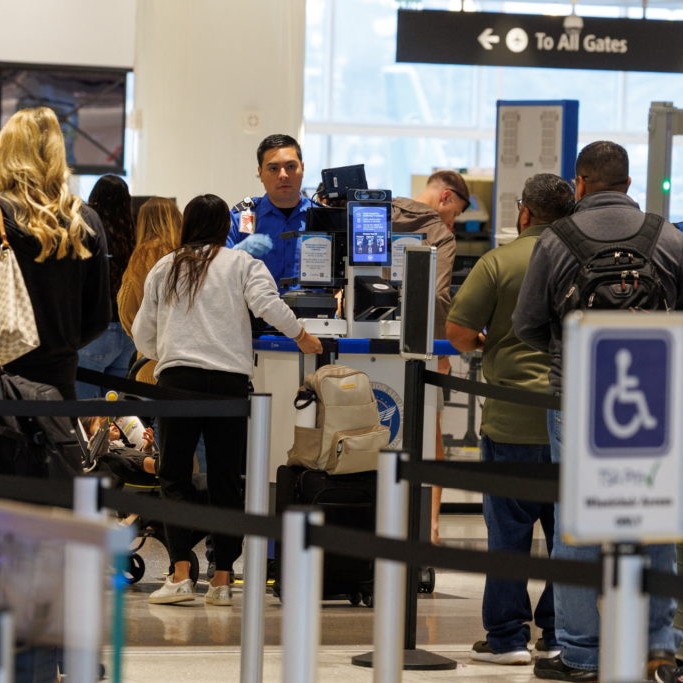
The government found a way to keep planes in the sky while quietly turning the airport checkpoint into the pressure point. If you are flying, the question is not whether security exists. It is how many screeners show up when the paychecks stop.
What You Should Know
A lapse in funding for the Department of Homeland Security began on February 14th, 2026, requiring most Transportation Security Administration workers to keep working without pay. Industry groups and travel experts warn that as the shutdown stretches, airport security lines and knock-on delays can grow.
The shutdown is narrowly tailored in a way that matters to travelers. The rest of the federal government remains funded through September 30th, which means Federal Aviation Administration air traffic controllers keep getting paid, while TSA officers, who run the checkpoint gauntlet, do not.
According to PBS NewsHour, the DHS shutdown took effect early Saturday, and it immediately revived memories of a 43-day shutdown that ended November 12th, 2025, after disruptions escalated into flight cancellations and long delays.
The Leverage Point Is Not the Runway
For lawmakers, the DHS shutdown is a bargaining chip. For travelers, it is a staffing experiment conducted at thousands of checkpoints, with unpredictable results.
Here is the core dynamic: keeping the rest of the government funded reduces the odds of a dramatic, national air travel collapse. However, putting DHS in the penalty box still hits a daily chokepoint that voters notice quickly. The checkpoint is where politics becomes a stopwatch.
PBS NewsHour reported that Democrats in the House and Senate are tying DHS funding to new restrictions on federal immigration operations. That is a policy fight being waged through an agency that includes the TSA, an organization that cannot simply pause and wait for a conference committee to find consensus.
That imbalance is the point. The TSA is designed to be visible, mandatory, and time-sensitive. Miss work at a desk job, and the effects can be hidden for a while. Miss a shift at a single-checkpoint airport, and the line becomes the headline.
Why This Shutdown Could Feel Different at the Airport
One reason the travel system did not immediately implode in past shutdowns is that air travel disruptions often build slowly, not overnight. As PBS NewsHour noted, during the previous shutdown, TSA temporarily closed two checkpoints at Philadelphia International Airport about a month in. That same day, the government ordered airlines to reduce domestic flight schedules.
This time, a key piece is different. Because the FAA is funded, air traffic controllers are still drawing pay. That reduces the risk that a wave of controller absences triggers mass cancellations.
Still, the checkpoint can jam even when the skies are controlled. The TSA is the intake valve. If that valve slows, airlines can end up holding departures for late-arriving passengers, and airports can start stacking people in places built for movement, not gridlock.
Travel risk professionals told PBS NewsHour the bigger variable is not equipment. It is morale and attendance. Many TSA officers have already lived through a shutdown recently. The incentive structure is blunt: show up anyway, or stay home and let the public consequences pile up.
The TSA Workforce Is Essential, but the Pay Is Not
According to the DHS contingency approach described by PBS NewsHour, about 95% of TSA workers are considered essential and must keep working during the funding lapse. That number sounds reassuring until you do the math at a small airport with one checkpoint and a thin bench.
If even a handful of people call out, the line can balloon. And when the line grows, everything downstream starts shifting. Gate agents deal with a surge of late passengers. Airlines face pressure to delay. Families sprint. Business travelers miss connections. The blame floats, and the incentives harden.
A traveler arriving at Detroit Metropolitan Airport put it in plain language, according to PBS NewsHour: “You might not be able to get home if you’re already out, or it might delay if you worked all week and you’re trying to get home. It’s really bad.”
That quote is not a policy argument. It is the practical threat of a shutdown that targets the people who stand between a boarding pass and a metal detector.
The Lines Are the Immediate Risk, and the Delays Are the Quiet Ones
The most obvious impact is longer waits at security. The less obvious one is schedule integrity.
Even with air traffic control operating normally, a clogged checkpoint can distort departure patterns. PBS NewsHour cited aviation and security experts warning that airlines may delay some departures to wait for passengers to clear screening. Staffing shortages can also slow checked-bag screening behind the scenes, which creates its own kind of chaos once bags and people get out of sync.
One travel executive told PBS NewsHour that the shutdown effect can show up faster this time because the last one is still fresh. The quote landed because it tied money to behavior: “It’s still fresh in their minds and potentially their pocketbooks.”
The TSA does not need a mass walkout to create trouble. Airports run on tight staffing assumptions, and passengers tend to arrive in waves. That means small changes in staffing can create big changes in throughput at peak hours.
What Travelers Can Control, and What They Cannot
No airline app can guarantee a fast checkpoint. However, there are a few levers travelers actually have that do not depend on Congress, the White House, or agency payroll systems.
- Track your airport’s posted checkpoint waits before travel day. PBS NewsHour reported travel advisers warning that the numbers can turn ugly fast, and checking too late can trap you in a two-hour reality with a 45-minute plan.
- Pack like the rules still matter, because they do. The TSA maintains an official list of what can and cannot go through checkpoints, and prohibited items slow everyone down, not just the person holding the bag.
- Assume smaller airports are more fragile. If there is only one checkpoint, there is no backup plan when staffing slips.
That is not a promise of smooth travel. It is a way to avoid being the person who turns a slow line into a missed flight.
Spring Break Is the Timer Nobody Controls
The most consequential line in the PBS NewsHour report might have been tucked into a joint industry warning. U.S. Travel, Airlines for America, and the American Hotel & Lodging Association cautioned that a prolonged shutdown threatens air travel as the spring break season approaches.
The statement did not mince the operational risk of unpaid work: “Travelers and the U.S. economy cannot afford to have essential TSA personnel working without pay, which increases the risk of unscheduled absences and call outs, and ultimately can lead to higher wait times and missed or delayed flights.”
That is the pressure triangle in one paragraph. Politicians fight over immigration restrictions. TSA works without pay. The travel economy absorbs the volatility, right as demand ramps up.
What Happens Next, and What to Watch
PBS NewsHour reported that the White House had been negotiating with Democratic lawmakers and that a deal was not reached before senators and members of Congress were set to leave Washington for a 10-day break. Lawmakers were also on notice to return if a deal is struck.
For travelers, the near-term signals to watch are not speeches. They are operational tells: checkpoint closures, sudden spikes in posted wait times, and airline schedule adjustments that suggest airports are losing slack.
For Washington, the shutdown creates a familiar contest between who can tolerate the consequences longer. The TSA is not a talking point in that contest. It is the workforce standing at the front door of the travel system, keeping it moving while the people with votes haggle over terms.
References