President Trump just picked a new target in the affordability fight, and he picked a number simple enough to fit on a bumper sticker. Ten percent. The open question is whether this is a serious policy effort, or a public pressure campaign aimed at an industry that can say “no.”
In a late-Friday Truth Social post, Trump urged credit card companies to cut interest rates and backed a one-year cap at 10%, a dramatic drop from today’s typical APRs. It landed in a political sweet spot, popular with voters, cheered by an odd bipartisan lineup, and fiercely contested by the banks and payment industry that would have to live with it.
A 10% Promise, and a Jan. 20, 2026 Start Date
Trump’s proposal is straightforward on paper. Cap credit card interest rates at 10% for one year, beginning Jan. 20, 2026, which he framed as the one-year mark of his second inauguration.
Trump’s pitch leaned on a familiar populist contrast, consumers vs. big financial players. “Please be informed that we will no longer let the American Public be ‘ripped off’ by Credit Card Companies that are charging Interest Rates of 20 to 30%, and even more,” Trump wrote on Truth Social, blaming the prior administration for letting high rates “fester[] unimpeded.”
What Trump did not spell out is equally important. It remains unclear whether the White House plans to pursue legislation, attempt an executive action, or use the bully pulpit to pressure issuers into voluntary cuts. CBS News reported it reached out to the White House and major issuers for comment.
The Math Problem That Makes 10% Sound Irresistible
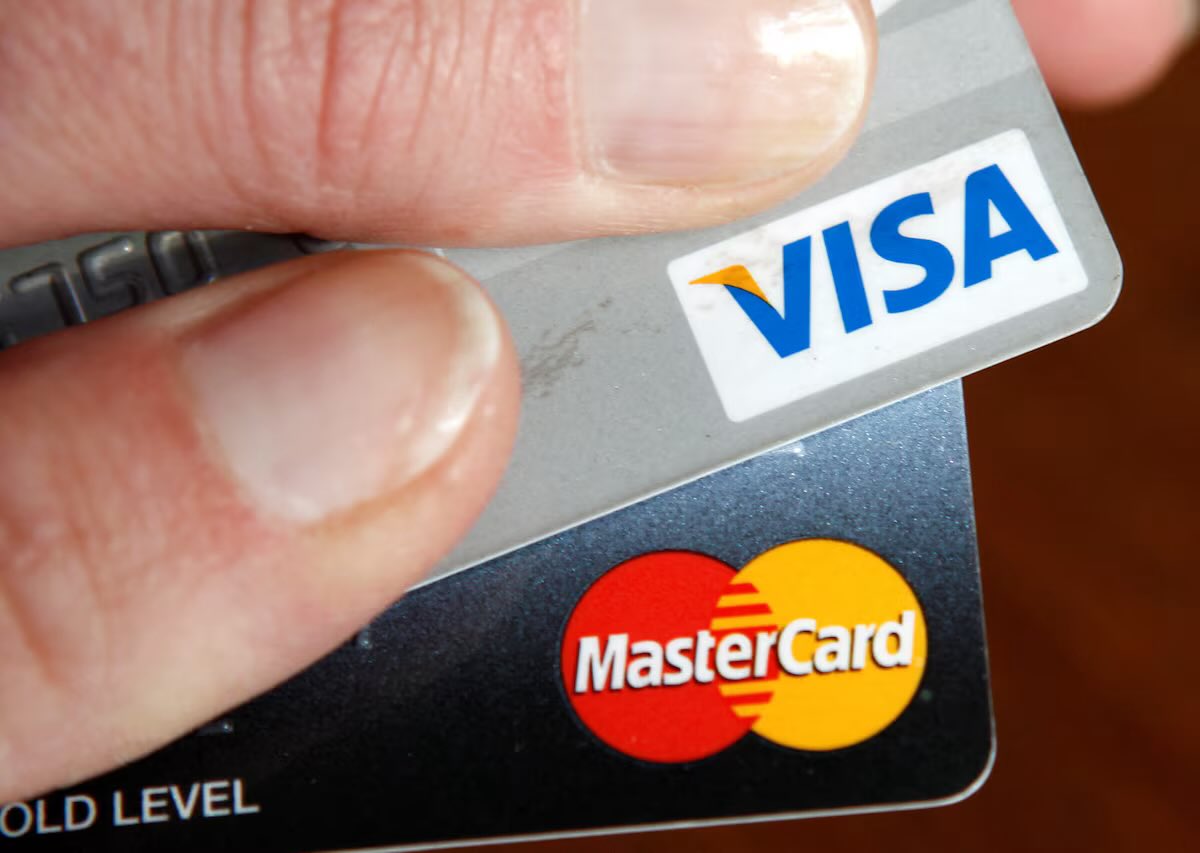
Credit card interest rates are already a sore spot, because they are widely visible and painfully compounding. Federal Reserve statistics show average credit card APRs running above 20%, so a 10% ceiling would be a major change in borrowing costs for people who carry balances.
The scale of the debt is what turns this from a campaign talking point into a live-wire policy fight. The Federal Reserve Bank of New York reported Americans owed $1.23 trillion in credit card balances in the third quarter of last year, the highest level on record. NerdWallet’s 2024 research found the average U.S. household with credit card debt owed $10,563.
Regulators have also documented the rise. The Consumer Financial Protection Bureau said in 2023 that credit card rates had climbed far above the cost of offering credit, a line often cited by advocates who argue issuers have room to lower APRs without collapsing the system.
Unusual Allies Are Lining up Behind the Idea
A national cap on card APRs is not new, but it has a rare political trait. It attracts supporters from very different corners.
Republican Sen. Josh Hawley of Missouri and independent Sen. Bernie Sanders of Vermont, who caucuses with Democrats, introduced legislation last year to impose a 10% cap. In the House, Democratic Rep. Alexandria Ocasio-Cortez of New York and Republican Rep. Anna Paulina Luna of Florida introduced a similar measure.
The sales pitch is simple. Rates are high, household debt is high, and credit card companies and banks are profitable. Sanders and Hawley framed it as stopping what they call an abusive profit model. “We cannot continue to allow big banks to make huge profits ripping off the American people,” Sanders said in their joint press release.
Luna argued the targets are working Americans. She said that “for too long, credit card companies have abused working class Americans with absurd interest rates,” trapping them in debt.
Trump also campaigned on temporarily capping interest rates at 10%. Hours before Trump’s Truth Social post, Sanders criticized him on X for not following through, which added a new layer to the moment. Sanders was publicly pushing, and Trump publicly responded with a concrete number and a start date.
The Banks’ Warning: A Cap Could Mean Fewer Cards, Not Cheaper Credit
The financial industry’s opposition is not subtle, and it is rooted in a core argument. If you force prices down for higher-risk borrowers, some of those borrowers stop getting offers at all.
A coalition of banking groups, including the American Bankers Association and the Bank Policy Institute, told CBS News that a 10% cap would “reduce credit availability and be devastating for millions of American families and small business owners who rely on and value their credit cards.”
The Bank Policy Institute has estimated that more than 14 million U.S. households that rarely pay their balances in full could see their access to credit eliminated or curtailed under a 10% ceiling, with additional impacts for people who sometimes carry balances.
The American Bankers Association has also warned in past arguments that cutting off higher-risk consumers could push them into more lightly regulated and often more expensive alternatives, such as payday lenders and pawn shops. The industry’s message is basically this: a price cap can become a rationing system.
Even some pro-Trump business voices are waving a red flag. Billionaire investor Bill Ackman, who backed Trump in the 2024 campaign, wrote on X that the cap would be a mistake. Ackman argued that if issuers cannot charge enough to cover losses and earn returns, they will cancel cards and consumers will turn to “loan sharks.”
Trade groups outside the big-bank universe echoed the same concern. Scott Simpson, CEO of America’s Credit Unions, said a 10% cap “does not make credit more affordable and could make it unattainable” for many working Americans. The Electronic Payments Coalition said a one-size-fits-all cap risks reducing access and choice.
The Power Question: Can Trump Actually Deliver a National Credit Card Cap?
This is where the story shifts from campaign-style messaging to governing reality. A national interest-rate cap touches banking law, state usury rules, federal banking regulation, and the business models of thousands of issuers. Congress can change the rules. A president can advocate, negotiate, and regulate in specific lanes, but an across-the-board 10% cap is not obviously something a White House can simply order into existence for private contracts.
That does not mean Trump’s post is empty. Presidents can shape the agenda, pressure CEOs, and use regulators to tighten supervision or propose new rules, depending on legal authority. But if the end goal is a hard nationwide ceiling at 10%, legislation is the cleanest route, and even then the fight would be brutal.
That is why the unanswered detail in Trump’s message is the most important one. Does the White House plan to pursue a bill, or is the goal to force voluntary reductions by threatening reputational heat and political scrutiny?
Why Trump Is Leaning Into Rates Now
Trump’s rate-cap push fits into a broader affordability storyline his administration has been building. CBS News reported that earlier in the week Trump directed the federal government to buy $200 million in mortgage bonds using cash from Fannie Mae and Freddie Mac in an effort to lower mortgage rates. He has also urged the Federal Reserve to cut its benchmark rate more aggressively, while acknowledging the inflation risk that can come with faster easing.
Trump is also expected to nominate a new Federal Reserve chair in the coming weeks. He told reporters he wants “somebody that will be honest with interest rates.” That comment matters because it signals a wider theme. Trump is trying to cast high rates as a choice made by people in power, not an economic condition no one controls.
Credit cards, unlike mortgages, hit consumers in small, steady drips. A 24% APR is a monthly line item. It is also a perfect political foil, because the numbers look indefensible to anyone who has ever carried a balance for a few months and watched minimum payments barely move the principal.
What To Watch Next
Three things will tell readers whether this is headed toward policy or theater.
First, whether the White House backs legislation or names a legal pathway for action, rather than simply repeating the 10% number.
Second, whether the bipartisan sponsors who already endorsed a 10% cap, including Hawley and Sanders, move quickly to reintroduce or advance a bill aligned with Trump’s proposed start date.
Third, whether issuers begin making voluntary adjustments to APRs or promotional terms, even modest ones, to blunt the political pressure. If they do nothing, the fight stays clean and simple for Trump. If they move, the story becomes whether consumers actually see relief, and who gets left out of the credit market.
For now, Trump has put a bright line on the table. A 10% cap sounds like instant relief. The banking industry is warning it could be a credit cutoff. And the next move will reveal whether this was a post meant to go viral, or a marker for a real showdown with the companies that set the price of revolving debt.