A U.S. Navy boarding in the Indian Ocean is being sold as proof that a new oil quarantine has teeth. The catch is what happened next, because the tanker at the center of the chase has not been formally seized, and Washington is now sitting in the gray zone it just created.
What You Should Know
U.S. military forces boarded the sanctioned tanker Aquila II in the Indian Ocean after tracking it from the Caribbean, according to an Associated Press report published by PBS NewsHour on February 9th, 2026. U.S. officials said the ship is being held, but not formally seized.
The headline is simple: a sanctioned, Panamanian-flagged tanker allegedly tied to illicit oil shipments ran, and the U.S. followed. The bigger story is the power play behind it, a quarantine aimed at Venezuela, plus the unresolved question of what the U.S. can, and cannot, do after it climbs aboard a foreign-flagged ship on the high seas.
A Global Chase, a Local Message
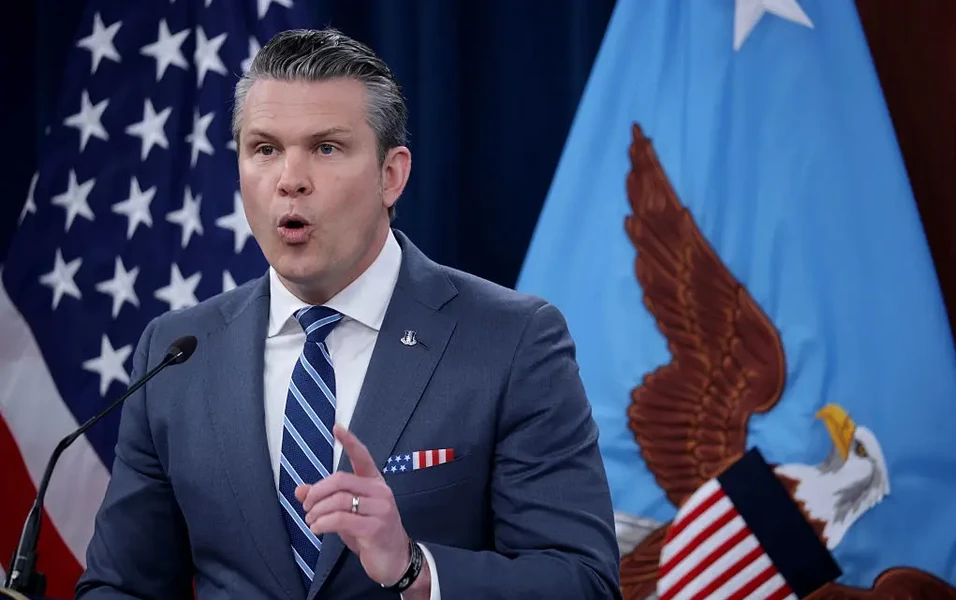
Defense Secretary Pete Hegseth framed the operation as a pursuit with no finish line. Speaking to shipyard workers in Maine, he said, “The only guidance I gave to my military commanders is none of those are getting away.” Then he tightened the threat: “I don’t care if we got to go around the globe to get them; we’re going to get them.”
That is not just chest-thumping for cable news. It is a signal to shipowners, flags of convenience, insurers, commodity traders, and governments that quietly benefit from cut-rate barrels moving in the shadows. If the U.S. is willing to move from sanctions paperwork to physical interdiction, the cost of doing business goes up fast.
But Hegseth’s certainty runs into the Pentagon’s own hedging. According to the same AP reporting, a defense official said Aquila II was not placed under U.S. control. Instead, it was being held while its ultimate fate is decided by the U.S.
That distinction matters because “boarding” can be a lawful inspection in one context and a major escalation in another. Seizure is a different legal animal, and it tends to produce the kind of court fights, diplomatic protests, and shipping market tremors that are hard to walk back.
The Pentagon’s One-Liner and the Fine Print
The Pentagon summarized the operation in blunt terms on X, calling it a “right-of-visit, maritime interdiction” and adding: “It ran, and we followed.”
“Right of visit” is one of those phrases that sounds like a polite knock at the door, but it is a concept with sharp edges. Under international maritime practice, it is typically invoked to check a vessel’s nationality when there are specific grounds, such as piracy, the slave trade, or statelessness, and it can be constrained by treaties, flag-state permissions, and the facts officers can articulate afterward.
The Trump administration’s pitch is that this is the enforcement of a quarantine of sanctioned vessels linked to Venezuela’s oil flows. The AP report says the ship was operating “in defiance of President Trump’s established quarantine of sanctioned vessels in the Caribbean,” even though the actual boarding occurred far away in the Indian Ocean, after U.S. forces tracked the vessel across oceans.
That is where the contradiction becomes the point. A quarantine implies a defined zone and a defined enforcement logic. A boarding on the other side of the world implies a different doctrine, one that looks a lot more like global manhunting for ships.
The Ship, the Flag, and the Shadow-Fleet Tells
AP reported that Aquila II is a Panamanian-flagged tanker under U.S. sanctions tied to the shipment of illicit Russian oil, and that the listed owner is a company with an address in Hong Kong. Those details are not trivia. They are the standard ingredients of sanctions-evasion logistics: a flag of convenience, ownership layers that are hard to pierce, and voyages that can be rerouted faster than regulators can draft a press release.
Then there is the behavior. The report says ship tracking data showed the vessel spent much of the last year with its radio transponder turned off, a practice often described as running dark. Commercial shipping normally broadcasts its position using AIS, an anti-collision and tracking system. Turning it off is not automatically proof of smuggling, but it is a familiar tell in sanctions enforcement cases, because it creates gaps that make custody of cargo harder to prove later.
Another detail complicates the public narrative: AP reported that data transmitted from the ship on February 9th, 2026, indicated it was not currently laden with crude oil. That does not clear the ship of past conduct, but it does make the immediate “we stopped the oil” storyline harder to sell.
Venezuela’s Oil, Cuba’s Leverage, and Washington’s Endgame
The administration is not treating this as a one-off interdiction. AP reported that the Trump administration had seized seven tankers as part of a broader effort to take control of Venezuela’s oil, and it described officials viewing tanker seizures as a way to generate cash while seeking to rebuild Venezuela’s battered oil industry and restore its economy.
That strategy puts two motivations on the same chessboard. One is geopolitical pressure, tightening the screws on a country by controlling the arteries that move its export earnings. The other is financial, treating seized assets as a revenue source to bankroll a reconstruction plan. Those goals can align, but they can also collide if courts, insurers, or allies see the seizures as overreach.
The Cuba piece raises the stakes further. AP reported that Trump has sought to restrict oil flows to Cuba and has said no more Venezuelan oil will go there. The report also described a signed executive order that would impose a tariff on goods from countries that sell or provide oil to Cuba, a move described as primarily pressuring Mexico.
Put bluntly, interdictions at sea can turn into arguments on land. Mexico is not a shadowy shipping company. Panama is not a paper entity. Hong Kong is not a backwater. If the U.S. starts treating oil movement as a global enforcement target, it risks dragging major trade relationships into a sanctions fight that was originally sold as a Venezuela squeeze.
Boarding Is the Easy Part, Disposition Is Where It Gets Messy
From a military standpoint, a boarding can be clean: a helicopter, a ladder, documents checked, crew controlled, cargo verified, and then a decision. From a policy standpoint, the decision is the land mine.
If the U.S. does not seize the ship, it has to explain what “held” means, for how long, under what authority, and at whose expense. If the U.S. does seize it, it has to be ready for litigation, diplomatic pushback, and the practical headache of what to do with a large tanker, its crew, its insurance, and any cargo chain disputes.
AP reported that a Navy official confirmed the destroyers USS Pinckney and USS John Finn, plus the mobile base ship USS Miguel Keith, were operating in the Indian Ocean, and that the official would not say what forces were used in the operation. That lack of detail is typical during ongoing operations, but it also keeps key facts out of public view, including how the boarding was justified and what rules of engagement were applied.
The administration is emphasizing willpower. The unresolved questions are procedural and legal. Those are the questions that decide whether this becomes a durable sanctions tool, or a headline that triggers the next round of court orders, diplomatic notes, and shipowners looking for new ways to disappear on the map.
What to Watch Next
Three things will tell the story of Aquila II faster than any speech.
First, whether the U.S. publicly identifies the legal basis for holding the vessel, including the role of the flag state and any consent or dispute. Second, whether the ship is redirected to a port under U.S. influence, which would signal a move toward seizure or forfeiture. Third, whether this tactic expands beyond Venezuelan-linked movements to other sanctioned streams, because the administration has already tied the ship to illicit Russian oil, not just Venezuela’s supply chain.
Hegseth’s promise was simple: none are getting away. The world’s shipping industry is now watching to see whether Washington can turn that slogan into a repeatable process, and whether the rest of the world lets it.