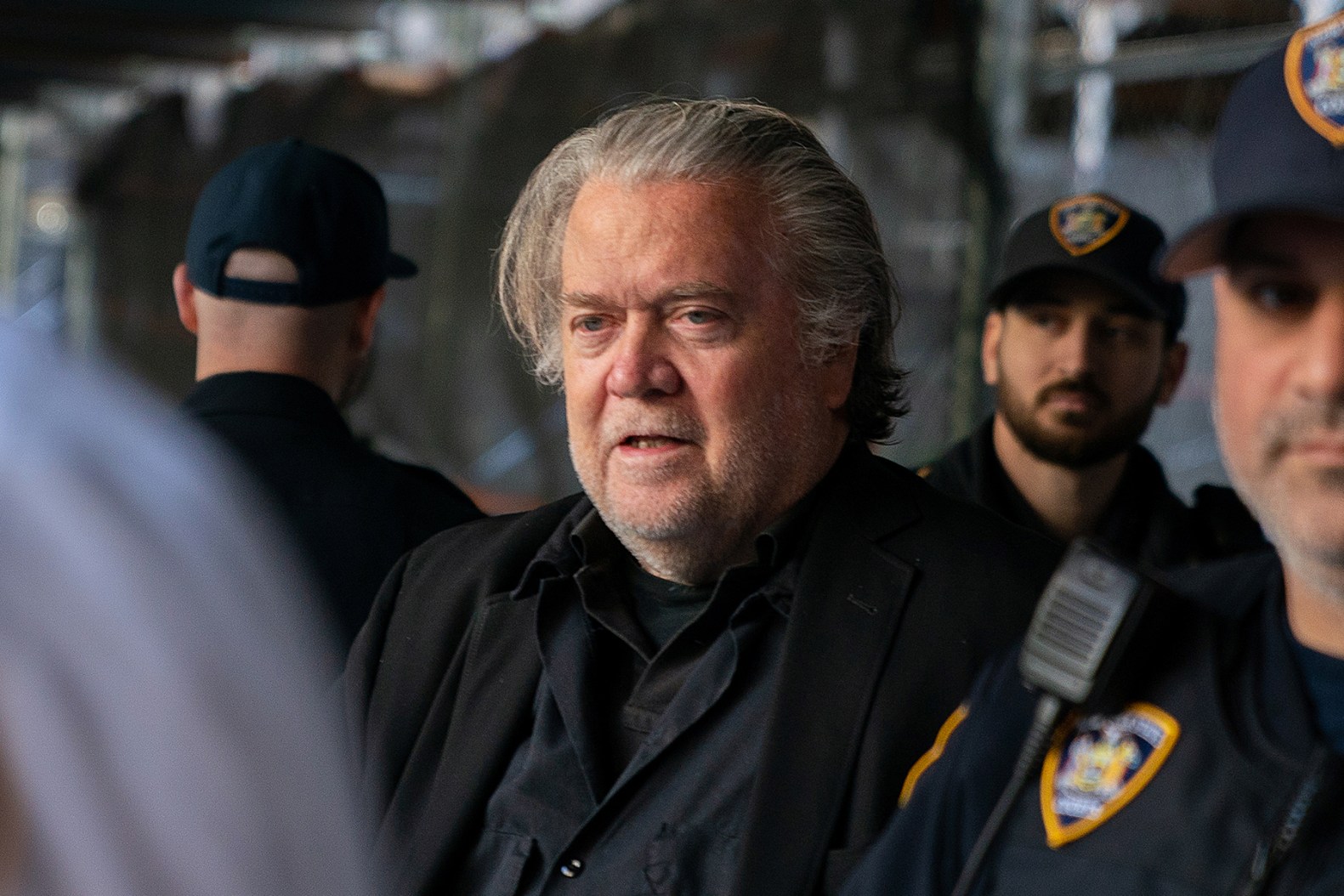
Steve Bannon asked the Supreme Court for a lifeline in his contempt of Congress case. The justices did not write an opinion, but their refusal to step in still carries a message that goes far beyond a single defendant.
What You Should Know
The Supreme Court declined to hear Steve Bannon’s appeal of his contempt-of-Congress conviction stemming from a subpoena issued by the committee investigating the House’s January 6th. The decision leaves lower-court rulings intact and keeps the conviction on the books.
Bannon, a longtime ally of former President Trump and a prominent right-wing media figure, was convicted after he refused to comply with a subpoena from the House select committee that investigated the January 6th attack on the U.S. Capitol, according to court reporting and federal prosecutors’ statements.
The Supreme Court’s One-Line Move
The Supreme Court’s action came without fanfare, the kind of procedural dead end that can look like a shrug until you read the practical effect. The case does not get another round, and the lower courts’ conclusions remain the controlling reality.
In the language of Supreme Court paperwork, the outcome was blunt:
“The petition for a writ of certiorari is denied.”
That line does not endorse the prosecution or bless every argument made below. However, it does end Bannon’s attempt to get the justices to revisit his conviction.
Bannon’s Defense vs. the Record
Bannon’s legal posture has long leaned on a familiar Trump-era friction point, the idea that executive privilege and related protections can limit what former advisers must hand over to Congress. Prosecutors countered that Bannon was a private citizen when the subpoena hit and that he did not show up to assert privilege question by question, which is typically where those disputes get litigated.
A jury convicted Bannon on two counts of contempt of Congress in 2022 for failing to appear for a deposition and failing to produce documents sought by the committee, according to The New York Times. The broader premise of the case was simple and combustible: Congress issues a subpoena, a high-profile witness refuses, and the courts decide whether the refusal is defiance or a defensible legal dispute.
What This Signals for Future Subpoena Fights
The stakes are not just about Bannon’s exposure. This is about leverage: congressional subpoenas are only as strong as the penalties for ignoring them, and politics often encourages witnesses to gamble that enforcement will wobble under pressure.
Bannon has framed his legal trouble as politically motivated, while federal prosecutors have argued it is about basic compliance with lawful process. Meanwhile, Bannon has also faced separate legal jeopardy in New York state related to fundraising for a border wall nonprofit, underscoring that courtroom risk for political operators rarely arrives one case at a time.
What to watch next is not a new Supreme Court opinion, but the knock-on effect. When the highest court declines to intervene, the next subpoena recipient has one less reason to assume the endgame is negotiable.