What You Should Know
Some Democrats urged using the 25th Amendment after Trump threatened strikes against Iranian infrastructure in a social media post. Section 4 would require the vice president and a majority of the Cabinet to act, and Congress could be forced to vote.
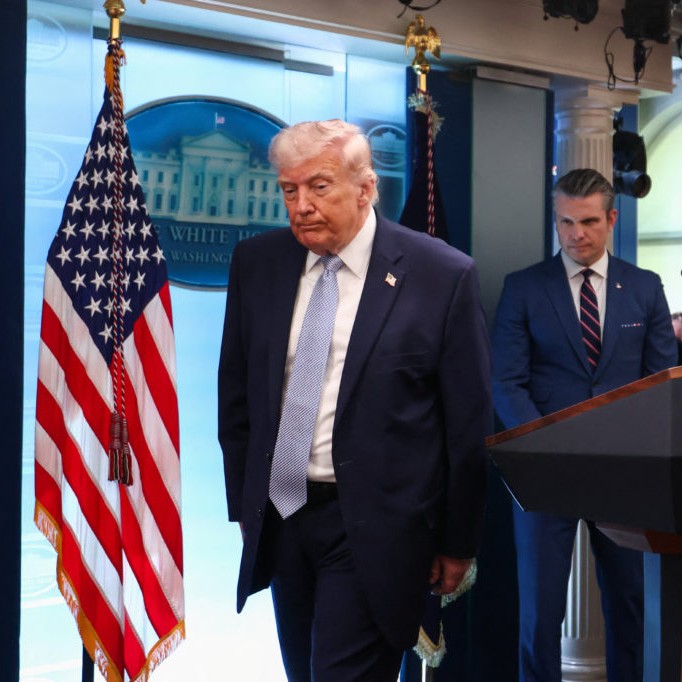
The spark was a Truth Social post on April 5th, 2026, in which Trump threatened attacks on Iranian power plants and bridges, according to PBS NewsHour, which published a PolitiFact explainer on April 6th, 2026. The reaction was immediate on the left, and notably quiet where the 25th Amendment actually lives: inside the executive branch.
Demanding the 25th Is Easy, Triggering It Is Not
Sen. Chris Murphy, D-Conn., framed the moment as a Cabinet-level emergency, writing on X, “If I were in Trump’s Cabinet, I would spend Easter calling constitutional lawyers about the 25th Amendment.” Other Democrats, including Reps. Yassamin Ansari, D-Ariz., and Melanie Stansbury, D-N.M., also floated the same remedy, per PBS.
The power dynamics are brutal for Democrats because Section 4 is designed to be initiated by the vice president and a majority of the Cabinet, not by lawmakers with microphones. Under the process described by PolitiFact, the president can contest the move; the vice president and Cabinet can reaffirm it; and then Congress can be forced into a high-stakes decision requiring a two-thirds vote in both the House and the Senate within four days.
That is why the White House response mattered more than the viral calls. Spokesperson Davis Ingle told PolitiFact, “President Trump is working tirelessly on behalf of the American people to fulfill his commonsense America First agenda that nearly 80 million people elected him for.” In other words, the administration treated the push as politics, not incapacity.
Section Four Is About Inability, Not Punishment
Even sympathetic legal minds draw a hard line between misconduct and inability. Michael J. Gerhardt, a University of North Carolina law professor, told PolitiFact, “The 25th Amendment has a limited focus on whether a president is physically or mentally incapable of doing his job.”
The paper trail backs that up. The National Archives notes the amendment was ratified on February 10th, 1967, after years of debate about presidential disability following John F. Kennedy’s assassination. The language was intentionally broad, but the architects of the amendment discussed scenarios involving a president who could not make or communicate decisions, not a president facing political backlash for a volatile statement.
What to Watch Inside the White House and Congress
The next test is not whether Democrats keep demanding the 25th. It is whether any public sign emerges that Vance or any Cabinet member is willing to treat Trump’s behavior as a constitutional “inability,” and whether congressional leaders want to walk into a two-thirds vote that would define the presidency.