They had a phone call that was supposed to cool things down. Then Colombia’s president went on the record and said the opposite. The question now is whether this is just Trump-style pressure, or the opening act of a regional showdown.
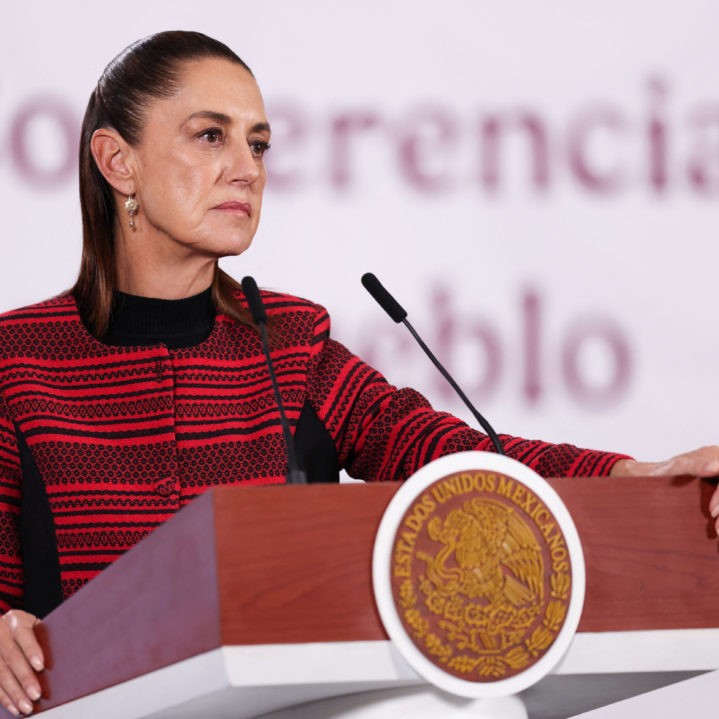
In an interview with the BBC, Colombian President Gustavo Petro said he sees a “real threat” of US military action against Colombia, a warning that lands after President Donald Trump publicly entertained a Colombia operation and fired off personal insults at Petro. The BBC said it approached the White House for comment.
The line that set Bogota on edge
According to the BBC, Trump floated the idea of military action after US strikes on Venezuela and the seizure of Venezuelan leader Nicolas Maduro. Trump said a military operation targeting Colombia “sounds good,” the BBC reported.
From Bogota’s perspective, that is not just rhetoric. Petro told the BBC that Colombia now faces a “real threat” of US military action, and argued the US has treated Latin American governments as part of a US “empire” for decades, “regardless of the law.”
It is a dramatic escalation in tone between two presidents who are already locked in a public, personal war of words. The BBC reported Trump repeatedly told Petro to “watch his ass,” language Petro condemned.
A friendly call, a “Great Honour” post, then the chill returns
The whiplash is part of the story. The BBC reported Trump and Petro spoke by phone, after which Trump said he would meet Petro at the White House in the “near future.” On Truth Social, Trump described the conversation as a “Great Honour,” the BBC said.
A Colombian official told the BBC the call reflected a 180-degree shift in rhetoric “from both sides.” That is the kind of line that signals diplomacy is back on track.
But Petro’s BBC interview suggested the call did not settle much. Petro said the conversation lasted just under an hour and that “most of it occupied by me.” He said they discussed “drug trafficking in Colombia,” Colombia’s view on Venezuela, and “what is happening around Latin America regarding the United States.”
The contradiction is the headline in itself. If both sides shifted, why is Colombia’s president now publicly warning about a strike?
Petro’s ICE comparison lights a new fuse
Petro did not limit his criticism to foreign policy. In the same BBC interview, he accused US Immigration and Customs Enforcement agents of acting like “Nazi brigades,” tying his broader “empire” argument to Trump’s expanded immigration enforcement at home.
The Trump administration has framed the crackdown as targeting crime and people who entered the US illegally. The BBC reported the administration said it deported 605,000 people between 20 January and 10 December 2025. The administration also said 1.9 million immigrants “voluntarily self-deported,” after a public awareness campaign encouraging people to leave the country to avoid arrest or detention.
There is also a specific flashpoint feeding Petro’s argument. The BBC reported that, in Minneapolis, a US immigration agent shot and killed a 37-year-old US citizen, Renee Nicole Good, sparking protests overnight. Federal officials said she tried to run over agents with her car. Minneapolis Mayor Jacob Frey said the agent acted recklessly and demanded agents leave the city, according to the BBC.
Petro told the BBC: “ICE had reached the point where it no longer only persecutes Latin Americans in the streets, which for us is an affront, but it also kills United States citizens.”
Drug war math, strike headlines, and why Colombia is a tempting target
Colombia is not just another country in Trump’s crosshairs. The BBC noted Colombia is the world’s largest producer of cocaine and a major hub for the global drug trade. It also has significant oil reserves and mineral wealth including gold, silver, emeralds, platinum, and coal.
Trump has repeatedly accused Colombia and Venezuela of failing to tackle drug trafficking, the BBC reported. The military context is already active. The BBC said the US conducted more than 30 strikes in recent months on vessels the US said were being used for drug trafficking in the Caribbean and the Pacific, killing more than 110 people.
Trump also hinted at expanding the battlefield. The BBC reported that in a Fox News interview with Sean Hannity, Trump said that after targeting trafficking “by water” “we are going to start now hitting land,” adding that “the cartels are running Mexico.”
After the strike on Venezuela, Donald Trump warned other drug-producing nations that he was losing patience over the flow of illegal substances to the US — singling out Colombia’s Gustavo Petro, an outspoken critic of the US president, over the production and trafficking of… pic.twitter.com/L0enHt4MpH
— Bloomberg (@business) January 5, 2026
That “hitting land” line matters in Bogota because it narrows the gap between maritime interdictions and operations on sovereign territory. Petro is essentially telling the world: do not assume Colombia is off limits.
Trump’s Venezuela move and the oil chessboard in the background
The Venezuela operation is the immediate backdrop, but the energy stakes are lurking in the frame. The BBC reported the US said it will control sales of Venezuelan oil “indefinitely” as it prepares to roll back restrictions on Venezuelan crude in global markets.
That combination, seizures, strikes, and oil controls, can look like a new doctrine or like leverage. Petro argues it looks like empire.
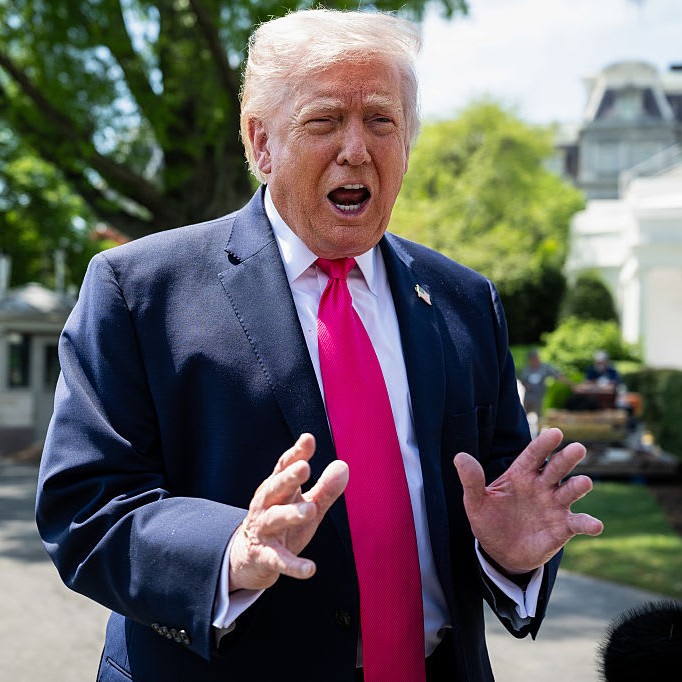
Trump, for his part, has made the dispute personal. The BBC reported that speaking aboard Air Force One after the Venezuela operation, Trump described Petro as a “sick man who likes making cocaine and selling it to the United States,” adding: “He’s not going to be doing it for very long.”
Petro denied the claim and pushed back with his own biography. “For 20 years I have been fighting against the drug cartels, at the cost of my family having to go into exile,” he told the BBC.
Petro’s “total peace” gamble, and the record-cocaine problem
Petro’s vulnerability is real, and it is not invented by Washington. Petro is a former guerrilla who has pursued a “total peace” strategy since taking office, prioritising dialogue with armed groups, the BBC reported. Critics say the approach has been too soft, and the BBC reported cocaine production reached record levels.
Pressed on what failed and whether he accepts responsibility, Petro told the BBC coca cultivation growth was slowing and described “two simultaneous approaches.”
“One, talking about peace with groups that are bandits. And the other, developing a military offensive against those who don’t want peace,” he said.
Petro said negotiations were ongoing in southern Colombia, where he claimed the greatest reduction in coca leaf cultivation has occurred and where Colombia’s homicide rate has fallen the most, according to the BBC.
He also offered a blunt line that doubles as a warning to skeptics: “we’re not fools, we know who we’re negotiating with.”
What to watch next: the White House meeting, and the risk of miscalculation
Two tracks are moving at once. Track one is diplomacy. Trump says he expects to meet Petro at the White House in the “near future,” per the BBC. Track two is escalation, where Trump’s “sounds good” and “watch his ass” comments collide with Petro’s “real threat” warning and his ICE “Nazi brigades” comparison.
The third track is operational. The BBC’s reporting on US maritime strikes, and Trump’s “hitting land” remark, will be read in the region as a test of whether the Venezuela operation was a one-off or a template.
Petro says Colombia prefers dialogue with the US, but he also told the BBC that Colombia’s history shows “how it has responded to large armies.” That is not a de-escalation line. It is a reminder that if the rhetoric turns into boots on the ground, the consequences will not stay neatly on one side of the Caribbean.
For now, the White House meeting is the shiny object. The darker question is whether the next headline is a handshake photo, or the moment “sounds good” becomes policy.