

El Paso woke up to a 10-day airspace shutdown, then watched it vanish in a couple of hours. The official explanation centered on cartel drones. The behind-the-scenes version points to something else that rarely gets said out loud: a Pentagon test, an FAA safety standoff, and a border city caught in the middle.
What You Should Know
Federal officials briefly closed airspace over El Paso on February 11th, 2026, disrupting commercial flights and medical transports. According to AP reporting, the closure was tied to Pentagon plans to test a laser countermeasure against cartel drones, amid coordination friction with the FAA.
The public storyline came quickly. Transportation Secretary Sean Duffy said the Defense Department and the FAA halted an incursion by Mexican cartel drones and that the threat had been neutralized. But multiple elected officials, plus Mexico’s president, signaled they were not buying the neatness of that summary.
A Closed Sky Is a Big Move for a Small Window
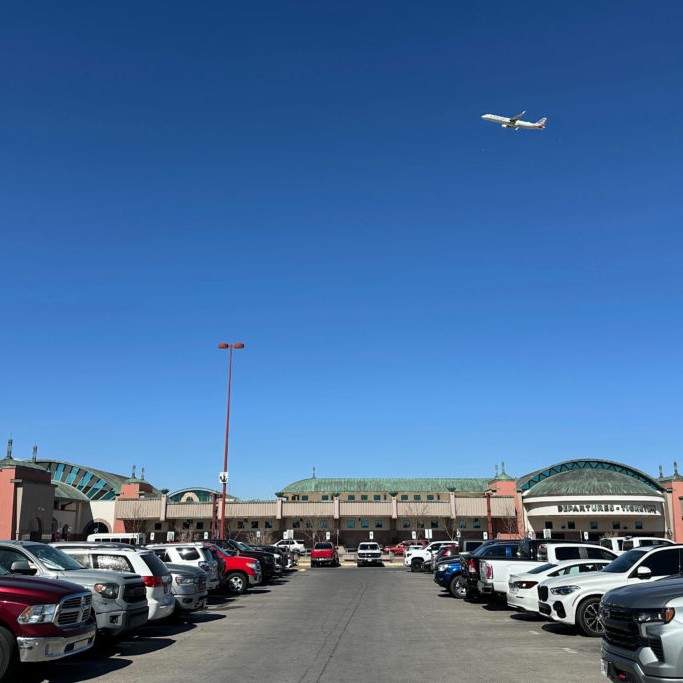
Airports deal with weather delays and routine security precautions all the time. What they do not often do is shut down an entire airport’s airspace on a security alert, even briefly. El Paso International Airport, serving a metro area on the US-Mexico border and carriers including Southwest, United, American, and Delta, saw travelers stranded, lines piling up, and a normal morning schedule punch holes into itself.
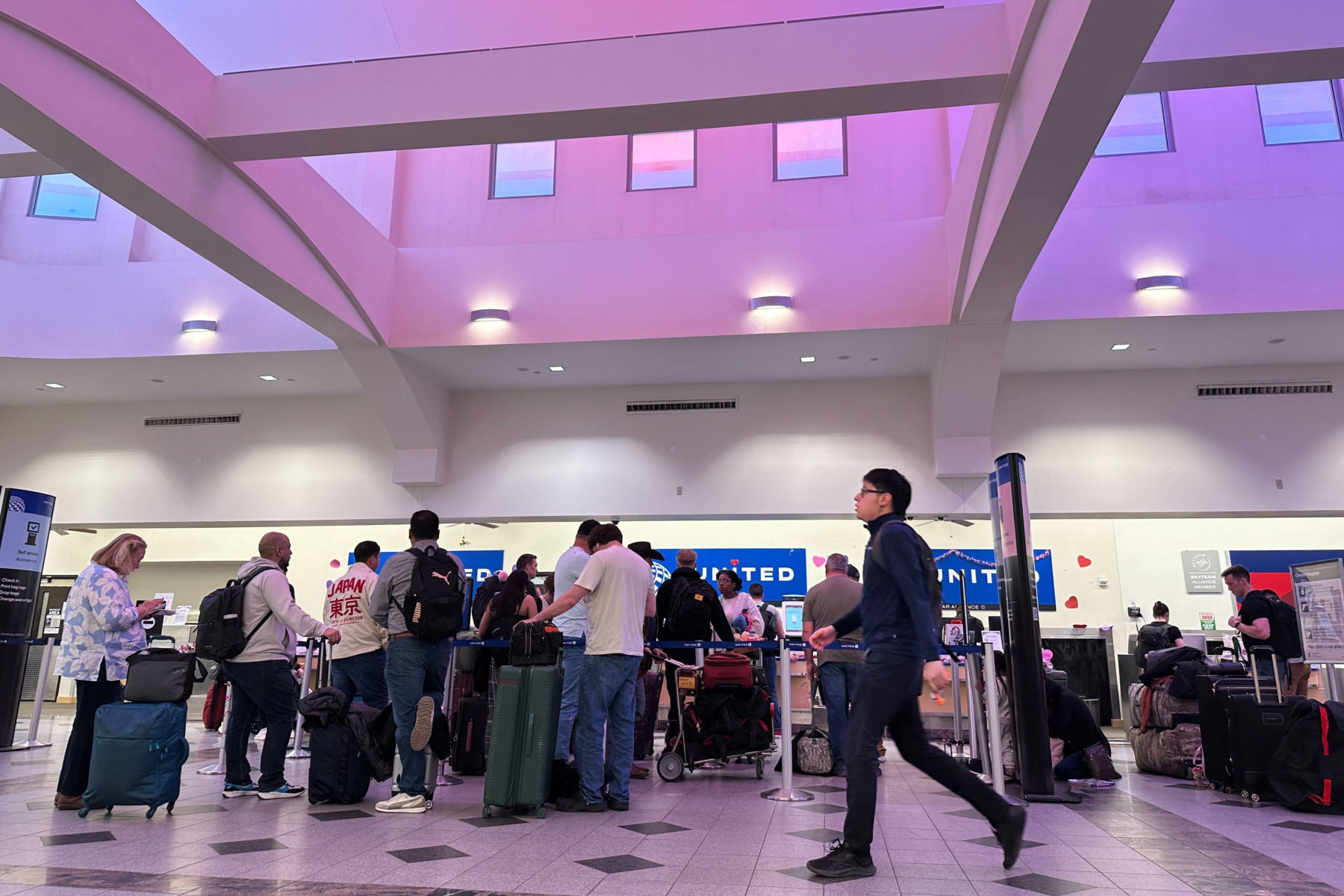
According to AP reporting published by PBS NewsHour, the restriction was first announced as extending for 10 days, but it lasted only a few hours. Seven arrivals and seven departures were canceled, flights resumed that morning, and some medical evacuation flights were rerouted.
The whiplash was the point. A 10-day shutdown implies an ongoing threat profile. A two-hour shutdown implies either a fast resolution or a misfire in communication. In El Paso, political leaders immediately asked which one it was.
The Reported Trigger: A Laser Test and an FAA Red Line
AP reported, citing three people familiar with the situation who spoke anonymously due to the sensitivity, that the shutdown stemmed from Pentagon plans to test a laser system intended to shoot down drones used by Mexican drug cartels. The friction, as described, was not about whether drones exist; it was about whether they should exist. It was about whether a live test should be conducted anywhere near commercial flight paths without tighter coordination.
The FAA’s job is to keep civilian aviation safe. The Pentagon’s job is to prepare for threats, including drones that have become cheaper, more common, and harder to stop with traditional tools. Put those mandates on the same map, and the border can look like both a national security laboratory and a civilian transportation corridor.
According to the AP account, the FAA and the Pentagon were trying to coordinate, with a meeting scheduled for later in the month to discuss the laser-testing issue. The reported complication was timing. The Pentagon wanted to proceed with testing, and the FAA responded by shuttering the airspace. One of the sources said the laser was used at some point.
That detail changes the power dynamics. If the airspace closure functioned as a safety perimeter for a test, the airport was not closed because officials were merely reacting to an airborne emergency. It was closed because the government was creating a controlled environment to do something it did not want colliding with routine passenger traffic.
Local Officials Say They Got No Warning
Rep. Veronica Escobar, a Democrat whose district includes El Paso, said neither her office nor local officials received advance notice of the closure. Then, after the restriction was lifted, she said the federal narrative did not reconcile with what residents experienced on the ground.
At a news conference, Escobar put it plainly: “I believe the FAA owes the community and the country an explanation as to why this happened so suddenly and abruptly and was lifted so suddenly and abruptly.”
El Paso Mayor Renard Johnson echoed the coordination complaint and went further on consequences, saying decisions made without notice and coordination “puts lives at risk and creates unnecessary danger and confusion.” He also called the event “a major and unnecessary disruption,” adding it had not occurred since 9/11.
Those are not small words for a shutdown that lasted hours. They are also an implicit accusation: that El Paso was treated as an afterthought in a federal decision that shut down its skies.
Mexico’s President Questions the Drone Explanation
Across the border, the response was not a fist-shake. It was a skeptical shrug from the top.
Mexican President Claudia Sheinbaum said she had no information about the use of drones on the border, according to the AP report. She said that if US authorities have more information, they should contact Mexico’s government. She also said Mexican defense and navy officials planned to talk with US Northern Command at a meeting in Washington attended by several other countries.
El Paso sits beside Ciudad Juárez, a city of about 1.5 million people and a major cross-border commerce hub. The area is a corridor for legal trade, daily commuting, and, as US officials have long argued, cartel activity that seeks to protect smuggling routes for drugs and migrants headed north, and cash and guns moving south.
If Washington is going to invoke cartel drones to justify shutting down a major airport, Mexico is signaling it wants receipts, not just a slogan. That is the diplomatic version of: show your work.
The Border Drone Reality Check, and the Unusual Part
On the substance, few people familiar with border security dispute that drones are an issue. Republican Rep. Tony Gonzales, whose district stretches roughly 800 miles along Texas’s border, said cartel drone sightings are common. “For any of us who live and work along the border, daily drone incursions by criminal organizations is everyday life for us. It’s a Wednesday for us,” Gonzales said.
AP also reported that Steven Willoughby, deputy director of the counter-drone program at the Department of Homeland Security, told Congress in July that cartels use drones nearly every day to transport drugs across the border and surveil Border Patrol agents. Willoughby said more than 27,000 drones were detected within 500 meters of the southern border in the last six months of 2024, mostly at night.
That context matters because it undercuts the idea that a single drone sighting automatically justifies shutting down a major commercial airport. Drone incursions are reported as frequent. Full-airport closures are not.
A former chief security officer at United Airlines, Rich Davis, told AP that what is extremely rare is the closure of an entire airport over a security issue. He said officials typically try to isolate the risk if a specific plane or airline is threatened rather than shut down the airport.
That is the contradiction at the center of the story: drones might be routine, but the government’s reaction was not.
A Coordination Problem With a Recent Body Count
The airspace fight also landed on an existing fault line: how well the Pentagon and FAA actually coordinate when military activity overlaps with civilian aviation.
AP connected the episode to scrutiny that followed last year’s midair collision near Washington, D.C., between an airliner and an Army helicopter that killed 67 people. The National Transportation Safety Board highlighted how the FAA and the Army did not always share safety data, including close-call information around Reagan National Airport, and failed to address risks.
Democratic Sen. Tammy Duckworth of Illinois, a former Army helicopter pilot who serves on committees focused on aviation and the armed services, described the El Paso incident as the latest example of a coordination problem she said was endemic in the Trump administration.
That is not just partisan framing. It is a reminder that the stakes in these bureaucratic turf battles are measured in lives, not press releases. When agencies argue over timing, jurisdiction, and acceptable risk, travelers end up waiting at a gate. In worse cases, investigators end up counting victims.
Who Owns the Story When the Story Changes
By the time flights resumed, the airport’s disruption had already produced a separate problem: public confidence.
Travelers described scrambling. Maria Aracelia, coming from Ciudad Juárez with a scheduled round-trip flight to Illinois, said a text at 4 a.m. told her about the 10-day closure, and she immediately tried to find options, including whether she needed another airport. Then the reopening notice came. “This is stressful, and there isn’t time to make so many changes, especially if you need to get back for work,” she said.
Another couple, Jorge Rueda, 20, and Yamilexi Meza, 21, from Las Cruces, New Mexico, had a morning flight to Portland canceled and faced losing part of their Valentine’s Day weekend trip. Rueda said he was glad that 10 days turned into two hours, and they were rebooked for an evening departure.
Those stories sound like normal travel chaos until you zoom out. If a shutdown can be announced as 10 days, then effectively reversed in hours, the public will reasonably ask whether the original warning was overstated, the later reversal was rushed, or the real reason was never fully explained.
AP reported that the White House, the FAA, and the Department of Transportation did not immediately respond to requests for comment about the reported dispute. The Pentagon said it had nothing to add beyond a statement that largely mirrored Duffy’s comment.
That leaves a vacuum. And in a vacuum, people fill in blanks with whatever theory best matches their politics, their fears, or their past experiences with government clarity.
What to Watch Next
Two things will determine whether this becomes a one-off mess or a repeatable playbook.
First, whether federal agencies explain the decision chain that led to a citywide airspace shutdown, including what risk calculations were made and why elected local officials say they were left out. Second, whether counter-drone technology testing near civilian infrastructure becomes normalized, with the FAA effectively acting as the switch that turns off commerce so the national security machine can run a drill.
El Paso is not just a border town. It is a logistics node, a gateway, and a symbol. When the airport shuts down, the question is not only what flew near the runway. The question is who had the authority to close the sky, and why the story of that decision keeps changing depending on who is telling it.