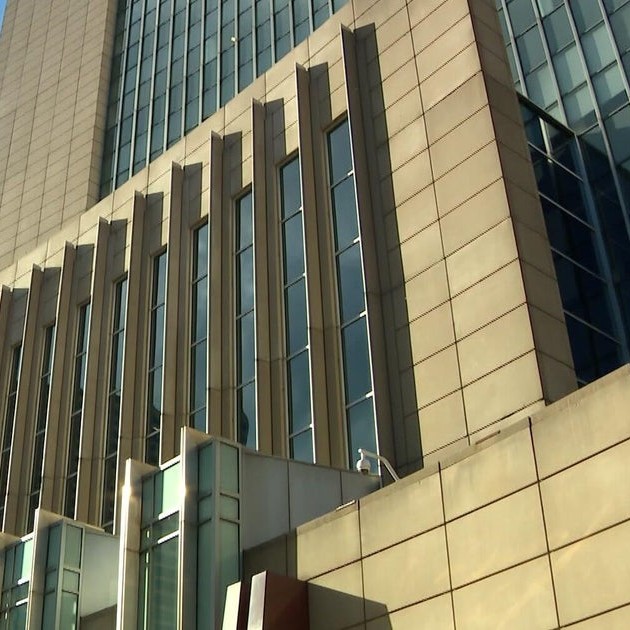
Albany just got a crash course in who gets to hold the keys to federal power, and how fast those keys can be snatched back.
What You Should Know
A panel of federal judges in the Northern District of New York appointed Donald T. Kinsella as U.S. attorney after a judge ruled John Sarcone was serving unlawfully. The Justice Department then said Kinsella was fired hours later, according to CBS News.
The immediate trigger was a rare judicial move, and an even rarer executive branch response. Judges in the Albany-based Northern District of New York appointed and swore in Kinsella, a former prosecutor, to temporarily run the U.S. attorney’s office. By late that same evening, Deputy Attorney General Todd Blanche publicly declared Kinsella out, framing the judges’ action as a constitutional overreach.
The Minute the Judges Moved, DOJ Moved Back
According to CBS News, the judges relied on a law that lets courts appoint a temporary U.S. attorney when a vacancy opens after an interim term expires. The judges’ stated rationale was simple: a vacancy existed because a federal judge had already concluded the office was being led unlawfully.
Then came the counterpunch, delivered in the most modern possible venue for a separation-of-powers brawl. Blanche wrote on X: “You are fired, Donald Kinsella.”
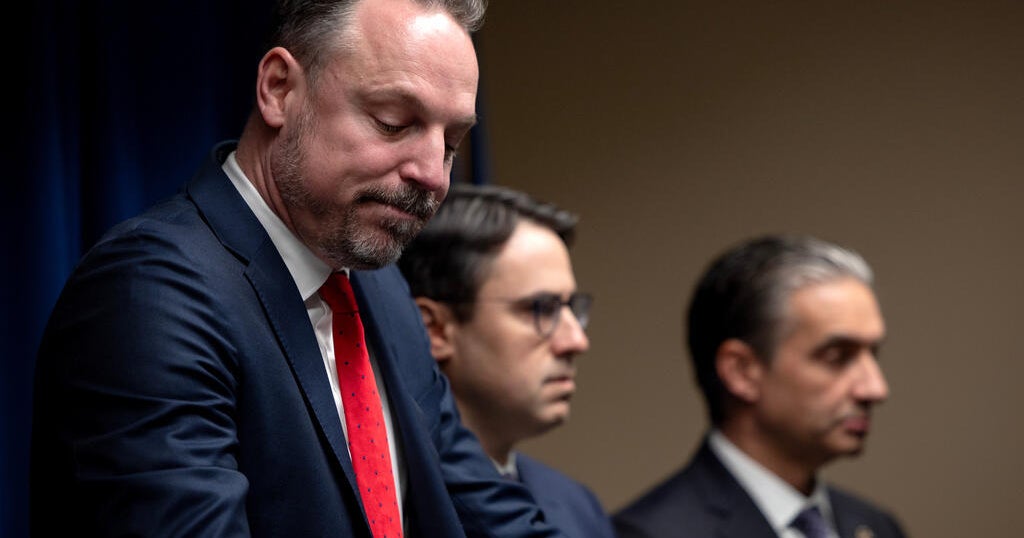
Blanche also argued the judges had no business choosing a U.S. attorney in the first place, writing, “Judges don’t pick U.S. Attorneys, [the president] does. See Article II of our Constitution,” according to CBS News.
The fight is not really about Kinsella, at least not only. It is about who gets to control a federal prosecutor’s office when the Senate-confirmed slot is empty, and whether the executive branch can keep a preferred pick in charge by re-labeling the job title.
Why This One Office Became a Test Case
CBS News reported the conflict began with John Sarcone, a former campaign attorney for President Trump, who was initially tapped as interim U.S. attorney. That interim role has a clock. When the time limit ran out in July, the judges in the district declined to extend it, CBS News reported.
Attorney General Pam Bondi then made a move that critics say looks like a workaround: she named Sarcone first assistant U.S. attorney, which can position someone to serve as acting U.S. attorney under vacancy statutes. Bondi also named Sarcone a “special attorney” and gave him the power of a U.S. attorney, according to CBS News.
Last month, CBS News reported U.S. District Judge Lorna Schofield ruled Bondi’s maneuver was not permitted under the laws governing vacancies, and found Sarcone “is not lawfully serving as Acting U.S. Attorney.” Schofield also barred Sarcone from overseeing a specific investigation, and she quashed two subpoenas issued in that probe, CBS News reported.
That ruling did more than bruise egos. It raised a practical question with real consequences: if the person signing subpoenas, approving indictments, and supervising cases is not lawfully in the job, what happens to the work product?
The Stakes: Cases, Subpoenas, and the Risk of a Collapse
In the abstract, this is a constitutional and statutory chess match. On the ground, it is the legitimacy of federal prosecutions, investigations, and subpoenas that can be dragged into court.
CBS News described one example outside New York, where a conflict in the Eastern District of Virginia led a federal judge to toss out criminal indictments against New York Attorney General Letitia James and former FBI Director James Comey because an interim U.S. attorney was serving unlawfully.
That detail matters because it shows the leverage judges hold if they conclude a prosecutor is not properly installed. The Justice Department can call the rulings wrong, appeal them, and argue separation-of-powers. However, a trial judge with a live case in front of them can still pull the plug on an indictment if the signature authority is tainted, at least until an appellate court says otherwise.
CBS News reported the government appealed Schofield’s ruling and asked for a stay while a federal appellate court considers the issue. That is the cleaner path for DOJ. The messier path is the one playing out in headlines: dueling assertions of authority, with a public firing meant to send a message to other courts considering the same move.
Article II vs. the Vacancy Statute, the Real Collision
Blanche’s argument points to Article II of the Constitution, the section that covers presidential powers, including appointments. The judges pointed to the statutory mechanism that can let courts fill a gap temporarily.
That tension is not new. Congress has written vacancy rules precisely because the government has to function between confirmations, resignations, and political stalemates. The question is how far those rules go, and whether an executive branch strategy that keeps the same person in effective control can be squared with the text and the purpose of the statute.
One key federal provision often cited in these disputes is 28 U.S.C. Section 546, which lays out how interim and court-appointed U.S. attorneys may be selected and how long they may serve. The details matter because they determine whether a vacancy truly exists and whether the judiciary’s temporary appointment authority is triggered.
DOJ, per CBS News, has argued that the president and the attorney general have the authority to choose prosecutors. Critics, CBS News reported, say the administration is sidestepping the Senate confirmation process.
It is a power struggle with a paper trail, and courts tend to care about the paper trail.
Why DOJ Made It Public, and Why It Might Backfire
Firing a newly sworn-in U.S. attorney within hours is not standard Washington procedure. Announcing in a public post makes it something else entirely: a warning shot.
The message reads two ways. First, to other judges considering similar action, it signals that DOJ will not quietly accept a court-installed prosecutor, even temporarily. Second, to Senate Democrats and other critics who claim the administration is ducking confirmation fights, it signals that DOJ is willing to press the boundary, and then litigate the boundary, rather than swap in a compromise nominee.
But public escalation has a downside. It can harden judges who see their statutory role as being steamrolled. It can invite more aggressive remedial rulings in active cases. And it can amplify the exact issue DOJ says it wants to minimize: the perception that federal prosecutions are being shaped by appointment maneuvers rather than stable, confirmed leadership.
Even if DOJ ultimately wins on appeal, the interim period can be costly. Defense lawyers read the same headlines. So do judges. And any case touched by disputed authority can become slower, noisier, and more vulnerable to attack.
What Happens Next
Watch the appeals. CBS News reported DOJ has already appealed Schofield’s ruling, and any decision from an appellate court could clarify whether the executive branch strategy in Albany stands or falls.
Also watch for a Senate-confirmed nominee. The fastest way to lower the temperature is to confirm a U.S. attorney. The slower that process goes, the more often this fight will be relitigated office by office, judge by judge, with defendants using the chaos as a weapon.
In the meantime, Albany is a warning label for the rest of the map. When a court says a top federal prosecutor is not lawfully serving, that is not just an administrative hiccup. It is an invitation for every branch of government to test how much control it can seize, and how publicly it wants to do it.