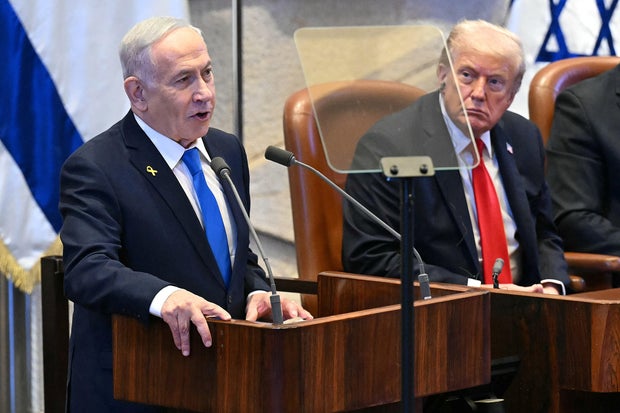
Two and a half hours in the White House can be a lot of things. A reset. A warning. A friendly photo-op with knives under the table. When President Trump summoned Israeli Prime Minister Benjamin Netanyahu for a quick-turn meeting as U.S. talks with Iran restarted, the official message was simple: keep negotiating. The subtext was not.
What You Should Know
President Trump met Israeli Prime Minister Benjamin Netanyahu at the White House for a 2.5-hour session focused on renewed U.S. negotiations with Iran over its nuclear program. Netanyahu’s visit also collided with fresh controversy over Israeli actions in the West Bank.
The meeting, as described by PBS NewsHour, landed at a moment when Trump is projecting confidence that he can cut a deal with Iran while Israel is signaling it wants terms so strict that diplomacy can start looking like a dead end. Netanyahu, meanwhile, arrived with a separate headache: international blowback over West Bank measures that even Trump has said he opposes.
A Diplomatic Push With a Built-In Threat
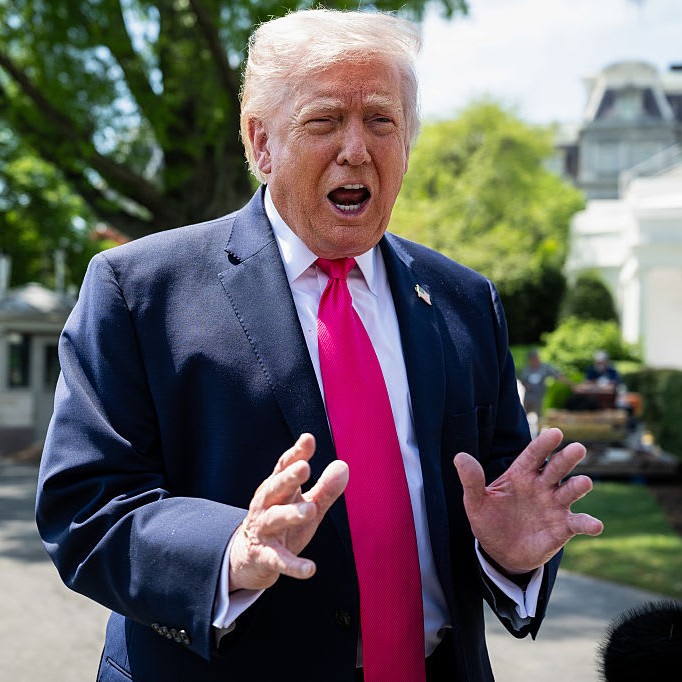
Trump’s post-meeting summary was upbeat but careful. In a statement cited by PBS NewsHour, Trump said the meeting was “very good,” while stressing that “there was nothing definitive reached” other than his insistence that negotiations with Iran continue to see whether a deal can be “consummated.”
That phrasing matters because it frames the White House as the adult in the room, insisting on process. However, the public posture also comes with a shadow message to Tehran and to Jerusalem: the administration wants a lane for diplomacy, and anyone who swerves into unilateral action could get blamed for the crash.
In the PBS segment, Trump also teased force as a backdrop to the talks, saying, “As you know, we have a massive flotilla right now going over to Iran. We will see what happens.”
It is the classic pressure sandwich. Talk peace, show steel, and let the other side wonder which one is real.
Israel’s Price List for a Deal
PBS NewsHour reported that Israel and the U.S. are demanding Iran end uranium enrichment, limit its ballistic missile program, and end funding for militant groups in the region. Those are maximalist asks, and that is not an insult. It is a description.
Iran has long treated enrichment as a sovereignty line, and it has typically resisted limits that look like permanent technological confinement. A U.S. push for diplomacy, paired with public demands that Iran surrender core leverage, sets up the deal as a high-wire act where each side needs to claim victory at home.
Netanyahu, before leaving Israel, told reporters his agenda was not limited to Iran, but it led with it. “On this trip, we will discuss a number of issues, Gaza, the region, but, of course, first and foremost, the negotiations with Iran. I will present to the president our ideas about the principles in the negotiation,” he said, according to PBS NewsHour.
The power dynamic is baked in. Trump is the gatekeeper to Washington’s negotiating track. Netanyahu is the ally with the capacity to complicate that track, directly or indirectly, by shaping what Israel can accept and what it can do on its own.
The Long Memory of the Iran Deal
To understand why this meeting is so loaded, you have to remember how much history is sitting behind the word “deal.” According to a BBC News explainer on the Iran nuclear agreement, the 2015 deal, formally known as the Joint Comprehensive Plan of Action, placed limits on Iran’s nuclear activities in exchange for sanctions relief.
Then came the rupture. According to The New York Times’ May 8th, 2018, coverage, Trump withdrew the United States from that agreement, fulfilling a campaign promise and resetting the political baseline for any future negotiation. That decision did not just change policy. It changed trust mechanics because it told allies and adversaries alike that U.S. commitments can be reversed at the ballot box.
Now Trump is back in the driver’s seat, pitching diplomacy again. That creates an awkward symmetry: the president who walked away from a deal is now asking skeptics to believe he can land a new one and keep it together.
Vance Draws a Red Line, Not a Road Map
Vice President J.D. Vance, in remarks cited by PBS NewsHour, framed the administration’s focus in blunt terms. “Well, look, I mean, if the Iranian people want to overthrow the regime, that’s up to the Iranian people. What we’re focused on right now is the fact that Iran can’t have a nuclear weapon,” Vance said.
That is a red line, not a road map. It tells the world what Washington says it will not tolerate, but it does not answer the hard part. What does compliance look like, who verifies it, and what penalties kick in when each side accuses the other of cheating?
Those questions are not academic. They determine whether the talks can produce something that survives the first scandal, the first attack, or the first leadership change.
The West Bank Problem Trump Does Not Want
While the Iran track was getting the spotlight, PBS NewsHour pointed to a separate flash point that can poison the room: the West Bank. Ahead of the meeting, Israel’s Security Cabinet approved a measure that would make it easier for Jewish settlers to force Palestinians to give up land, according to the PBS report.
Israel’s ultra-nationalist finance minister, Bezalel Smotrich, praised the move in a statement as a way to “bury the idea of a Palestinian state,” PBS NewsHour reported. That is not coded language. It is an explicit political goal, delivered at the exact moment Netanyahu is trying to keep Washington close.
The international system responded the way it usually does, with warnings that sound procedural until you translate them into consequences. PBS NewsHour aired comments from Stephane Dujarric, spokesman for the U.N. secretary-general: “The secretary-general warns that the current trajectory on the ground, including this decision, is eroding the prospects for a two-state solution.”
And Palestinians on the ground offered a much darker interpretation. Munther Al Natsheh, a resident of Hebron, told PBS NewsHour through an interpreter, “This government is a fascist government that wants to control all areas of the West Bank and does not want a Palestinian presence in the West Bank or Gaza. They want to displace the Palestinian people.”
Those statements are miles apart in tone, but they collide at the same point. If Israel is taking steps that look like permanent annexation by another name, it becomes harder for the White House to sell any broader regional strategy as stabilizing.
A Contradiction in Plain Sight
Trump has publicly opposed annexation, and PBS NewsHour reported that Trump reiterated that position in an Axios interview, adding, “We have enough things to be thinking about now.”
That line is classic Trump. It sounds like impatience. It is also a strategic triage. The White House wants to keep Iran talks from becoming a referendum on the entire Israeli-Palestinian conflict, because those fights are where U.S. diplomacy goes to get stuck, shamed, and drained.
However, Netanyahu’s political coalition includes figures who openly treat the two-state framework as a problem to be eliminated, not a goal to be negotiated toward. So Trump can ask for diplomacy with Tehran and restraint in the West Bank, but Netanyahu has to manage a domestic reality that rewards confrontation.
The ‘Board of Peace’ and the Gaza Metropolis Pitch
PBS NewsHour also reported that Netanyahu officially joined Trump’s “Board of Peace,” an initiative that promises to transform Gaza from a war-ravaged territory to a wealthy metropolis by 2035.
On paper, it is a future-forward rebrand. In practice, it is also a political instrument, because it ties Netanyahu to a Trump-branded vision of what Gaza could become, while the present reality remains dominated by security, governance, reconstruction costs, and the question of who actually controls what.
The tension is not subtle. If the White House is promoting a 2035 skyline, but the West Bank is moving toward policies described by Israeli officials as meant to “bury” Palestinian statehood, the story becomes a credibility test. Not of intentions, but of outcomes.
What to Watch Next
Three clocks are running at once.
First, the Iran clock. Negotiations live or die on verification, timelines, and enforcement. If Washington insists the talks continue but Israel believes the terms are too soft, the pressure on Netanyahu to show toughness will rise.
Second, the West Bank clock. Measures that change facts on the ground tend to create irreversible politics. Each new step increases the cost of reversing course, which means even a friendly U.S. president can find himself boxed in by his own stated position against annexation.
Third, the relationship clock. PBS NewsHour noted Netanyahu has visited the White House more than any other leader in Trump’s second term, and the frequency itself sends a message. Access is a form of power. It is also a form of accountability, because it makes every disagreement visible.
Trump wants a deal with Iran that he can sell as strength. Netanyahu wants an Iran policy that treats skepticism as the default setting. The question is whether the West Bank, an issue Trump says he does not want to think about right now, becomes the lever that forces the two men to think about it anyway.