The border fight in Washington is starting to look like a different kind of pressure tactic, one that lands on airport checkpoints, disaster zones, and cyber teams instead of the political players making the demands.
What You Should Know
Department of Homeland Security funding was set to expire after February 13th, 2026, prompting agency leaders to warn Congress that most workers would stay on duty but could miss paychecks. Officials said TSA, FEMA, the Coast Guard, the Secret Service, and cyber operations would face immediate and longer-term strain.
The argument is not about whether DHS exists. It is about who controls it, what constraints get attached to immigration enforcement, and whether a funding standoff becomes leverage that mostly squeezes employees who cannot simply stop showing up.
The Standoff, the Deadline, and the Real-World Targets
Congress had already approved full-year funding for most of the federal government, but DHS was living on a short-term patch that ran out after February 13th, 2026, according to the Associated Press report carried by PBS NewsHour. That left one of the government’s biggest operational departments, and one of its most politically combustible, stuck inside a time bomb.
Democrats tied DHS funding to changes in immigration enforcement operations, including demands aimed at Immigration and Customs Enforcement, or ICE. Republicans argued that a DHS shutdown would not actually stop the ICE activity Democrats are focused on, and they pointed to separate funding that they said already bolstered immigration enforcement.
That is the core tension: the fight is framed as a showdown over enforcement, but the first people likely to feel the pain are the ones doing what Washington calls essential work, and what their bank accounts call unpaid labor.
Who Keeps Working Without Pay
Witnesses told a House appropriations panel that in a shutdown, the department’s missions do not suddenly disappear. The work keeps coming, and in some corners, the work gets riskier.
Vice Adm. Thomas Allan of the U.S. Coast Guard testified that law enforcement and emergency response missions continue during a shutdown, but he warned about the human cost of forcing people to do critical jobs while pay is delayed. He said, “Shutdowns cripple morale and directly harm our ability to recruit and retain the talented Americans we need to meet growing demands.”
TSA leadership delivered an even more vivid picture of what that looks like on the ground. Ha Nguyen McNeill, a Transportation Security Administration official, estimated that roughly 95% of TSA’s 61,000 workers would keep working in a shutdown, potentially without a paycheck, depending on how long it lasts. She pointed lawmakers to what she said was reported during the last major disruption: “We heard reports of officers sleeping in their cars at airports to save money on gas, selling their blood and plasma, and taking on second jobs to make ends meet.”
Those lines do not just describe hardship. They describe operational risk. When screening officers cannot afford fuel, childcare, or rent, the question is not whether patriotism exists. The question is whether airports can run smoothly when staffing becomes a personal financial emergency.
Republicans Say ICE Keeps Rolling, Democrats Say That Misses the Point
Republicans on the panel leaned into a blunt message: a shutdown is not a brake on the agencies Democrats are trying to restrain. Rep. Mark Amodei, the GOP chairman of the House Appropriations subcommittee on Homeland Security, said, “Removal operations will continue. Wall construction will continue.”
Democrats, meanwhile, framed the DHS funding debate as a response to consequences they say are already showing up on the enforcement side. Rep. Henry Cuellar, the ranking Democrat on the panel, referenced the killing of two American citizens in Minneapolis, identified in the AP report as Renee Good and Alex Pretti. He argued the moment demanded scrutiny, not slogans, telling lawmakers, “When enforcement actions lead to outcomes like that, we have an obligation to ask the hard question and to make sure our laws and policies are working as intended.”
It is a familiar Washington pattern with a sharp edge: one side says the shutdown is a hostage situation that hurts the wrong people, and the other side says the policy stakes are too high to fund the status quo without guardrails. The employees, contractors, and state partners who rely on predictable cash flow become the leverage.
Cyber Threats Do Not Pause for Congressional Negotiations
One of the quieter warnings from the hearing landed in a place that rarely gets the airport-screening spotlight: the federal effort to help protect public and private networks from cyber threats.
Madhu Gottumukkala, identified as the acting director of the DHS cyber agency in the AP account, warned that a shutdown would reduce the government’s ability to deliver guidance and support quickly. He put it in a line designed to survive the news cycle: “I want to be clear, when the government shuts down, cyber threats do not.”
That statement highlights a power dynamic that tends to stay off camera. DHS is not only about border enforcement and security lines. It is also about the back-end machinery that helps state governments, utilities, hospitals, and private companies coordinate on threats. A shutdown does not have to stop every mission to create a gap. It only has to slow the ones that depend on rapid communication and staffing depth.
FEMA Says It Can Respond, but Planning Gets Hit
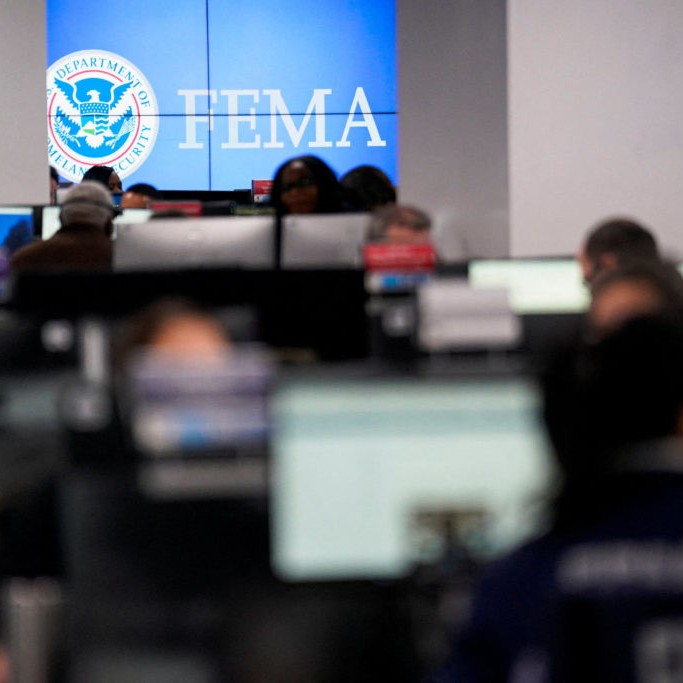
FEMA’s message was less about immediate collapse and more about the slow damage that a lapse can cause. Gregg Phillips, a FEMA associate administrator, said the disaster relief fund had enough to keep emergency response going during a shutdown, but he warned the cushion could strain in the event of a catastrophic disaster.
He also said long-term planning and coordination with state and local partners would be “irrevocably impacted,” a phrase that is easy to skip until the next major storm, fire, or flood makes planning failures painfully visible.
Phillips pointed to a concrete example: a lapse disrupting training for first responders at the National Disaster & Emergency Management University in Maryland. He told lawmakers, “The import of these trainings cannot be measured. And their absence will be felt in our local communities.”
The stakes there are not theoretical. FEMA can keep the lights on for immediate response, but training pipelines, preparedness work, and coordination exercises are the kind of unglamorous investment that pays off only when things go wrong. A shutdown attacks that investment first.
The Secret Service Warning: The Public Might Not Notice at First
At the Secret Service, the pitch was almost chilling in its calmness. Matthew Quinn, the agency’s deputy director, said, “The casual observer will see no difference,” even if funding lapses. Protection missions continue.
But the agency described the behind-the-scenes cost, especially for reforms, hiring, and modernization. Quinn said, “Delayed contracts, diminished hiring, and halted new programs will be the result.”
That is another contradiction at the heart of shutdown politics. The most visible security functions still run, because failure is not an option. The costs show up elsewhere, in things the public does not see immediately, like backlogged procurement, delayed training, and staffing gaps that can surface months later.
What to Watch Next
The negotiations were described in the AP report as stuck, with Democrats and the White House still far apart and Senate Majority Leader John Thune pushing both sides to close the gap. Thune’s advice sounded like classic Capitol Hill management-speak, but it also signaled that leadership knew the calendar was winning. “I think it’s important that the people at the negotiating table double down, sharpen their pencils and strike a deal,” he said.
If DHS funding is resolved cleanly, this hearing becomes another near-miss in Washington’s ongoing shutdown habit. If it is not, the next phase will be less about rhetoric and more about knock-on effects: TSA staffing reliability, FEMA planning slowdowns, cyber response capacity, and the long tail of delayed contracts and hiring at agencies that cannot simply power down.
In other words, the fight is being sold as an ICE dispute. The bill, at least at first, is likely to be paid by people who screen bags, respond to disasters, protect officials, and track threats that do not care what day Congress picks to argue.