They did not shut down the airports. They shut down the shortcut. In the middle of a Washington funding fight, the Department of Homeland Security just took Global Entry off the board, and millions of travelers are left to guess what gets used as leverage next.
What You Should Know
The Department of Homeland Security said on February 22nd, 2026, that Global Entry will be shut down as long as the partial government shutdown continues. DHS reversed course on a planned TSA PreCheck suspension, keeping PreCheck operating while warning of staffing constraints.
The pressure point is not subtle. A partial government shutdown that began February 14th, 2026, has fused airport operations with an immigration oversight fight, putting DHS, the White House, Democrats, airlines, and travelers into the same high-stakes waiting line.
The Quiet Flex Is Which Line You Kill
Global Entry is the U.S. Customs and Border Protection program that lets pre-approved, low-risk travelers move through expedited kiosks when re-entering the United States. It is the kind of government service that sounds boring until it disappears, and then suddenly every returning flight feels like a group project.
DHS said the program would be shut down for the duration of the shutdown. The announcement landed after a Saturday night scare in which DHS indicated both Global Entry and TSA PreCheck would be suspended, only for DHS to cancel the PreCheck closure.
TSA, for its part, left the door open to changes, even while keeping PreCheck alive. The agency said, “As staffing constraints arise, TSA will evaluate on a case-by-case basis and adjust operations accordingly.”
That is not a promise. It is a warning with a flexible definition of “case-by-case.”
What Washington Is Fighting About, and Why Travelers Are in the Middle
The shutdown traces back to a funding impasse over the Department of Homeland Security. According to reporting distributed by The Associated Press and published by PBS NewsHour, Democrats and the White House failed to reach a deal on DHS funding, with Democrats pushing for changes to immigration operations that are central to President Donald Trump’s deportation campaign.
That is the power dynamic in plain language. If you cannot force a deal in a committee room, you make the consequences show up in the real world, where the public notices. Airport lines are a uniquely efficient billboard.
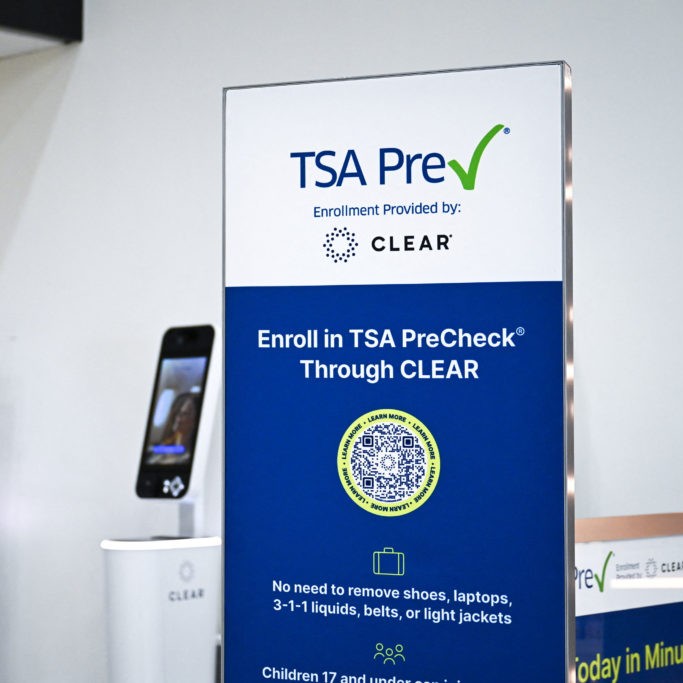
DHS had already framed its posture as triage, saying it was taking “emergency measures to preserve limited funds.” In that earlier description, DHS listed “ending Transportation Security Administration (TSA) PreCheck lanes and Customs and Border Protection (CBP) Global Entry service” as steps to shift personnel to the “majority of travelers.”
Then came the reversal on PreCheck. Global Entry stayed on the chopping block.
Why PreCheck Survived, and Global Entry Did Not
PreCheck is the domestic choke point. It moves security lines for departures. Global Entry hits people returning from abroad. In political terms, both can cause pain, but they do it differently, and on different news cycles.
DHS has said more than 20 million Americans had TSA PreCheck as of 2024, and many of those memberships overlap with Global Entry. That overlap matters because shuttering Global Entry does not just slow customs. It also turns one paid, vetted convenience into a partial product, at least for travelers who buy Global Entry for the bundle effect.
Industry groups noticed immediately. Geoff Freeman, the president and CEO of the U.S. Travel Association, praised the PreCheck decision while twisting the knife on how the situation was created in the first place: “We are glad that DHS has decided to keep PreCheck operational and avoid a crisis of its own making.”
Airlines for America, the trade group representing major carriers, also pressed Congress to move and complained about the timing of the initial suspension warning. The group said it was “issued with extremely short notice to travelers, giving them little time to plan accordingly.”
The line everybody is drawing is the same. If airport operations become a bargaining chip, the question becomes who is holding it, and who gets blamed for spending it.
The Human Receipt: One Cancun Return, One Long Line
DHS can talk about staffing models. Travelers talk about corners.
Blair Perkins, a 39-year-old from Dallas, returned from Cancun on February 22nd, 2026, and told reporters that the standard line at Dallas-Fort Worth International Airport was long, even if it moved. “We went around about four or five different corners to get to the end of the U.S. line,” she said.
Her comparison is the whole point of the program. Perkins said Global Entry usually takes less than five minutes for her, but her February 22nd trip took about 30 minutes. She called the shutdown frustrating and added the kind of line that lands because it is specific: “It feels like Washington is using travelers as a pawn to try to, I guess, persuade the other side to do what they want.”
TSA line data did not show immediate chaos at every airport. TSA’s app indicated many major airports were listing security wait times under 15 minutes through midday February 22nd. That calm can change quickly if staffing shifts, weather hits, or travelers surge into the same lanes at the same time.
Then the Weather Showed Up With Its Own Deadline
The shutdown squeeze is colliding with a winter storm that was forecast to hammer the East Coast from February 22nd into February 23rd, 2026. The travel impact is already measurable. Reporting carried by PBS said nine out of 10 flights departing John F. Kennedy International Airport, LaGuardia Airport, and Boston Logan Airport were canceled for February 23rd.
That matters because storms create rebooking waves, missed connections, and international arrivals rerouted into crowded hubs. When flight schedules are breaking, airports do not need an extra bottleneck at customs. Global Entry exists because the regular process is not built for bursts.
Noem’s Message: Consequences, On Purpose
Secretary Kristi Noem, who leads DHS, framed the shutdown in blunt terms. In a statement carried in the same reporting, Noem said, “shutdowns have serious real world consequences.”
She also said she would remove courtesy escorts for members of Congress at airports during the shutdown. That is not an operational necessity. It is a message about status, access, and who feels discomfort first.
Democrats on the House Committee on Homeland Security attacked DHS over the initial plan to suspend the programs, accusing the administration of “kneecapping the programs that make travel smoother and secure.” Sen. Andy Kim, a New Jersey Democrat, argued the administration was trying to make life harder as a form of leverage. “This administration is trying to weaponize our government, trying to make things intentionally more difficult for the American people as a political leverage,” he said in comments aired on CNN and cited in the reporting.
The contradiction is the story. DHS says it is preserving limited funds. Critics say the pain is being distributed strategically. Meanwhile, the only guaranteed outcome is that travelers, who did not get a vote in the negotiation, are still waiting.
What to Watch Next
Three things will determine how loud this gets and how fast.
First, whether DHS can keep PreCheck running without visibly degrading it. TSA’s “case-by-case” language is a built-in escape hatch if staffing constraints worsen.
Second, whether the Global Entry shutdown triggers measurable knock-on effects: longer customs backups, missed connections, and delayed baggage flows. The pain becomes political when it becomes predictable.
Third, whether Congress and the White House decide the optics are no longer worth it. Airport operations do not just move people. They move narratives. And right now, the narrative is that the fastest line in America got shut down while the slow line did what it always does.
References
- PBS NewsHour: Department of Homeland Security Shuts Down Global Entry While Partial Government Shutdown Remains in Effect
- PBS NewsHour: Partial Government Shutdown Drags On Amid Immigration Oversight Battle
- PBS NewsHour: What Services Are Affected by the Homeland Security Shutdown? What You Need to Know