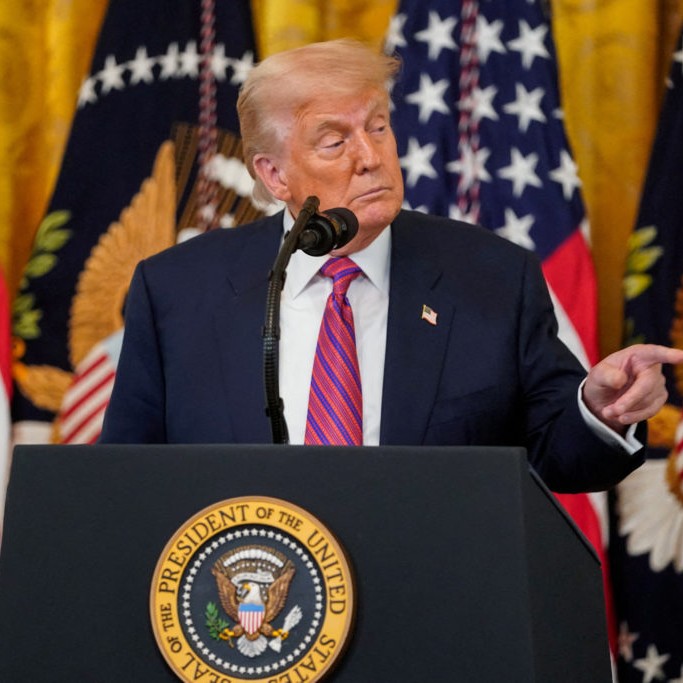
President Donald Trump is trying to sell a neat ending to an expensive story. The trouble is that the war narrative keeps colliding with the logistics of oil, alliances, and a calendar that ends with midterm elections.
What You Should Know
According to an Associated Press analysis published by PBS NewsHour, Trump has faced growing political headwinds two weeks after U.S. and Israeli strikes on Iran. Disruptions tied to the Strait of Hormuz and a 30-day U.S. sanctions waiver for some Russian oil shipments have intensified the domestic and international stakes.
The public messaging has been whiplash: Trump has suggested the U.S. has already prevailed, while also signaling that keeping global shipping lanes open may require other countries to step in.
The Hormuz Problem Is Bigger Than a Victory Lap
In the AP account, Trump began talking up outside help as tanker traffic through the Strait of Hormuz faced heavy disruption. The chokepoint matters because roughly a fifth of the world’s traded oil moves through those waters, a leverage point Iran has explicitly referenced as the war drags on.
Trump framed the gap as a burden-sharing issue, writing that affected countries “will be sending War Ships, in conjunction with the United States of America, to keep the Strait open and safe,” and adding that “this should have always been a team effort.” The White House, according to the AP, did not immediately provide details on what the post meant operationally, and allied responses were cautious.
A Russia Waiver, a Ukraine Problem
Then came the policy move that turned an energy squeeze into a geopolitical argument. The U.S. Treasury Department announced a 30-day waiver related to Russian sanctions, aiming to free up certain Russian oil cargoes as supply tightened amid the Iran war, the AP reported.
That decision landed in the middle of a yearslong Western effort to restrict revenue feeding President Vladimir Putin’s war machine. Ukrainian President Volodymyr Zelenskyy called easing sanctions “not the right decision” and said it “certainly does not help peace,” according to the AP, as analysts warned that higher oil prices can buoy Moscow.
Midterms, MAGA, and the Messaging Trap
At home, the economic feedback loop is the real-time scoreboard. Trump promised voters energy relief once the war ends, while Energy Secretary Chris Wright said on NBC’s “Meet the Press” that Americans are feeling higher prices and would for “for a few more weeks,” the AP noted.
Republicans are not unified on the risk. Sen. Rand Paul, a Kentucky Republican, warned on Fox Business that sustained high gas and oil prices could mean a “disastrous election” for the GOP, and Democrats are already betting the cost-of-living argument travels faster than any battlefield update.
Trump is also fighting on the information front, publicly railing at coverage and leaning on regulatory pressure, while some prominent right-wing voices criticize the intervention as a break from anti-war promises. If the Strait of Hormuz stays shaky and prices stay hot, the next test is not a rally line. It is whether the public buys a victory claim that still needs a coalition escort.