One executive order, two neighbors, and a blunt message: trade is now the enforcement tool.
President Donald Trump has signed an order threatening tariffs on goods from any country that sells or provides oil to Cuba. On the same day, he also dangled a 50% tariff on aircraft sold into the United States from Canada. Different targets, same pressure point: access to the American market.
The question now is less about what Trump wants and more about how fast Mexico City and Ottawa can adjust without looking like they blinked.
A Tariff Threat Aimed at Havana, Felt in Mexico City
According to an Associated Press report published by PBS News, Trump signed an executive order that would impose a tariff on goods from countries that sell or provide oil to Cuba. It is a familiar Trump-era move: use trade penalties to force an outcome that looks like foreign policy, then dare everyone to call it coercion.
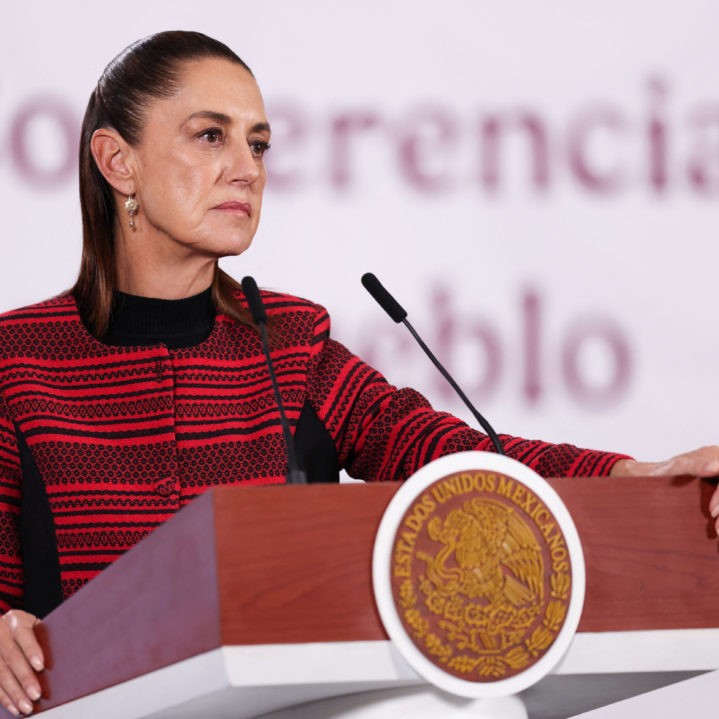
The immediate tension sits in Mexico, which has been under scrutiny in Washington over reported oil shipments to the island. Mexican President Claudia Sheinbaum said her government had, at least temporarily, stopped shipments. But she also insisted the decision was Mexico’s, not Washington’s.
Sheinbaum’s phrasing was careful. She called it a “sovereign decision” and said it was not made under pressure from the United States, per the AP report.
That is the tightrope for any U.S. ally facing a tariff threat: comply too visibly, and it looks like capitulation. Resist too loudly, and the penalty is designed to land on domestic industries that have nothing to do with Cuba.
Trump’s Leverage Play: Sanctions Plus Tariffs
Cuba is already constrained by longstanding U.S. sanctions, and Trump is now proposing an extra layer of punishment that spreads the cost outward to third countries. In other words, the island is the named target, but the enforcement mechanism is aimed at whoever still does business with it.
That dynamic matters because it reframes the risk. Instead of an argument about Havana, it becomes a calculation for Mexico, Canada, and any other trading partner: Is supporting Cuba’s energy needs worth paying an import tax at the U.S. border?
The AP report describes Trump as “squeezing Mexico” to distance itself from the Cuban government and further isolate the island. That is a power move that works precisely because Mexico’s economy is deeply intertwined with the United States. Tariffs are the gun on the table.
There is also a bigger narrative being pushed from Trump’s side. In the same AP report, Trump is described as claiming the Cuban government is “ready to fall” following a U.S. military operation that ousted former Venezuelan leader Nicolas Maduro. That claim, and the underlying operation it references, raises the stakes beyond trade, because it suggests the White House sees the region as a domino line.
What the Order Changes, and What It Doesn’t
The order, as described by the AP report, is not a narrow penalty aimed at a single company or shipment. It is a broad threat: do business with Cuba’s oil supply, and your country’s exports to the United States could get hit.
That breadth is the point. Tariffs are politically loud, easier to message than complex sanctions programs, and they spread pain widely enough that business lobbies start making phone calls. The pressure is designed to travel from factory floors and boardrooms to foreign ministries.
But the same breadth can also create messy questions that matter to trading partners and lawyers, including how the U.S. would define “sell or provide,” how it would measure compliance, and how quickly it would act. The AP report did not detail implementation mechanics beyond the threat itself, and that uncertainty is part of the leverage. If the hammer might fall at any moment, companies often change behavior before regulators ever publish a rule.
Mexico’s Contradiction: Sovereignty, Timing, and Optics
Mexico is trying to preserve two storylines at once.
Storyline one: Mexico is a sovereign country making sovereign energy and foreign policy decisions, including any pause in shipments to Cuba.
Storyline two: Mexico is not ignoring the reality that the United States can impose trade costs that ripple into Mexican exports, investment, and domestic politics.
The contradiction is not in what Sheinbaum said, but in what the timeline suggests. A temporary stop in shipments, announced as Washington escalates, invites the obvious question: if this is not pressure, why now?
Mexico’s incentive is to avoid looking like it is being ordered around by a U.S. president. Trump’s incentive is the opposite. His model works best when the compliance is visible, because visible compliance advertises his leverage to the next capital, watching the same playbook.
Canada Gets Dragged In, Again
Then came the second threat.
Trump also warned that he would slap a 50% tariff on “any and all Aircraft sold into the United States of America” from Canada, according to the AP report. The stated justification was retaliation over certification issues involving jets from Savannah, Georgia-based Gulfstream Aerospace.
Trump’s post was direct: “If, for any reason, this situation is not immediately corrected, I am going to charge Canada a 50% Tariff on any and all Aircraft sold into the United States of America,” he wrote, according to the AP report.
He also said the United States would “decertify all Canadian aircraft,” including planes from Bombardier, per the AP report.
The power dynamic here is similar to the Cuba order, even if the subject is totally different. The U.S. market is the leverage, and tariffs are the threat that turns a regulatory fight into an economic one. Canada, like Mexico, has to decide whether to treat it as negotiating theater or as a policy switch that could flip quickly.
Notably, the AP report said Trump did not provide details about when he would impose the aircraft import taxes. That pattern, a headline-making threat with fuzzy mechanics, can still reshape behavior. Businesses dislike uncertainty more than they dislike known costs, because uncertainty freezes planning.
Why This Strategy Works, Until It Doesn’t
Tariffs are a blunt instrument, and that bluntness is why presidents like them. They are easy to announce, easy to understand, and hard for trading partners to ignore.
The risk is that the bluntness can create collateral damage at home, including higher costs, retaliation, and supply-chain chaos. The political upside comes fast. The economic bill can come later, sometimes right when an election cycle heats up.
There is also the diplomatic cost. When everything is a tariff threat, every disagreement becomes a loyalty test. Mexico is being asked to prove it is not aligned with Cuba. Canada is being challenged to bend on aircraft certification and trade posture. The more those tests pile up, the more allies start looking for ways to reduce exposure.
That does not mean they will succeed. It means the incentive structure shifts. Countries that think they can be targeted next often start building options, even if they never say so out loud.
What to Watch Next
First, watch for clarity on timing and enforcement. The practical impact depends on whether the administration lays out a process, a start date, and a definition of what counts as providing oil to Cuba.
Second, watch Mexico’s next statement, because it is likely to be written for two audiences at once: domestic voters who do not want to be seen as taking orders from Washington, and U.S. officials who want compliance that can be measured.
Third, watch Canada’s response to aircraft certification and whether industry voices, including Bombardier’s stakeholders, start lobbying publicly or quietly. The AP report noted spokespeople for Bombardier and Canada’s transport minister did not immediately respond to messages seeking comment.
Trump has now put tariffs in the middle of two separate fights in a single day. If the pattern holds, the question will not be whether he uses tariffs again. It will be who gets picked next, and what they are asked to give up to make the threat disappear.