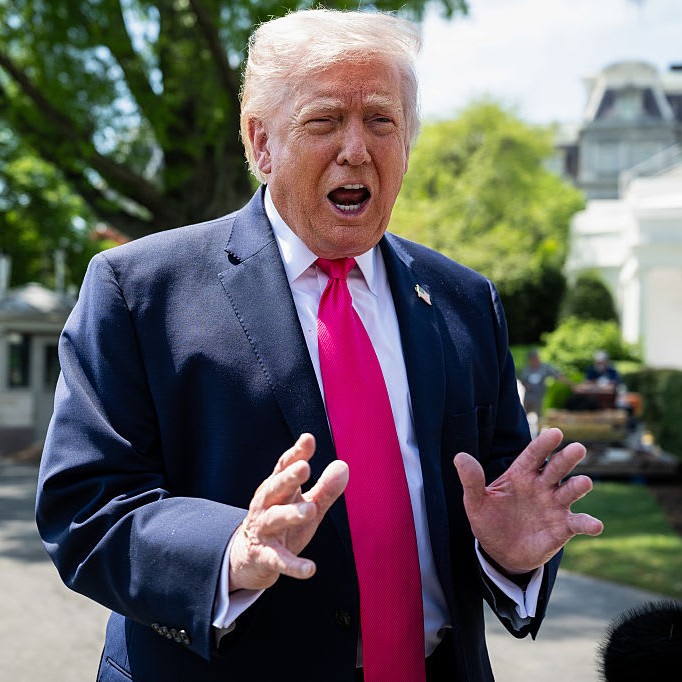


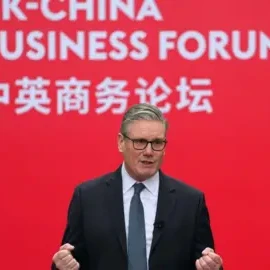
Donald Trump picked a loaded moment to lob a warning across the Atlantic. As Prime Minister Sir Keir Starmer arrived in Shanghai to cap a China trip built around business, investment, and security co-operation, the US president said it was “very dangerous” for the UK to do business with China.
The information gap is this: Was Trump issuing a strategic red line, or auditioning for leverage while keeping his own China options open?
Because in the same breath, Trump also described Chinese President Xi Jinping as a “friend” and said he knew Xi “very well.” In global power politics, those two messages do not naturally sit together.
What Trump Said, and What He Did Not Say
Trump made the “very dangerous” remark after a reporter asked about the UK “going into business with China” as Starmer’s delegation pursued agreements aimed at increasing business and investment, according to BBC News.
Then Trump pivoted, quickly. The BBC reported that he moved on to Canada, calling it “even more dangerous, I think, for Canada,” and warning against looking to China as an economic answer. Earlier in the same week, Trump had threatened tariffs on Canada tied to its own China economic outreach, the BBC reported.
Trump did not lay out a detailed policy for London, nor did he specify which UK-China agreements he considered unacceptable. That ambiguity matters. Vague warnings can be read as deterrence, but they can also function as a pressure tactic that keeps allies guessing.
Starmer’s China Pitch, in Public
Starmer’s trip has been packaged by the UK government as a blend of economics and realism. After meeting Xi in Beijing, Starmer said the UK’s relationship with China was in a “good, strong place,” according to the BBC.
At the UK-China Business Forum, Starmer described “very good meetings” that delivered “just the level of engagement that we hoped for,” adding, “We warmly engaged and made some real progress, actually, because the UK has got a huge amount to offer,” the BBC reported.
In other words, the UK is selling confidence. It wants investment, export wins, and a seat at the table, even while acknowledging the security and human rights hazards that come with China policy.
The Deals That Made the Warning Land Harder
The agreements tied to Starmer’s visit, as described by the BBC, cover a wide span. That range is exactly why Trump’s broad-brush warning is politically combustible.
- An agreement on visa-free travel.
- Lower whisky tariffs.
- A reported 10.9bn AstraZeneca investment to build manufacturing facilities in China.
- Co-operation to reduce red tape for UK exporters.
- Collaboration on health challenges, including antimicrobial resistance.
Then comes the part that complicates the usual “trade versus values” framing. The UK and China also agreed to share intelligence to identify people-smuggling supply routes as part of an effort aimed at tackling organised crime and illegal immigration, according to the BBC.
The BBC also reported that the UK government has said inflatable dinghies used in small-boat Channel crossings often contain parts sourced in China. That detail turns “business with China” from a generic economic question into a specific operational one. If supply chains touch enforcement and border policy, the line between trade and security gets thinner.
Trump’s Contradiction Problem: ‘Very Dangerous’ vs. ‘Friend’
Trump’s warning was blunt. His personal language about Xi was softer.
“Very dangerous.” “Friend.” “Very well.”
Those phrases, reported by the BBC from Trump’s remarks at the premiere of a documentary about his wife, Melania, create a split-screen message. China is framed as a threat when allies engage commercially, but framed as familiar when Trump talks about his own relationship with Xi.
UK Business Minister Sir Chris Bryant seized on that contradiction. He told the BBC Trump was “wrong” and said it would be “bonkers frankly for the UK to ignore the presence of China on the world stage.”
Bryant also made the UK government’s favored argument in one line: “Of course, we enter into our relationship with China with our eyes wide open,” he said, per the BBC.
The phrase “eyes wide open” is doing heavy lifting. It signals caution without surrendering the economic case. It also tries to pre-empt the domestic criticism that engagement equals naivete.
Downing Street’s Quiet Signal to Washington
Downing Street’s response was calibrated, but pointed. The BBC reported that UK officials indicated Washington had been aware of the trip and its objectives in advance.
That is not a full rebuttal of Trump. It is closer to an accountability note: this was not sprung on the United States, and if the US president wants to publicly scold London anyway, that is his choice.
The power dynamic here is not subtle. The US remains the UK’s biggest single-country trading partner, while China is the fourth, according to figures cited by the BBC from the Department for Business and Trade. The UK has strong incentives to keep Washington close, even while it hunts for growth and investment in Asia.
The Domestic UK Attack Line: Security for ‘Crumbs’
In the UK, Starmer is not only managing Trump. He is also managing Parliament.
The BBC reported that opposition MPs criticized the trip as the first by a UK leader since 2018, raising concerns about national security and Xi’s human rights record. Shadow Home Secretary Chris Philp went straight for the reputational jugular, saying Starmer had ‘gone to Beijing to kowtow to President Xi’ and accusing the government of trading “national security for economic crumbs off the Chinese table.”
Philp’s framing is designed for maximum contrast: posture versus profit, loyalty versus access. It also echoes a familiar political trap, where any deal can be recast as a surrender if the counterpart is seen as hostile.
The UK government has tried to show it is not freelancing. The BBC noted that the government faced similar criticism earlier in January when it approved China’s plans for a new embassy in central London. Security Minister Dan Jarvis said intelligence agencies had been “integral” to the decision-making process and that he was “content any risks are being appropriately managed,” according to the BBC.
The Human Rights Shadow That Never Leaves the Room
Even a business-heavy trip cannot outrun the human rights record that follows Beijing into every negotiating room.
The BBC referenced UN accusations of “serious human rights violations” against the Uyghur population and other mostly-Muslim ethnic groups in Xinjiang. Those allegations are not abstract, and they are not limited to political speeches.
In August 2022, the UN Office of the High Commissioner for Human Rights published an assessment stating that allegations of patterns of torture, arbitrary detention, and other abuses in Xinjiang may constitute international crimes, while also noting China’s rejection of the claims. That is the kind of documentation that keeps the topic alive, regardless of how many trade announcements are made.
The BBC also highlighted the case of Hong Kong media tycoon Jimmy Lai, who is facing life in prison. That case is watched internationally, and it is a recurring flashpoint for critics who say engagement normalizes repression.
So What Happens Next?
Starmer’s itinerary matters. Shanghai was his last stop in China before heading to Tokyo to meet Japanese Prime Minister Sanae Takaichi for a working dinner, according to the BBC. That sequencing suggests the UK is trying to balance engagement with China by reinforcing relationships with other major players in Asia.
For Washington, the question is whether Trump wants alignment or leverage. If the US president keeps warning allies away from China while praising Xi personally, he invites a cynical read: the threat language is for everyone else, and the deal-making is for him.
For London, the near-term test is whether these agreements turn into measurable gains without producing the kind of security blowback that turns “eyes wide open” into a punchline.
And for everyone watching, the real tell will be consistency. The West’s China policy is always loud on risk. It is quieter on what replaces the economic gravity China still holds.
References