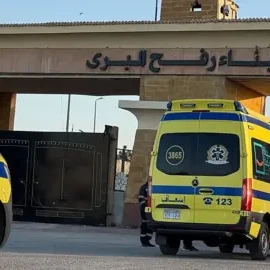
Rafah is open again, but the question Gaza’s families are asking is brutally specific: open for whom, and on whose terms?
After months of being largely sealed, Palestinians have begun moving through the Rafah border crossing between the Gaza Strip and Egypt, a checkpoint that many in Gaza treat less like a gate and more like a pressure valve. When it is closed, the outside world is not a drive away. It is a rumor.
Now the valve has turned, but not all the way. The reopening is for the movement of people, not goods, and the reported numbers are small enough to feel like policy by eyedropper.
A Lifeline Reopened, With Conditions Attached
According to BBC News, Palestinians started entering Rafah after it reopened for travel. That sounds straightforward until you stack it against the reason it mattered so much in the first place: the crossing has largely been closed since May 2024, after Israeli forces captured the Gaza side.
The mechanics of the restart read like a political compromise written into a security protocol. The crossing will be run by European Union supervisors and local Palestinian staff, while Israel carries out remote security checks, the BBC reported.
That arrangement tells you who holds the lever. The EU gets a visible role. Local staff get the desks. Israel keeps the veto power, from a distance.
An Israeli security official, quoted by the BBC, said the crossing had “now opened to the movement of residents, for both entry and exit” after teams from the European Union Border Assistance Mission (EUBAM) arrived.
Egyptian-aligned coverage leaned into the same moment but with a different emphasis. Al Qahera News TV, described by the BBC as close to Egyptian intelligence, said the crossing had “received the first batch of Palestinians returning from Egypt to the Gaza Strip” and framed it as “part of Egyptian efforts to facilitate movement through the crossing.”
Same gate, two narratives. Israel highlights security and process. Egypt highlights facilitation and return.
The Quiet Trade-Off: Hostages, Bodies, and Border Policy
The timing is the part that does not fit neatly into a humanitarian headline.
The reopening was supposed to happen during the first phase of US President Donald Trump’s ceasefire plan between Israel and Hamas, which the BBC reported began in October. But Israel blocked the reopening until the return of the body of the last Israeli hostage in Gaza, according to the BBC’s reporting.
That is the power dynamic in plain language: movement at Rafah did not restart because the need disappeared, or because the logistics were suddenly solved. It restarted after a condition was met.
Last week, the Israeli military said it retrieved the remains of Master Sgt Ran Gvili at a cemetery in northern Gaza, the BBC reported. Gvili was among the 251 people abducted during the October 7, 2023, Hamas-led attack on Israel, which killed around 1,200 people, according to the BBC’s summary of Israeli figures.
Israel’s military campaign in Gaza, launched after that attack, has killed more than 71,790 Palestinians, according to the territory’s Hamas-run health ministry, the BBC reported.
Rafah’s reopening sits inside that ledger of losses, and it also sits inside negotiation logic that treats border movement as something that can be paused, resumed, and calibrated based on other events.
Medical Exits, Bottleneck Numbers
For families trying to leave for treatment, the crossing is not just a diplomatic symbol. It is a clock.
Around 20,000 sick and wounded Palestinians are waiting to leave Gaza for treatment, according to local hospitals and the World Health Organization (WHO), as cited by the BBC.
Against that backlog, Israeli reports cited by the BBC say only 50 patients will be allowed to exit each day, accompanied by one or two relatives. The same reports say 50 people who left Gaza during the war will be allowed to return.
Even if everything runs smoothly, those numbers create a queue measured in months. And the policy choice to exclude goods adds another layer of tension. People can move, but supplies are not coming through Rafah under this reopening, according to the BBC report.
Humanitarian aid entering from Egypt is routed via Israel’s Kerem Shalom crossing point, the BBC noted, after describing Rafah’s previous role as both a main exit for permitted travel and a key entry point for aid before it was seized in 2024.
In other words, Rafah is back as a human corridor, while the aid spigot stays routed through a different crossing under different controls.
A Mother, a Daughter, and the Stakes of Delay
The most revealing part of the reopening story is not the policy language. It is what delay looks like when it is a body.
A Palestinian mother, Sabrine al-Da’ma, told the BBC she hoped to travel abroad with her 16-year-old daughter, Rawa, who suffers from kidney disease. She plans to donate one of her kidneys.
“She used to be treated through monitoring, ultrasound imaging, and tests to check the condition of her kidneys. Since the war started, because of food shortages, hunger, and the food she was forced to eat, she began dialysis,” Da’ma said.
“We hope they will speed up our referral so that we can travel quickly, because she is getting exhausted. I am also 45 years old, and they may tell me that as I get older, I won’t be able to donate anymore. That’s why we’re rushing.”
This is what a border bottleneck does. It turns time into a medical eligibility issue. It turns an administrative referral into a race against worsening health.
Who Runs Rafah Now, and What Happens Next
Israeli authorities said a trial opening of the crossing was carried out and completed, the BBC reported. A Palestinian official familiar with the trial arrangements told the BBC that about 30 Palestinian staff members arrived at the Egyptian side ahead of the initial operational phase.
The BBC also reported that the WHO will oversee the transfer of patients from territory under Hamas control, transporting them by bus to the crossing over the so-called “Yellow Line” and into territory controlled by the Israeli military.
That transfer route, and the layered supervision, add up to a central reality: Rafah may be physically located at the Gaza-Egypt frontier, but the process now stretches through multiple authorities and security zones.
Trump’s 20-point Gaza peace plan, as described by the BBC, says reopening Rafah in both directions is subject to the same mechanism used under a previous ceasefire deal in January last year.
That line matters because it hints at how fragile the current arrangement could be. Mechanisms can be paused. Mechanisms can be reinterpreted. Mechanisms can be used as leverage.
Meanwhile, the politics of who gets to move in which direction is still live. In December, Israel said Rafah would open to allow Palestinians to leave Gaza, the BBC reported, but Egypt said the crossing would only be opened if movement was allowed in both directions.
More than 30,000 Gazans have registered with the Palestinian embassy in Cairo to be allowed to return to Gaza, according to the BBC.
So the next pressure point is easy to predict: throughput. If the daily numbers stay low, the crossing will be open in name but closed in effect for most of the people who need it. If the numbers increase, the fight moves to who gets vetted, who gets prioritized, and who gets to say no from behind a remote security screen.
Rafah reopened. The larger question is whether it becomes a functioning passage again, or a tightly rationed privilege that can be switched on and off whenever the bigger war demands another bargaining chip.