

House Republicans are selling a promise: national election rules that look tougher, sound cleaner, and land fast enough to reshape the political terrain before the next high-stakes vote.
The catch is right there in the timing. Parts of the package would not kick in until later. Other parts hit immediately, right as control of Congress is on the line in the midterm elections.
And the backdrop is not subtle. President Donald Trump has kept insisting the 2020 election was rigged, and his administration has started taking visible enforcement steps tied to that same contest.
Republicans have a name for their new bill: the Make Elections Great Again Act. They also have a message discipline that is familiar to anyone who has watched the post-2020 era harden into a permanent campaign issue.
A Federal Power Play, Sold as a Minimum Standard
According to The Associated Press, House Republicans released a 120-plus-page package that would reshape election administration for federal contests. The pitch is simple: set a national baseline, and use federal leverage to force compliance.
That leverage is money. States that do not comply risk losing federal election funds at various points, including on timelines that would start before the next presidential cycle.
Rep. Bryan Steil of Wisconsin, the chairman of the House Administration Committee, framed the bill as a confidence project, not a crackdown. His statement leaned heavily on the vocabulary that has dominated Republican election messaging since 2020.
“Americans should be confident their elections are being run with integrity, including commonsense voter ID requirements, clean voter rolls, and citizenship verification,” Steil said.
Steil then added the line designed to defuse the accusation Democrats have made for years about these policies.
“These reforms will improve voter confidence, bolster election integrity, and make it easy to vote, but hard to cheat,” Steil said.
Republicans have heard the counterargument before: that what gets described as integrity often functions as friction. The bill appears built to turn that argument into a forced choice, with penalties attached.
What Would Change Now, Not Years From Now
The bill does not treat every proposed change the same way. Some items are timed for later implementation. Others are designed to land immediately, even before Americans vote in the midterms.
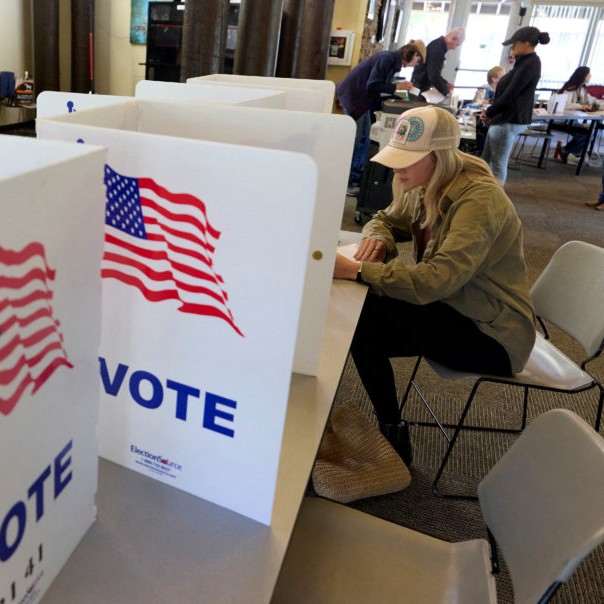
According to The Associated Press, immediate changes would include requiring “auditable” paper ballots, prohibiting states from mailing ballots to all voters through universal vote-by-mail systems, and banning ranked choice voting. Ranked choice voting is currently used in Maine and Alaska.
That immediate timeline matters because these are not theoretical tweaks. Universal vote-by-mail and ranked choice voting are not fringe ideas in the states that use them. They are also the kinds of systems that create different kinds of campaign incentives and, in close races, different pathways to victory.
The bill also would require more frequent updates to voter rolls, every 30 days, starting this year, according to The Associated Press.
Supporters will argue that frequent roll maintenance is basic upkeep. Opponents tend to focus on what happens when upkeep turns into purges, mismatches, and last-minute chaos, especially for voters whose records are more likely to contain inconsistencies.
The Parts That Wait: Photo ID and Proof of Citizenship
The bill’s marquee demands, photo ID requirements, and proof of citizenship verification are not presented as immediate changes in the reporting. According to The Associated Press, those requirements would be put in place later, with some elements slated for 2027.
That sequencing creates a political contradiction the sponsors will have to manage: the strictest elements are marketed as core integrity measures, but the most immediate actions target voting methods that have expanded participation in certain states.
Voting rights advocates have long argued that proof-of-citizenship requirements can trap eligible voters in paperwork problems, even when there is no allegation of fraud in their cases. A widely cited estimate from the Brennan Center for Justice has warned that millions of voting-age citizens do not have proof of citizenship readily available, and passport ownership is not universal.
Republicans counter that verification is a basic safeguard for federal elections, and that states can design processes that do not block legitimate voters. The bill, however, is drafted with penalties for noncompliance, which increases the pressure on states to implement quickly and aggressively.
Funding Threats and a New Relationship With the Attorney General
If the bill is a baseline standard, it is also an enforcement plan.
According to The Associated Press, states could lose federal election funds for various forms of noncompliance. One example in the reporting is a requirement that states have agreements with the attorney general’s office to share information about potential voter fraud, with funding consequences tied to 2026.
That detail is not just bureaucratic. It pulls state election offices closer to federal law enforcement and federal political leadership, precisely as elections themselves have become a partisan combat zone.
The more election administration becomes intertwined with national enforcement priorities, the more every technical dispute becomes a potential headline, and the more every headline becomes a campaign tool.
Democrats Say Disenfranchisement, Republicans Say Confidence
The Associated Press reported the bill faces a long road in a narrowly split Congress, with Democrats rejecting similar proposals as disenfranchising voters through onerous ID and registration requirements.
This is the core power argument each side wants to win.
Republicans want the debate centered on fraud prevention and public trust, especially after years of Trump framing election losses as suspect. Democrats want it centered on access, administrative burden, and the predictable way that new requirements hit certain voters harder than others.
Both sides can point to real-world examples. Administrative rules, even when neutral on paper, can play out unevenly across counties, income levels, age groups, and life situations like name changes. That is why these fights rarely stay technical for long.
The Other Track: Trump Administration Pressure and the Fulton County Raid
The legislative push is arriving alongside a separate escalation from the executive branch.
According to The Associated Press, FBI agents raided the election headquarters of Fulton County, Georgia, seeking ballots from the 2020 election. Fulton County includes most of Atlanta, and it is a politically loaded terrain in the modern election dispute ecosystem.
The AP report noted the raid followed Trump’s comments earlier in the month, suggesting charges related to the 2020 election were imminent.
Those moves raise the stakes for election officials watching Washington. A bill that tightens federal standards is one kind of pressure. Federal law enforcement activity connected to 2020 ballots is another. Together, they sketch a message to states: the federal government is not backing away from election conflict, and it is willing to use multiple tools at once.
Why This Fight Is Happening Now
Republicans have talked for years about national election rules. What changes the temperature is the calendar and the narrative discipline coming from the top of the party.
In a PBS NewsHour video referenced in the AP coverage, Trump argued that Republicans need to win the midterms, or, in his words, “I’ll get impeached.” The line is revealing because it frames the midterms not as a policy referendum, but as a personal survival contest.
When elections are cast as survival contests, procedures stop being background. They become strategy.
The bill also fits into a broader effort to turn Trump’s previous election-related executive order ideas into statute. The AP report pointed to earlier House action on the Safeguard American Voter Eligibility Act, which has stalled in the Senate, even as Republicans have signaled renewed interest.
What Happens Next, and What to Watch
On paper, House Republicans can move a bill. In practice, the Senate is built to be a brake, and Democrats have treated national voting restrictions as a red line.
Still, the bill can do political work even if it never becomes law. It forces members to take votes that can be used in campaign ads, it defines the party’s election platform in a single branded package, and it sets up negotiations where Republicans can push to salvage parts of the plan.
For voters, the key questions are not slogans. They are operational.
- Which provisions are immediate, and would they affect your state’s existing system before the midterms?
- How would enforcement work, especially when federal funding is on the table?
- What does compliance look like for states that use universal vote-by-mail or ranked choice voting today?
The headline fight is about integrity versus access. The quieter fight is about control, who sets the rules, who enforces them, and who pays the price when the rulebook changes midstream.