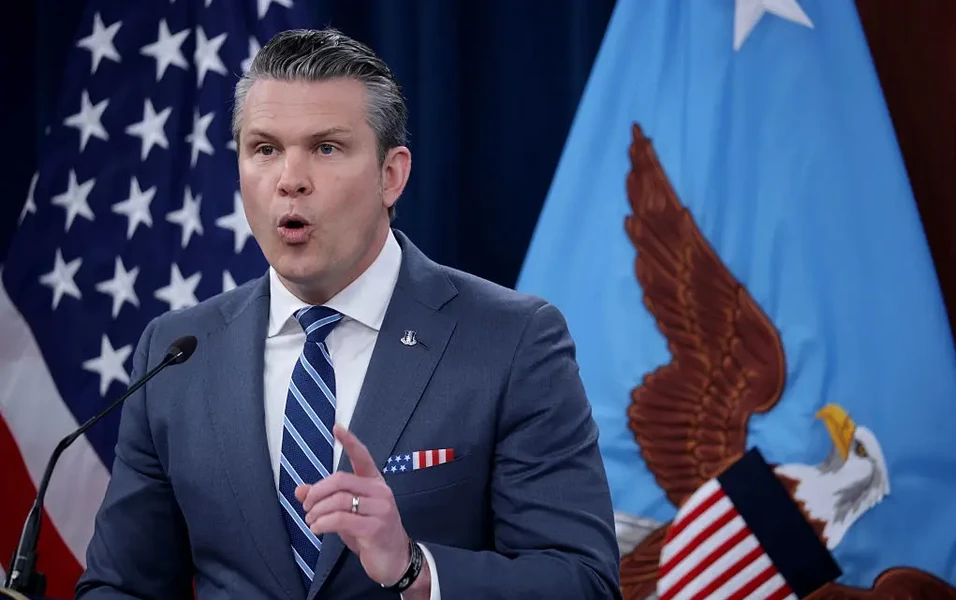
The partial shutdown is not just about money. It is about who gets to set the rules for masked federal agents on American streets, and who takes the blame while the lights flicker in Washington.
On February 1, 2026, House Speaker Mike Johnson said a government funding package would not hit the House floor right away, effectively extending the partial shutdown into the week. The standoff is now tied directly to the Trump administration’s immigration enforcement posture, and to Democrats’ demands to put new restraints on Immigration and Customs Enforcement.
Johnson’s public message is simple: this is President Donald Trump’s plan, and Democrats are the ones holding out. The less-simple reality is that Johnson is trying to pass a temporary Department of Homeland Security funding measure through a narrowly divided House, while both parties fight over what ICE can do, what agents must show, and what happens next if Washington cannot land a broader deal.
Johnson is also doing something speakers rarely do unless the math is ugly. He is openly outsourcing the heavy lift to the most powerful person in his party.
A Shutdown With DHS at the Center
According to Associated Press reporting published by PBS NewsHour, the Senate passed a stopgap measure that would temporarily fund the Department of Homeland Security for two weeks. The point is to keep DHS operating while Congress fights over whether ICE operations should be curbed after protests in Minneapolis and public outrage tied to two shooting deaths during those protests.
The Senate structure matters because it breaks the usual shutdown script. Instead of one big funding package, DHS gets peeled off into its own short-term patch, with a new deadline built in. That makes immigration enforcement the headline fight, not an end-of-year accounting exercise.
Johnson said the House needs a few days before it can vote, citing procedural steps that start in committee and push a floor vote to at least Tuesday. In shutdown politics, a few days is not just a scheduling note. It is leverage, and it is risk.
Johnson Says Trump Is Calling the Play
Johnson has been careful to frame the strategy as Trump’s, not his. On Fox News Sunday, he said, “The president is leading this.” Then he sharpened it: “It’s his play call to do it this way.”
That phrasing does two things at once. It signals to Republicans that Trump is invested, and it warns swing-vote lawmakers that crossing the bill could mean crossing Trump. It also gives Johnson a shield if the bill faceplants. If the plan fails, the speaker can argue he ran the play that the quarterback wanted.
Johnson also claimed Trump has “already conceded that he wants to turn down the volume” on federal immigration operations. That is a telling line, because it suggests the White House sees the political temperature, even if the administration does not want to look like it is backing down.
Democrats Want ICE Restrained, Not Just Funded
Democrats are not treating the stopgap as a clean funding vote. They are treating it as a chance to force operational changes, and they are openly refusing to provide the votes needed for speedy House action.
The bill already includes $20 million for body cameras, but Democrats want more. Their push goes beyond equipment and into identity, accountability, and the legal thresholds for enforcement actions.
On ABC’s This Week, House Democratic leader Hakeem Jeffries said, “What is clear is that the Department of Homeland Security needs to be dramatically reformed.”
“Masks should come off,” Jeffries said. “Judicial warrants should absolutely be required consistent with the Constitution, in our view, before DHS agents or ICE agents are breaking into the homes of the American people or ripping people out of their cars.”
In practical terms, Democrats are pressing for changes like these:
- Requirements for agents to unmask and identify themselves.
- Limits or an end to roving patrols by immigration agents.
- Stronger warrant requirements for certain enforcement actions, as Democrats frame it.
Those demands are policy, not process, which is exactly why they are hard to negotiate under shutdown pressure. They also put Republicans in a bind: accept restrictions that anger the party base, or reject them and own the shutdown’s consequences.
Republicans Say Unmasking Agents Creates New Threats
Johnson’s counterargument is not that oversight is bad. It is that Democrats’ specific oversight tools could create new hazards for law enforcement.
He has pointed to fears that forcing agents to show names or unmask could lead to targeting, especially if personal information is posted online. On Fox, he said he does not believe Trump would approve the unmasking and name-identification requirement. He added, “I don’t think the president would approve it, and he shouldn’t.”
That is the core collision. Democrats are selling transparency as a safety measure for the public. Johnson is selling anonymity as a safety measure for agents. Both sides are claiming the word safety, and the shutdown is the battlefield.
The Shutdown Fallout Is Real, Even When Services Keep Running
While lawmakers argue about DHS, the rest of the government is not magically insulated. The Associated Press reported that agencies, including defense, health, transportation, and housing, were given shutdown guidance. Some operations are considered essential, and services are not necessarily interrupted right away, but workers can face delayed pay and furloughs if the impasse stretches.
Shutdown politics always includes a timing game. The immediate disruptions are often uneven, but the pressure builds as paychecks, programs, and planning timelines start to snap. That is why Johnson’s decision to delay a vote for several days matters. It increases the number of people and systems pulled into the standoff, which can strengthen urgency or harden resentment.
Trump Wants a Faster Exit, but With a 2-Week Fuse
Johnson has argued that the administration wants to resolve this shutdown more quickly than the last major shutdown fight, and he has described Trump personally working the phones. He said he was in the Oval Office when Trump, along with border czar Tom Homan, spoke with Senate Democratic leader Chuck Schumer to work out the deal structure.
On NBC’s Meet the Press, Johnson said, “I think we’re on the path to get agreement.”
But a two-week DHS patch is not an agreement; it is a countdown. It postpones the biggest decisions while guaranteeing another high-stakes vote arrives soon. That is useful if you need time to negotiate. It is dangerous if both sides use the two weeks to run attack ads, not talks.
Pressure Is Rising Inside DHS Politics
Democrats are also escalating the personnel stakes. The Associated Press reported that growing numbers of lawmakers are calling for Homeland Security Secretary Kristi Noem to be fired or impeached.
On Fox News Sunday, Sen. Chris Murphy described the situation in Minnesota in blunt terms: “What is happening in Minnesota right now is a dystopia.” He also said, “ICE is making this country less safe, not more safe today,” and argued, “Our focus over the next two weeks has to be reining in a lawless and immoral immigration agency.”
Whether those claims translate into votes is the next test. But the political shape is clear: Democrats are trying to turn the shutdown into a referendum on DHS leadership and ICE tactics. Johnson is trying to turn it into a referendum on Democrats’ demands, with Trump positioned as both the enforcer and the closer.
What to Watch Next
The next moves are procedural, but the consequences are not. Johnson has said the House needs to run the bill through committee and procedural votes before a floor vote. Democrats are weighing their next step on internal caucus calls. The Senate has already sent the two-week DHS structure forward, which narrows the House’s options: pass it, change it and bounce it back, or watch the shutdown stretch.
The big question is not whether Washington can fund DHS for two weeks. It is whether any side can sell the next package without looking like it blinked on ICE, on public safety, or on accountability.
References
- PBS NewsHour (Associated Press): Johnson Says No Quick House Vote to End Partial Shutdown, Blames Democrats for Their ICE Demands
- PBS NewsHour: Here’s What to Know About the Partial Government Shutdown and Its Impact
- PBS NewsHour: Funding Deal Begins to Unravel as Senate Democrats Vow to Oppose DHS Bill Over Alex Pretti Shooting in Minnesota