

The Epstein files are back, and the loudest part is not the celebrity roll call. It’s the gap between what powerful people have said about Jeffrey Epstein, and what the newly released records suggest about how long some lines of contact stayed open.
A Justice Department release tied to its Epstein investigations surfaced emails, references, and summaries that name tech billionaires, political figures, royalty-adjacent elites, and business kingpins. None of the people cited have been charged with crimes connected to Epstein’s sex trafficking case, and multiple figures have denied any involvement in abuse. But the documents still land like a reputational audit, because they preserve who answered, who joked, who asked questions, and who appears to have stayed in touch after Epstein’s 2008 guilty plea in Florida.
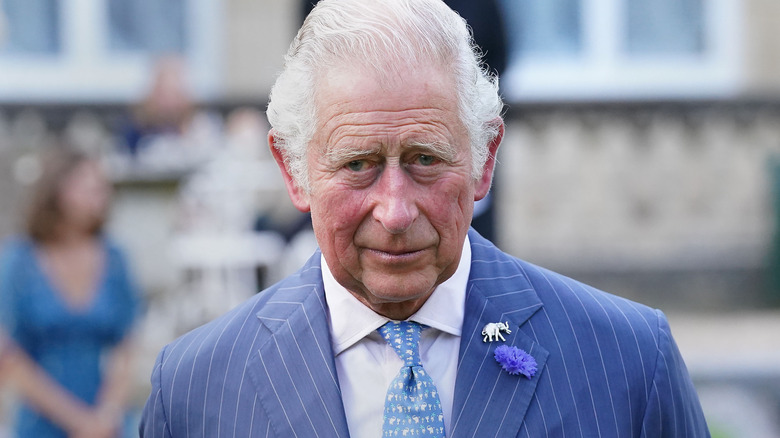
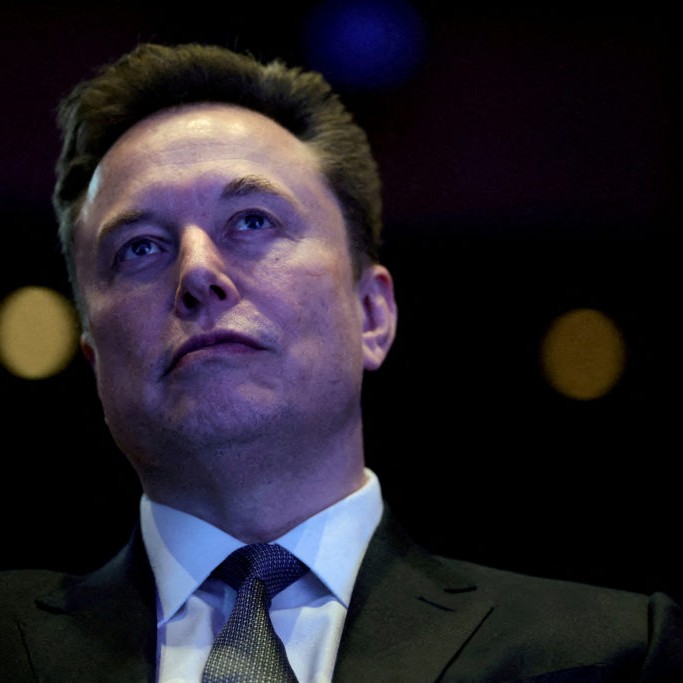
The file photo above, distributed with a Reuters credit in the underlying report, is the kind of detail that matters in this story. The documents are not just about who knew Epstein. They are about who could afford to ignore the stigma, who had enough leverage to treat it as background noise, and who now has to explain why their past wording does not match the written record.
A Name List Is Easy, but the Timeline Is the Trap
Jeffrey Epstein died in a Manhattan jail cell in 2019 while awaiting trial on federal sex trafficking charges. Long before that, he had cultivated an ecosystem of rich and powerful contacts, and the newly released material shows just how wide that ecosystem spread.
What makes this release different, as summarized in an Associated Press report published by PBS News, is the density of the everyday receipts. Not just big, cinematic allegations, but invitations, logistics, and the kind of casual tone that can sound normal in the moment and brutal in hindsight.
The stakes are not uniform. For some figures, the damage is mostly social and reputational. For others, the timing matters because they hold public roles, oversee public money, or have previously claimed they cut ties years earlier. The files are a reminder that in a scandal with this many famous satellites, the public argument often turns on one question: When did you know enough to walk away?
Sarah Ferguson’s Public Pledge vs. Her Private Follow-Up
The documents highlight a clean example of that contradiction. In March 2011, Sarah Ferguson, then the Duchess of York, publicly apologized for letting Epstein help pay off some of her debts. She told London’s Evening Standard she would have “nothing ever to do with Jeffrey Epstein ever again.”
Then the files show that, two months later, she emailed Epstein asking for advice ahead of an Oprah Winfrey appearance, specifically on how to answer questions about their relationship.
That is the dynamic in miniature. A public statement designed to close a door, followed by private communication that suggests the door was still usable when the lights were off.
Epstein’s reply in the email chain, as quoted in the report, reads like the kind of self-defense script that only works if the listener is willing to play along: “Jeffrey was unfairly characterized as a pedophile by the tabloid press. Many years ago jeffrey pleaded guilty to soliciting underage prostitutes. He paid his debt to society and has sought forgiveness. I have nothing more to say.”
Elon Musk and the Island Question That Will Not Die
Elon Musk appears in the new release in email exchanges from 2012 and 2013 discussing a possible visit to Epstein’s Caribbean island compound, according to the report. The documents, as described, do not conclusively show whether any visit happened.
That ambiguity is its own accelerant, because Musk has been publicly emphatic about refusing Epstein. In 2025, Musk posted on X, “Epstein tried to get me to go to his island and I REFUSED.”
The contrast is not necessarily a contradiction on its face, since discussing a visit is not proof of going. But it is the kind of detail that keeps the story alive: a paper trail that implies a level of engagement that does not neatly fit into a single, definitive sentence.
Spokespersons for Musk’s companies, Tesla and X, did not respond to emails seeking comment at the time of the underlying report, according to the same account.
Branson’s Emails Show the Culture of the Club
Richard Branson’s inclusion offers a different kind of discomfort. The documents described in the report include emails between Branson and Epstein, including an invitation to Branson’s private Caribbean island.
In a 2013 message quoted in the report, Branson wrote, “Any time you’re in the area would love to see you. As long as you bring your harem!”
That line does not accuse Branson of Epstein’s crimes, and the report does not claim it does. What it does show is the social atmosphere in which Epstein operated: the joking, the entitlement, and the treatment of women as accessories in elite networking. In these files, the subtext is often the point.
Lutnick’s Records Put a Cabinet-Level Claim Under a Microscope
For pure political consequence, one of the most combustible entries is President Donald Trump’s commerce secretary, Howard Lutnick.
Records in the release show Lutnick visited Epstein’s private Caribbean island with his family on at least one occasion, and emails described in the report show plans for a December 2012 visit to Little St. James in the U.S. Virgin Islands, including plans to arrive by yacht with children.
The key detail is the apparent clash with prior statements attributed to Lutnick claiming he had cut ties with Epstein decades ago, calling him “gross.” If you are a Senate-confirmed official, “decades ago” is not a vibe. It’s a timeline claim.
The Commerce Department, in a statement quoted in the report, said Lutnick had “limited interactions with Mr. Epstein in the presence of his wife and has never been accused of wrongdoing.”
That language is tight and notably specific. Limited interactions. Presence of his wife. Never accused. It is the kind of statement designed to narrow the exposure to what can be disproven, rather than to overexplain what cannot.
The Trump and Clinton Sections Are About Politics, Not New Charges
The files include thousands of references to Trump, but the report notes that much of it adds little new detail about the relationship beyond what has long been known, including chatter, shared articles, and gossip.
The more telling piece is bureaucratic: the Justice Department disclosed a spreadsheet created in August summarizing tip-line calls from people claiming knowledge of wrongdoing by Trump. The report describes the document as containing a range of uncorroborated stories, including far-fetched scenarios.
Deputy Attorney General Todd Blanche, quoted in the report, said the FBI fielded “hundreds of calls” about prominent individuals that were “quickly determined to not be credible.” That quote matters because it signals the government’s posture: yes, the names are famous, but that does not mean the leads were usable.
Bill Clinton is also referenced, with the report reiterating long-public information that Clinton spent time with Epstein more than two decades ago, including flights on Epstein’s private jet and contact at the White House. Clinton has denied knowledge of Epstein’s wrongdoing, and his representatives have said he broke off relations after the first round of criminal charges in 2006. The report also notes that none of Epstein’s victims have publicly accused Clinton of involvement in Epstein’s crimes.
The Other Names Tell You What Epstein Was Buying
Steven Tisch, the New York Giants co-owner, is mentioned more than 400 times, and the report describes correspondence in which Epstein offered to connect him to women. Tisch acknowledged knowing Epstein, denied going to Epstein’s island, and offered a regret-soaked statement that tries to put a fence around the relationship while admitting the tone: “We had a brief association where we exchanged emails about adult women, and in addition, we discussed movies, philanthropy, and investments,” Tisch said in a statement quoted in the report. “As we all know now, he was a terrible person and someone I deeply regret associating with.”
Casey Wasserman, president of the committee for the 2028 Summer Olympics in Los Angeles, is described in the report as having exchanged flirty emails with Ghislaine Maxwell years earlier. Wasserman said he never had a personal or business relationship with Epstein and regretted the correspondence, saying it came long before Maxwell’s crimes came to light. Maxwell is serving a 20-year prison sentence for sex trafficking.
Ehud Barak, the former Israeli prime minister, appears frequently in the release as well, and the report says the correspondence shows ongoing contact even after Epstein’s 2008 guilty plea. Barak has acknowledged visiting Epstein and flying on his private plane, but has said he never observed inappropriate behavior.
Sergey Brin is described in the report as making plans to meet with Epstein and Maxwell before Epstein was publicly accused of abusing underage girls, including invitations to New York events in 2003. Steve Bannon is described as having exchanged friendly texts with Epstein, including discussions of politics, travel, and a documentary project that was said to be aimed at rehabilitating Epstein’s reputation.
In Slovakia, the pressure appears more immediate. Miroslav Lajcak, a national security adviser to the Slovakian prime minister, resigned after past communications with Epstein appeared in the release, according to the report. He has not been accused of wrongdoing and said his correspondence was part of diplomatic duties, but the political cost still hit fast.
What to Watch Next
These releases tend to trigger two parallel battles. One is legal, focused on what the documents actually prove, which in many cases is not much beyond contact. The other is social and political, where proximity itself becomes a liability, and where contradictions are more damaging than mere familiarity.
If there is a through-line, it is this: Epstein’s power was never just money. It was access, and the files show how many people treated access as worth the risk, even when the risk was already public record.