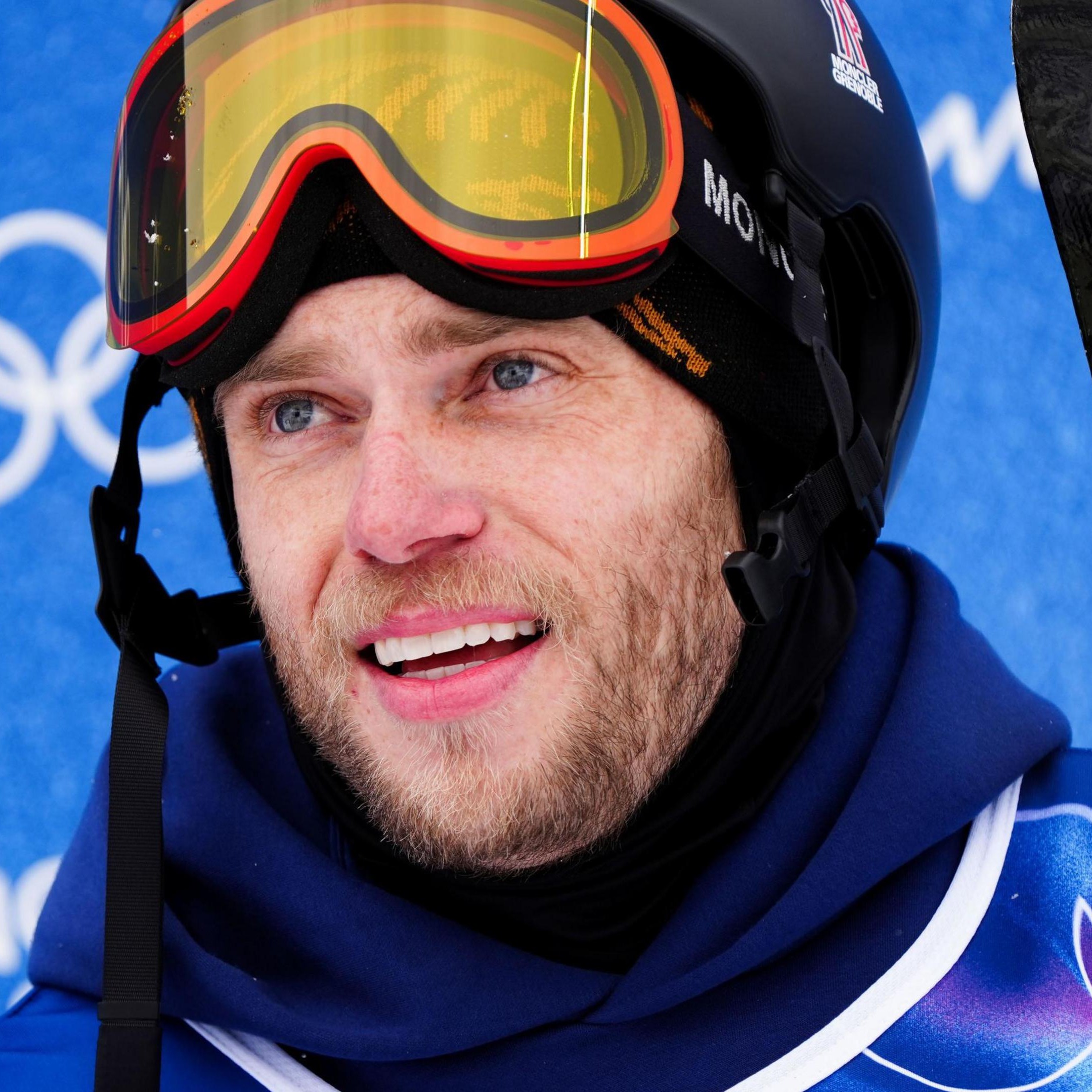
The halfpipe is supposed to be clean math: speed, height, landings, score. Gus Kenworthy dragged something messier into it anyway, and now the Olympics are hosting a side battle over ICE, online threats, and who gets to claim the flag.
What You Should Know
Team GB freestyle skier Gus Kenworthy said he received death threats after sharing an anti-ICE image on Instagram ahead of the Winter Olympics in Italy. In an interview with BBC Sport, he said, “I think I’m on the right side.”
Kenworthy, 34, is not just another athlete with a hot take. He is a British-born, U.S.-raised Olympic medalist who switched allegiance to Team GB in 2019, and returned from retirement to chase a fourth Olympics, according to BBC Sport.
An Olympic Run With a Political Fuse Attached
BBC Sport reported that Kenworthy posted a graphic anti-ICE image, one that included an expletive, about the United States’ Immigration and Customs Enforcement agency. The timing was not subtle. The post went up about a week before he was due to compete at the Winter Olympics in Italy.
The result, Kenworthy said, was a stream of threats that did not stay in the realm of ordinary internet heckling. “No-one wants to read bad things about themselves, things that are threats and violent and scary and homophobic,” he told BBC Sport.
Kenworthy tried to project a kind of practiced calm about it, the sort of posture public figures adopt when they know reacting is part of the trap.
“I also took it with a grain of salt,” he said. “I couldn’t imagine writing something like that about someone, especially on a public forum, anyone who does that has something wrong with them.”
Then he drew the line that turns this from athlete chatter into a public-positioning moment: “I think I’m on the right side.”
The Minnesota Flashpoint BBC Put at the Center
BBC Sport rooted the tension in a specific U.S. event, reporting that intensive care nurse Alex Pretti, 37, and Minnesota resident Renee Good, 37, were killed by ICE agents in January, sparking protests across the United States.
That detail matters because it reframes Kenworthy’s post as a response to an alleged lethal encounter, not a random anti-government meme. It also explains why the backlash could escalate from disagreement to intimidation. When a debate is framed as life-or-death, the online reaction tends to adopt the same vocabulary.
At the same time, the BBC report shows how quickly a single post can collapse categories. Kenworthy is at the Games as a competitor. His critics treated him as a proxy combatant in a domestic U.S. fight over immigration enforcement.
Trump, a Hand Gesture, and the Flag Problem
Kenworthy was not the only one navigating politics on snow. BBC Sport also reported on U.S. skier Hunter Hess, who qualified in fifth and made an L sign against his forehead after completing his first run, a response to President Donald Trump calling him a “real loser.”
Even if you strip out the personalities, the power dynamics are hard to miss. The president insults an athlete. The athlete answers in a gesture that needs no translator. The Olympics, a global stage, becomes a megaphone for a domestic insult cycle.
Hess, for his part, tried to draw a distinction that athletes have leaned on for decades: wearing a country does not mean endorsing its politics. Before the Games, BBC Sport reported that Hess said, “Just because I’m wearing the flag doesn’t mean I represent everything that’s going on in the US.”
Then, after qualifying, he swung hard in the other direction, insisting the controversy would not define him. “I worked so hard to be here. I sacrificed my entire life to make this moment happen,” Hess told reporters, according to BBC Sport.
He also went out of his way to stress patriotism even while bristling at the president’s jab. “I’m not going to let controversy like that get in my way. I love the United States of America. I cannot say that enough,” he said, per the BBC report.
Put Kenworthy and Hess side by side, and you get the contradiction the Olympics keep producing. Athletes want the freedom to speak like citizens, but they also want the insulation of being treated as pure competitors. Governments, meanwhile, are happy to borrow Olympic shine when it flatters them, and just as happy to weaponize public attention when an athlete steps out of line.
Tom Homan Says the Surge Ends, but ICE Stays
The BBC story also pulled in a second layer of official messaging from the Trump administration. It reported that Tom Homan, described as Trump’s border tsar, said earlier in February that an immigration enforcement surge in Minnesota would end.
According to BBC Sport, Homan said Operation Metro Surge resulted in many undocumented immigrants who had committed violent crimes being detained for deportation. BBC Sport also reported that Homan said more than 4,000 undocumented immigrants had been arrested.
But there is a built-in tension in the way the surge was described. The operation was presented as both temporary and ongoing, at least in effect. As BBC Sport put it, Homan said ICE has always had a presence in Minnesota and would continue to have one.
If you are trying to calm a political fire, “the surge will end” is meant to sound like closure. “ICE will continue to have a presence” sounds like the opposite. Kenworthy’s critics can read it as proof that the enforcement posture is permanent. Kenworthy’s supporters can read it as a reason to keep pressuring public figures to speak. Either way, the Olympics become an echo chamber for an argument that is not being settled on the snow.
Kenworthy’s Other Reality, Self-Funded, High-Risk, and Still Competing
Kenworthy is also doing something less glamorous than posting to Instagram: paying the bill. BBC Sport reported that he retired after the 2022 Olympics in Beijing, announced a comeback last year, and has had to self-fund his way to the Games because GB Snowsport’s athlete funding had already been allocated.
That matters because it changes the leverage. A self-funded athlete is freer in one way, because there is no direct check to yank. But he is also more exposed, because the financial margin is thinner and the stakes are personal.
Kenworthy told BBC Sport that burnout and head injuries played a role in his earlier exit. “I called it quits partly because I’d been doing it a long time and I had burnout and was over it, but I was also having some bad head injuries, and so it made it easier to walk away,” he said.
He described the comeback impulse as something that grew louder once symptoms eased. “Months after, when those symptoms started to subside, and I started to feel myself again, I started wondering it wasn’t the way I wanted it to finish,” he told BBC Sport.
The line that followed reads like a dare to himself, and it also explains why a person might accept the risk of public blowback for a political post right before the Games.
“I kept pushing that feeling away, and finally I was at a point where I was like ‘ok, well if you’re having that feeling, it’s now or never, and I didn’t want to live to regret it and wonder what if,'” he said, according to BBC Sport.
In the same interview, Kenworthy laid out what “self-funded” actually means when you are chasing an Olympic start.
“I decided to just give it a push and make it go, and try and get there. It’s been pretty tough, because I didn’t have any funding, I wasn’t on any national team in order to get assistance, so it’s been totally self-funded, myself, my coach, both of our travel, training camps, lift tickets, insurance, all of it, food, lodgings,” he said.
And he closed with the kind of logic that tends to override both financial prudence and internet threats. “I struggled deciding if it was the right thing to do, but ultimately, money comes and goes, this opportunity won’t,” Kenworthy told BBC Sport.
What to Watch Next
BBC Sport reported that Kenworthy qualified ninth for the halfpipe final with a score of 81.25 points, with the final scheduled to start at 18:30 GMT on February 20th, 2026.
The competition result will matter, but the bigger test might be whether Olympic officials, sponsors, and federations can keep pretending these are separate worlds. Kenworthy’s quote, the threats he described, Hess’s gesture, and the administration’s talking points about ICE all point in the same direction: the Games are not just a stage for medals. They are a stage for messages, and those messages come with consequences.