Ayatollah Ali Khamenei just put a big, blunt sentence on the table: attack Iran, and the whole neighborhood burns. The timing is not subtle. U.S. warships are sitting close enough to make the threat feel less like rhetoric and more like a countdown.
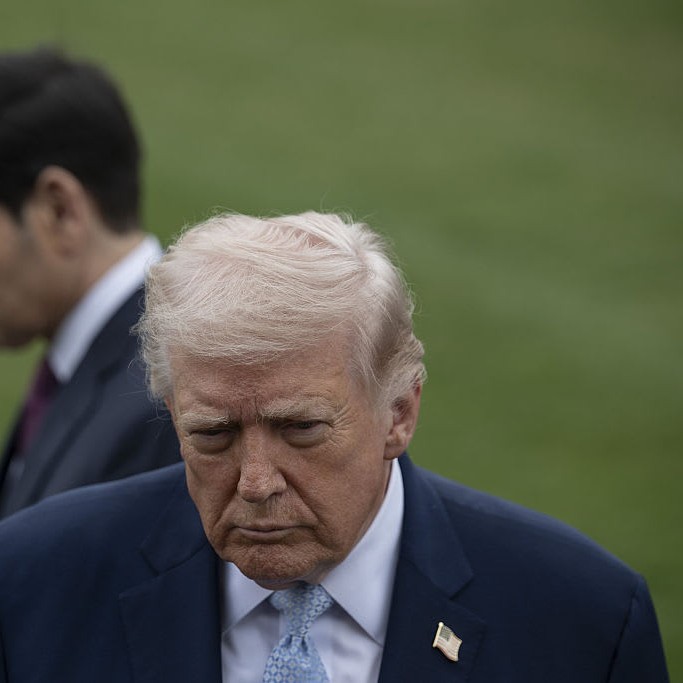
And then there is President Donald Trump, offering a familiar split screen. He is talking about making a deal, while also describing military power in the region, like it is leverage you can see from space.
Behind the speeches is the part that rarely stays contained, the internal crackdowns, the disputed death tolls, the Strait of Hormuz, and a nuclear file that never fully leaves the room.
Here is the tension. Both sides say they do not want to start a war. Both sides are acting like they are preparing for one.
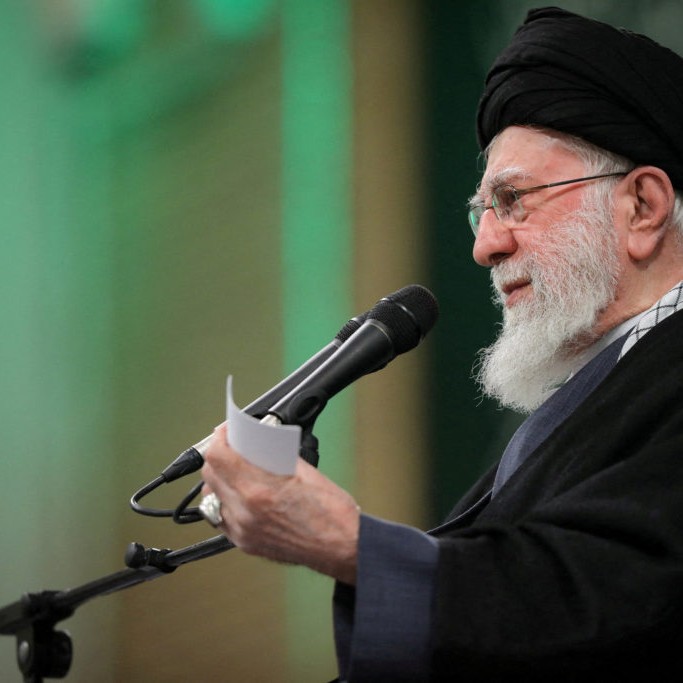
In a report distributed by the Associated Press and published by PBS NewsHour on February 1, 2026, Khamenei, 86, warned that any U.S. attack would spark a regional conflict, as the USS Abraham Lincoln and associated American warships operated in the Arabian Sea after Tehran’s violent response to nationwide protests.
A Carrier in the Arabian Sea, and a Message for the Cameras
Khamenei’s warning landed in public, not in a back channel. That choice matters. It signals deterrence aimed at Washington, but also a domestic show of control aimed at Iranians watching their government frame mass protests as foreign-backed sedition.
According to the AP report carried by PBS, Khamenei delivered his sharpest line yet as U.S. forces moved into position nearby.
“The Americans must be aware that if they wage a war this time, it will be a regional war,” he said.
In the same appearance, Khamenei tried to cast Iran as the restrained party, while keeping the threat intact.
“We are not the instigators, we are not going to be unfair to anyone, we don’t plan to attack any country. But if anyone shows greed and wants to attack or harass, the Iranian nation will deal a heavy blow to them.”
The posture is classic power politics. Iran claims it is defensive, while warning that its response will not be contained to a single battlefield.
Trump’s Deal Talk Comes With Steel and a Timer
Trump, asked about Khamenei’s threat, did not exactly de-escalate. He pointed to the hardware, saying the U.S “has the biggest, most powerful ships in the world over there, very close, a couple of days, and hopefully we’ll make a deal. If we don’t make a deal, then we’ll find out whether or not he was right.”
That quote does two jobs at once. It tells Iran that the U.S. can act quickly, and it tells a domestic audience that Trump is not bluffing. It also leaves the biggest question hanging: what, exactly, counts as the kind of Iranian move that triggers force?
In the AP account, Trump has described red lines tied to Iran’s crackdown, including fears about mass executions of detainees. At the same time, he has repeatedly returned to Iran’s nuclear program as a negotiating target. The contradiction is the point. Human rights and nuclear risk are both real issues, but the lever being pulled at any given moment is political power, not moral clarity.
The Protest Crackdown Is the Fuse Everyone Is Pretending Not to See
The spark for the current escalation is not a missile test or a tanker seizure. It is internal unrest.
According to the AP report published by PBS, demonstrations began on December 28, initially tied to Iran’s currency crisis, then expanded into a direct challenge to Khamenei’s rule. Khamenei, who previously acknowledged that some protesters had legitimate economic grievances, shifted to a harder line, calling the protests “a coup” and describing attacks on state targets.
Then comes the numbers war, which is where propaganda meets credibility.
A U.S.-based group, the Human Rights Activists New Agency, has reported detention and death figures that dwarf Iran’s official count. The AP reported it could not independently verify those figures because Iranian authorities cut the country’s internet off from the rest of the world. Tehran, for its part, has offered far lower totals. As of January 21, 2026, Iran’s government put the death toll at 3,117, according to the AP report, and labeled some of the dead “terrorists.”
That is the core contradiction. Iran is asking the world to accept its numbers, while simultaneously restricting information flows that would allow independent verification. Meanwhile, outside groups offer far higher figures that cannot be fully confirmed from inside the blackout.
The stakes are not just reputational. If Washington treats the crackdown as the trigger for military action, Iran has an incentive to control the narrative, control the footage, and control the numbers.
The Strait of Hormuz: A Military Drill With a Global Price Tag
Iran’s warning was paired with another pressure point: geography.
According to the AP report carried by PBS, Iran planned live-fire military drills in the Strait of Hormuz on February 1 and February 2. That waterway is the narrow mouth of the Persian Gulf, a chokepoint that turns regional drama into a global oil story.
Iran does not need to defeat the U.S. Navy to cause consequences. It needs uncertainty. Shipping insurers, commodity traders, and governments do the rest.
U.S. officials have warned against threatening American warships or disrupting commercial traffic during the drills, according to the AP report. That sets up a familiar, dangerous line-drawing exercise: how close is too close, what counts as harassment, and who gets believed first when something goes wrong on radar?
Europe Gets Dragged in, Even if It Does Not Want the Lead Role
The story is not only Washington versus Tehran. Europe is getting shoved onto the board as a supporting actor with real liabilities.
According to the AP report published by PBS, Iran’s parliamentary speaker said Iran now considers all European Union militaries to be terrorist groups, after the EU declared Iran’s paramilitary Revolutionary Guard a terror group over its role in the crackdown.
On paper, these reciprocal designations can look symbolic, even theatrical. In practice, they deepen the diplomatic freeze and raise the cost of de-escalation. They also widen the target list, at least rhetorically, which is exactly what Khamenei’s “regional war” line is designed to imply.
Inside Iran’s parliament, lawmakers later chanted “Death to America!” and “Death to Israel!” at the session, according to the AP report carried by PBS. That matters because it shows what kind of political language hard-liners are normalizing while Trump claims negotiations are happening.
What to Watch Next: Words, Ships, and a Negotiation That Might Be a Trap
The next moves are easy to describe and hard to control.
First, whether Iran’s drills in the Strait of Hormuz stay tightly choreographed, or produce an incident that either side can label as provocation. In maritime standoffs, the first disputed video clip often becomes more important than the full truth.
Second, whether Iran’s government escalates its domestic response, particularly if high-profile trials or executions are announced. In the AP report carried by PBS, sedition charges in Iran can carry the death penalty, and fears about mass executions were described as a red line for Trump.
Third, whether Trump turns the public talk of negotiations into a written framework, or keeps it in the realm of suggestion. His own quote, “hopefully we’ll make a deal,” is an offer with an implied threat behind it. That works as coercion, but it also narrows the room for face-saving compromise.
Finally, there is the bigger contradiction sitting under the whole showdown. Iran is treating protests like war. The U.S. is treating warships like negotiating tools. Khamenei is warning of a regional war. Trump is saying they are “seriously talking.” Those stories can coexist right up until they can’t.
References