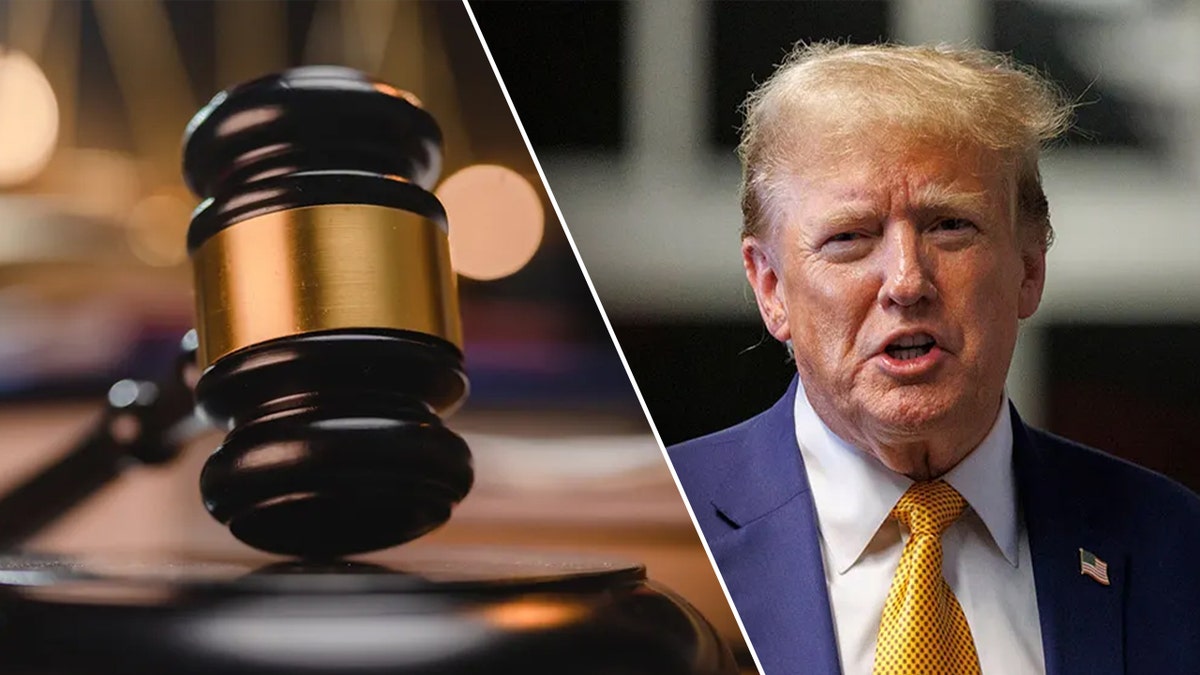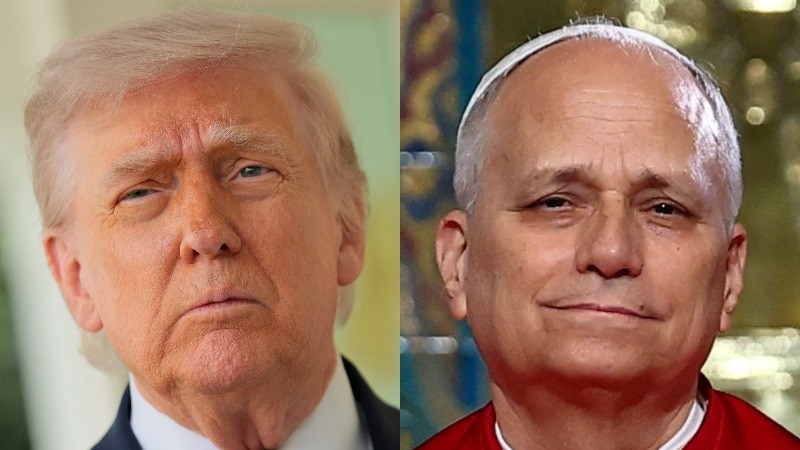
Donald Trump keeps asking voters to see him through one lens: faith. But a second lens, AI, is now strapped to the same camera, and it does not care what is relevant, what is satire, or what turns into a viral political weapon.
What You Should Know
The Hill highlighted a cluster of Trump-adjacent stories involving Bible-centered messaging, a Pope Leo-themed online feud, and AI-generated religious imagery. Together, they show how modern politics can blend belief, branding, and algorithm-driven content.
The connective tissue is not theology. It is power, attention, and who gets to define what a candidate is signaling when religion moves from a pew to a feed.
The Bible Message Is Clear, the Motive Is Not
Trump has repeatedly leaned into public religious symbolism, including high-visibility moments that critics framed as political staging and allies framed as cultural pushback. According to The Associated Press and The New York Times, one of the most enduring images came in 2020, when he held up a Bible outside St. John’s Church after law enforcement cleared protesters from nearby Lafayette Square.
Asked what he was holding, Trump answered, “It’s a Bible.” The simplicity of that line is part of the point. Supporters can treat it as straightforward faith. Opponents can treat it as calculated branding.
Pope Leo Enters the Chat
The Hill’s item also gestures at a niche but telling kind of dispute: internet-era religious tribalism that drags in Catholic history, including references to Pope Leo, as shorthand for arguments about modern culture and authority. Even when the underlying quarrel is online-only, it can become a proxy battle over who counts as the “real” defender of tradition.
That matters for a campaign because Catholic and evangelical voters are not just a demographic. They are a messaging ecosystem, complete with influencers, clergy voices, donor networks, and pressure campaigns that can reward or punish candidates over perceived slights.
AI Jesus Raises the Stakes for Everyone
Then there is the third ingredient: AI-generated religious imagery, including Jesus-themed content that can read as devotion, trolling, or coded messaging depending on the audience and the caption. The problem is not only taste. The problem is attribution, because synthetic images can be detached from their origin and recirculated as “proof” of support, mockery, or blasphemy.
Reuters and the BBC have reported broadly on election-year concerns that cheap generative AI tools can accelerate misinformation, confuse accountability, and force campaigns and platforms into whack-a-mole mode. In a religion-soaked political moment, that pressure hits faster because believers and critics often share the same images for opposite reasons.
What to watch next is how quickly campaigns, platforms, and religious leaders start demanding clearer labeling, faster takedowns, or explicit disclaimers. When Bible politics and AI culture collide, the winner is usually the loudest interpretation, not the most accurate one.