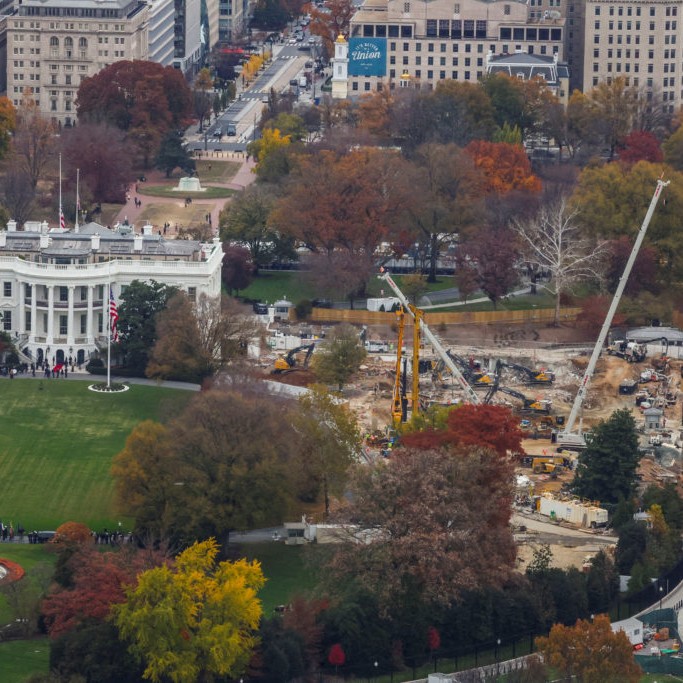
The Justice Department is treating a violent security incident as more than a warning sign. It is using it as leverage, with a clock attached, in a courtroom fight over President Donald Trump’s $400 million White House ballroom.
What You Should Know
The Justice Department sent the National Trust for Historic Preservation a letter citing the shooting near the White House Correspondents’ Dinner and urging it to dismiss its lawsuit challenging Trump’s planned ballroom. The case is already in active litigation, with ongoing construction and a court review hearing scheduled for June 5th.
The pressure campaign became public after acting Attorney General Todd Blanche posted about the letter on X, while the National Trust, the preservation group suing to block the project, said it would review the demand with legal counsel.
A Security Crisis Gets Turned Into a Legal Deadline
According to reports from PBS NewsHour and The Associated Press, the letter from Assistant Attorney General Brett Shumate gave the National Trust until 9 a.m. Monday to drop its lawsuit or face a government push to have the court end it.
“It’s time to build the ballroom,” Blanche wrote on X, publishing the letter.
In that letter, Shumate argued that the Washington Hilton, the venue for the Correspondents’ Dinner, was unsafe for presidential events, and he framed a White House-based ballroom as a long-term security fix that would reduce future risk to the Secret Service.
The Lawsuit Is About Power, Process, and Who Pays
The National Trust sued in December, shortly after the East Wing was demolished to make way for the planned expansion. Trump has said the ballroom would hold 999 people and be paid for with private donations, while public funds cover underground bunker work and security upgrades, according to the same reporting.
The group has argued in court filings that the project moved forward without approvals, which it says are required from key federal agencies and Congress. The dispute is not just about architecture. It is about who gets to declare an emergency, who controls the permitting process, and how far a president can push a construction plan under the banner of national security.
The legal posture is already complicated. A federal appeals court recently allowed construction to continue, while U.S. District Judge Richard Leon blocked above-ground work but allowed below-ground work tied to what the court described as national security facilities. The appeals court also scheduled a June 5th hearing to review the case, PBS NewsHour reported.
Both Parties Smell Leverage, and the Hilton Is the Villain
Trump and allies have used the shooting to sell the ballroom as a security necessity, and the pitch has traveled across partisan lines. PBS NewsHour reported that Rep. Jim Jordan said on Fox News he agreed with Trump “100%” on safety grounds, while Sen. Lindsey Graham called the ballroom a “national security necessity” on X.
Democrats were not uniformly dismissive, either. Sen. John Fetterman, who attended the dinner, said the proposed space should be used for events like that one, and he described the night as “vulnerable” given how many officials were in the room, according to PBS NewsHour.
Even if the administration is portraying the Hilton as uniquely problematic, history shows that the White House complex itself has had breaches, too. Documented incidents include a 2014 fence-jumper who made it into the building, a 1994 small plane crash on the South Lawn, and the 2009 state dinner gate-crashing case involving Tareq and Michaele Salahi.
For now, the immediate standoff is simple: accept the government’s demand, or force the Justice Department to try to persuade a judge that Saturday night’s violence should effectively rewrite the litigation. Either way, the next pressure points are the dismissal deadline and the June 5th hearing date.
References
- PBS NewsHour: Justice Department Cites Correspondents’ Dinner Shooting in Push to Drop Trump Ballroom Lawsuit
- PBS NewsHour: Trump Unharmed After Security Incident at White House Correspondents’ Dinner
- PBS NewsHour: Correspondents’ Dinner Shooting Suspect Wrote About Grievances Against Trump and Targeting Administration Officials