

Trump just put a ticking number on Iran, 10 to 15 days, while the U.S. moves another aircraft carrier toward the Middle East and Iran stages drills alongside Russia. The question is whether that deadline is a negotiating tactic or a calendar for something louder.
What You Should Know
On February 19th, 2026, President Donald Trump said Iran has 10 to 15 days to reach a nuclear deal as U.S. military assets, including the USS Gerald R. Ford, move closer to the region. Iran is conducting naval drills with Russia.
The moment is defined by two parallel tracks that do not neatly match: diplomacy described as indirect talks, and force posture described as mid-March readiness. Both Washington and Tehran are signaling they are prepared for war if negotiations collapse, according to an Associated Press report published by PBS NewsHour.
A Deadline That Sounds Like Leverage
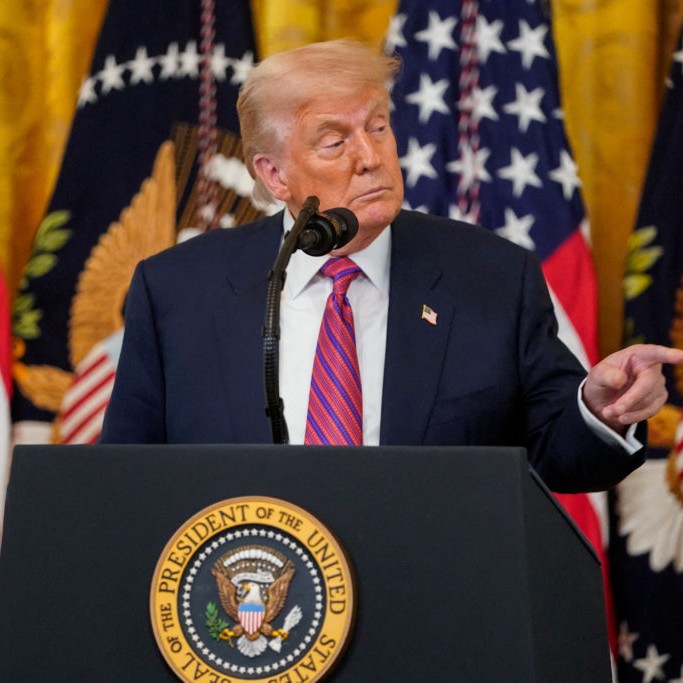
Trump did not wrap the message in diplomatic poetry. He framed it like a timer.
“It’s proven to be, over the years, not easy to make a meaningful deal with Iran, and we have to make a meaningful deal. Otherwise, bad things happen,” Trump said, according to the AP report. Later, he tightened it further: “I would think that would be enough time.”
There is a reason deadlines land differently when aircraft carriers are part of the same news cycle. A time limit can be leverage. It can also be a way to pre-load blame, setting up the line that the other side “ran out the clock” when the next step is not another meeting in Geneva.
Iran, for its part, has resisted widening the agenda. The AP report said Tehran has refused to negotiate broader U.S. and Israeli demands tied to Iran’s missile program and its relationships with armed groups in the region. If that refusal is still in place, the math is ugly: 10 to 15 days is not much time to solve disputes that have been deadlocked for years.
Carriers, Combat Aircraft, and a Mid-March Marker
The most revealing line in the AP report was not the deadline itself. It was the calendar attached to the hardware.
A senior U.S. official, speaking anonymously because they were not authorized to comment publicly, told the AP that top national security officials were briefed that the “full forces” needed for potential military action are expected to be in place by mid-March.
That matters because it creates two clocks at once: Trump’s public 10-to-15-day clock, and the Pentagon-style readiness clock. They are not identical, and that gap is where pressure campaigns live.
Meanwhile, the USS Gerald R. Ford was described as near the mouth of the Mediterranean Sea, with tracking data placing it off Morocco in the Atlantic Ocean as of midday Wednesday in the AP report. Translation: it is not yet in striking distance of Iran, but it is moving into a position where the option becomes more real, more credible, and harder to ignore.
The AP report also cited the New York-based Soufan Center, which said another 50 U.S. combat aircraft, including F-35s, F-22s, and F-16s, were ordered to the region to supplement hundreds already deployed to bases in the Arab Gulf states. Even if no shots are fired, that kind of flow changes decision-making on every side. More assets means more possible missions, more deterrence, and more ways a misread signal turns into an incident.
Iran Drills With Russia, and the Strait of Hormuz Reminder
Iran did not answer Trump with a press conference alone. It answered with choreography at sea.
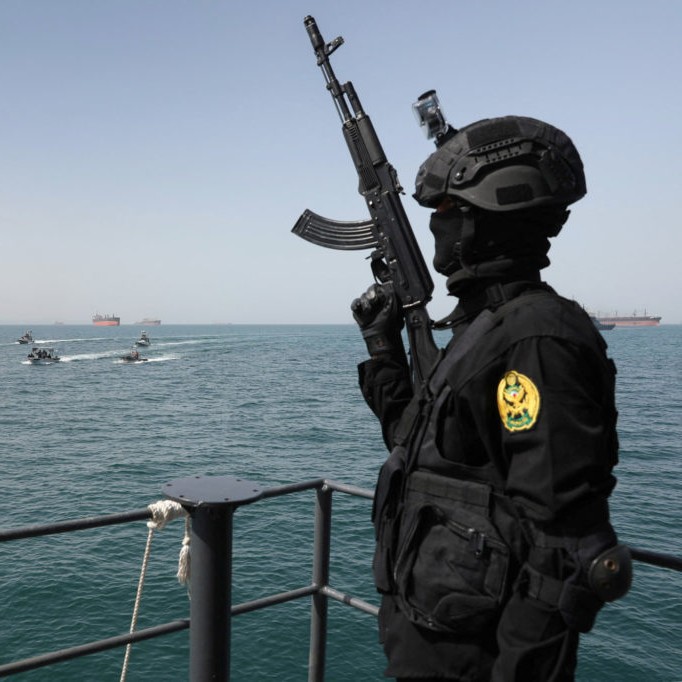
Iranian forces and Russian sailors conducted annual drills in the Gulf of Oman and the Indian Ocean aimed at improving operational coordination, Iran’s state-run IRNA news agency reported, according to the AP account. Iran also issued a rocket-fire warning to pilots in the region, suggesting anti-ship missile activity during the exercise.
Then there is geography, the kind that turns military posturing into global economics. The AP report said Iran launched a drill earlier in the week involving live-fire in the Strait of Hormuz, the narrow opening of the Persian Gulf through which a fifth of the world’s traded oil passes.
When the Strait of Hormuz enters the chat, it is not just about Iran and the U.S. It is about insurance markets, shipping schedules, fuel prices, and the political consequences that follow if energy costs spike. Tehran knows that. Washington knows Tehran knows that.
Two Vulnerabilities, One Escalation Risk
The AP report described Iran’s leadership as more vulnerable than it has been in years, pointing to 12 days of Israeli and U.S. strikes on Iranian nuclear sites and military targets last year, plus mass protests in January that were violently suppressed.
Yet vulnerability does not equal incapacity. The same report noted Iran remains capable of striking Israel and U.S. bases in the region, and has warned that any attack would trigger a regional war.
That is the escalatory trap in one sentence: one side believes pressure will produce concessions, the other believes concessions invite collapse, and both keep reminding each other they can widen the battlefield.
Even Europe is hearing the hum. The AP report said Polish Prime Minister Donald Tusk urged Polish citizens to immediately leave Iran, warning that within a short window, evacuation could become impossible. Germany, the report added, said it moved a mid-two digit number of non-mission critical personnel out of a base in northern Iraq, while some troops remained.
Those are not declarations of war. They are the kinds of moves governments make when they want to be able to say later that they saw the risk coming.
The Contradictions, From Nuclear Claims to Inspector Access
One of the biggest contradictions in this standoff sits inside a pair of statements that do not comfortably coexist.
Iran has said the current talks should only focus on its nuclear program, and that it has not been enriching uranium since the U.S. and Israeli strikes last summer, according to the AP report. Trump, in the same broader timeline, said the strikes had “obliterated” Iran’s nuclear sites. But the AP report added that the exact damage is unknown because Tehran has barred international inspectors.
That is a problem for everyone. If the damage is truly decisive, inspectors would be the cleanest proof. If the damage is not decisive, inspectors would be the fastest way to measure how close Iran is to rebuilding or rerouting. Blocking access leaves a fog where worst-case assumptions thrive.
And worst-case assumptions are gasoline in a moment when carriers are moving, and drills are going live-fire.
Israel Signals Its Own Red Lines
Israel is not an observer here. It is a stakeholder with its own timetable and its own domestic pressure, and it is broadcasting readiness.
“We are prepared for any scenario,” Israeli Prime Minister Benjamin Netanyahu said Thursday, according to the AP report, adding that if Iran attacks Israel, “they will experience a response they cannot even imagine.”
The AP report noted Netanyahu has long pushed for tougher U.S. action against Iran and argues any deal should do more than constrain the nuclear program. He wants limits on Iran’s missile arsenal and a severing of ties with groups like Hamas and Hezbollah.
Iran says the talks should be narrower. Israel says the deal should be wider. Trump says the deal must be meaningful, and he put a short number on it. Those positions are not naturally compatible, and the mismatch increases the odds that “no deal” becomes the most realistic outcome.
What To Watch Next
Three near-term signals will matter more than rhetoric.
First, the written proposal. The AP report said Iran agreed to draw up a written proposal addressing U.S. concerns raised during indirect nuclear talks in Geneva. The official cited in the report did not provide a timeline for when Iran is expected to deliver it. If Trump’s 10-to-15-day window passes without paper, the White House could frame that as stalling.
Second, the force posture. The difference between “approaching” and “in position” is not subtle in military planning. The closer the Ford and supporting ships get to the eastern Mediterranean, the more credible any implied threat becomes. Credibility can deter, but it also compresses decision time on all sides.
Third, the Strait of Hormuz. Any new Iranian live-fire warnings, vessel seizures, or missile tests in that corridor would not just be a regional signal. It would be a global one, with consequences that show up far away from the waterline.
For now, Trump is offering a deal with one hand and a deadline with the other. Iran is offering talks but keeping inspectors out. Russia is showing up for drills. Israel is promising readiness. The pieces are not locked into place yet, but they are moving in ways that make accidents and choices harder to reverse.