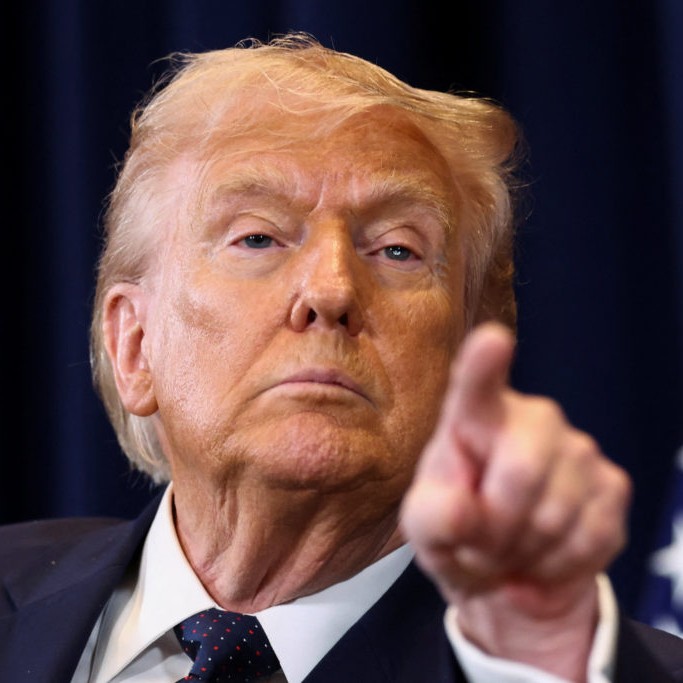


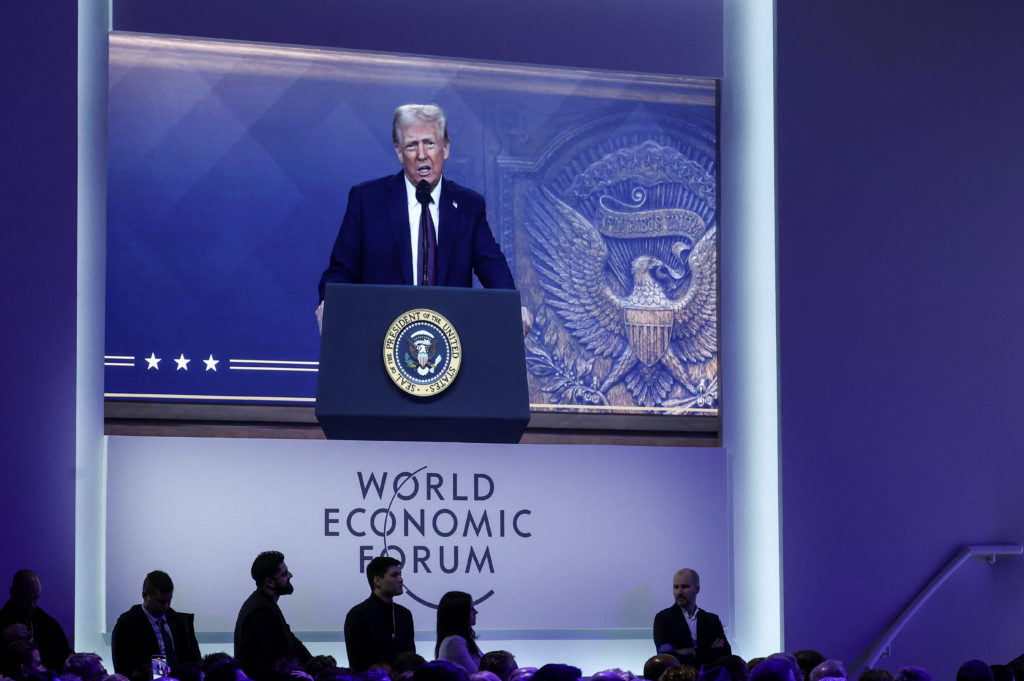
Donald Trump is heading back onto the most elite stage in global business. But the most important people listening might not be in the Davos hall. They could be in Brussels, watching whether a U.S. president can turn a Greenland pressure campaign into a trade fight that forces Europe to pick a side.
Trump is expected to deliver an address at the World Economic Forum annual meeting in Davos, Switzerland, according to the Associated Press, carried by PBS News. His return comes as corporate chiefs and government leaders gather for a week of high-gloss dialogue about economic progress, even as Washington’s actions have “upended the global order” and billionaires have reaped trillions in new wealth while the poor lag behind, the AP reported.
Davos Is the Backdrop – Greenland Is the Plot
The immediate tension is not a policy white paper or a panel on artificial intelligence. It is Trump’s posture toward Greenland, and what Europe is preparing in response.
French President Emmanuel Macron said the European Union “should not hesitate” to use the bloc’s anti-coercion instrument in the face of Trump’s tariff threats over Greenland, according to the AP report.
That tool has a nickname that does not sound like the usual Brussels bureaucracy. The AP described it as unofficially known as the “trade bazooka.” In plain terms, it could sanction individuals or institutions found to be putting undue pressure on the EU.
For Trump, the optics are familiar. Davos is the symbolic capital of the global elite. Greenland is the kind of geopolitical talking point that plays differently across audiences, raising alarms among allies while energizing supporters who want Washington to push harder overseas.
What We Know About Trump’s Appearance
Trump is expected to deliver an address at the World Economic Forum at 8:30 a.m. Eastern, the AP report said, with PBS offering a live stream. It will be his third visit to Davos as president, per the AP.
The timing is what makes it combustible. The same AP report notes U.S. allies are worried about Trump’s ambition to take over Greenland. In other words, Trump is walking into an elite forum while allied leaders are openly gaming out defensive options, including a trade instrument designed for coercion scenarios.
It is a high-stakes contrast that Davos thrives on. One side sells stability and predictability. The other sells disruption and leverage. The cameras will be on the speech, but the market for signals will be just as intense as the applause.
Europe’s Countermove Has a Name and a Target
The anti-coercion instrument is not a rhetorical flourish. It is a mechanism. The AP described it as capable of sanctioning individuals or institutions it finds to be applying undue pressure on the EU.
That matters because tariff threats are not just numbers on a spreadsheet. Tariffs can be used to apply political pressure, and the EU is signaling it wants legal and economic tools ready if it concludes it is being forced into a corner.
Macron’s language also matters. “Should not hesitate” is not a diplomatic shrug. It is an invitation to treat the situation as urgent, and to move quickly if Trump’s posture escalates.
Trump’s Wider Pressure Campaign, From NATO Nerves to Fed Anxiety
The AP report framed Trump’s Davos moment as part of a broader pattern of hardball tactics that have multiple audiences on edge.
Beyond Greenland, the report said Latin America is grappling with Trump’s efforts to seize Venezuela’s oil. It also said business leaders and lawmakers at home have expressed concerns about his hardball tactics toward Federal Reserve Chair Jerome Powell.
Those are three distinct arenas, but they intersect in one place: confidence. Investors, allies, and corporate leaders tend to crave predictable guardrails. Trump’s brand, especially on the world stage, has often been built on breaking those guardrails and forcing counterparties to respond in real time.
Even a short line can carry weight. In related coverage referenced by the AP report, Trump was quoted as saying, “Something’s going to happen,” as Greenland threats rattled NATO allies. The phrase is vague, but that is part of why it travels. Allies hear uncertainty. Markets hear risk. Supporters hear momentum.
Why Davos Cares, Even When It Says It Is Above Politics
Davos sells itself as a convening space for dialogue and economic progress. That language is in the AP’s description of the forum. But Davos is also where corporate chiefs and government leaders compare notes on what is coming next, and how quickly.
In that setting, Trump’s appearance is not just a speech. It is an audition for leverage. If he hints at timelines, tariffs, or escalation, every sentence becomes a data point for supply chains, defense planning, and political messaging inside the EU.
The AP’s framing also pulls another thread Davos cannot escape: the widening gap between the ultra-wealthy and everyone else. “Billionaires have reaped trillions in new wealth as the poor lag behind,” the report said. That is the contradiction Davos lives with. The forum markets big solutions while the world watches the winners win bigger.
Receipts To Watch for After the Applause
Because this is a live event setup, the most meaningful receipts may come in the hours and days after Trump speaks, not during the applause lines.
Here is what carries consequences based on the AP report’s stakes:
- Any explicit reference to tariffs tied to Greenland. The EU’s anti-coercion instrument is already being floated publicly. If Trump doubles down, European leaders have a clear next step to justify action.
- Any concrete signals about Venezuela’s oil. The AP noted Latin America is grappling with Trump’s efforts. Specific language could harden regional responses.
- Any escalation cues regarding the Federal Reserve. The AP said business leaders and lawmakers have concerns about pressure on Fed Chair Jerome Powell. Davos is where those concerns go from rumor to boardroom risk planning.
None of those requires a policy document to move markets or politics. A sentence can do it.
The Next Move Belongs to Europe, and to Trump
Davos has a way of turning abstract power into very concrete standoffs. This week’s setup is a familiar one: Trump takes the stage, allies listen for pressure points, and Europe quietly sharpens a tool it has already branded the “trade bazooka.”
Macron has already put the warning in public. The EU, he said, “should not hesitate.” Now the question is whether Trump’s Davos remarks give Europe a reason to act, or a reason to wait. Either way, the world’s most exclusive conference is once again serving as a live-fire test of who can force whose hand.