

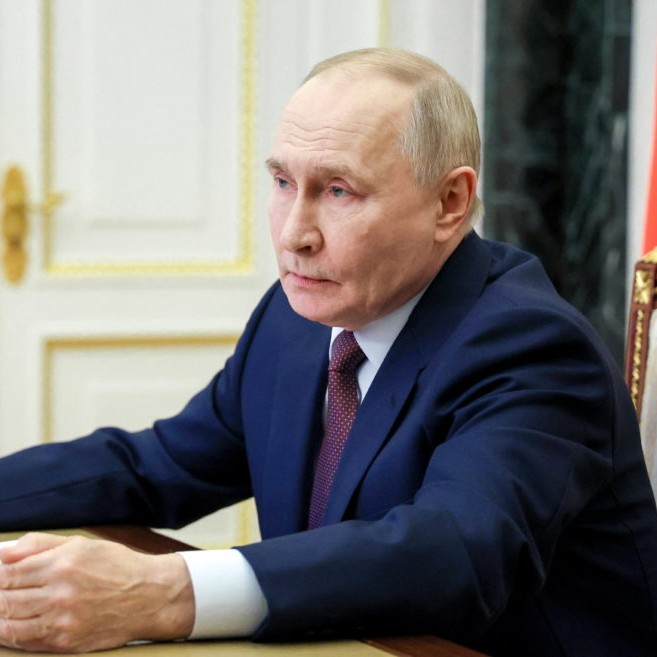
President Donald Trump took a call with Russian President Vladimir Putin as the war in Iran pressed into a second week. The catch is that the most concrete details and the most strategic framing surfaced from Moscow first.
What You Should Know
According to the Kremlin, Trump and Putin spoke on March 9th, 2026, for about an hour about the war in Iran and other issues. The Kremlin said they also discussed Venezuela and global energy markets as oil prices jumped.
The account came from Yuri Ushakov, Putin’s foreign affairs adviser, who described the conversation as a substantive exchange during what he called an ongoing U.S.-Israeli operation connected to the conflict.
The Kremlin Got Its Message Out First
Ushakov said the two leaders had a “specific and useful” exchange of views and that Putin floated ideas for a quicker political and diplomatic settlement after his own conversations with Gulf leaders and Iran’s president. That is a neat narrative for Moscow, a power broker pitching itself as the grown-up mediator.
Trump, Ushakov said, offered his assessment of the developing situation, and the Kremlin placed it inside the larger picture of U.S. and Israeli military activity. In other words, Russia cast itself as the party pushing diplomacy, while describing the United States as already deep in operations.
That framing matters because readouts are not just summaries. They are leverage. When one side defines what was discussed and why, it shapes how allies, rivals, and markets interpret the call.
Energy Leverage Is Sitting Under the Conversation
The Kremlin account did not stop at Iran. Ushakov said the leaders touched on Venezuela in the context of the global oil market, a reminder that wars and sanctions land fastest at the gas pump, and that energy producers know it.
Putin also used the day to talk energy pressure in public terms. He warned that “attempts to destabilize the situation in the Middle East will inevitably jeopardize” the global energy market, a line that connects battlefield chaos to price spikes and supply fears.
He cast Russia as a “reliable energy supplier” for countries it labels reliable partners, naming regions and nations, and he reiterated that Moscow has weighed redirecting gas away from the European Union as the EU moves toward a full ban on Russian gas from 2027.
What Washington’s Silence Would Mean
If the U.S. side offers fewer details, the Kremlin version fills the vacuum by default. That puts pressure on Trump’s team to either match the specificity or accept a storyline in which Moscow is the calm broker with energy to spare.
What to watch next is not only whether more official U.S. details emerge, but whether the Iran conflict keeps feeding oil volatility, and whether Russia uses the moment to bargain on sanctions, energy routes, or diplomatic relevance.