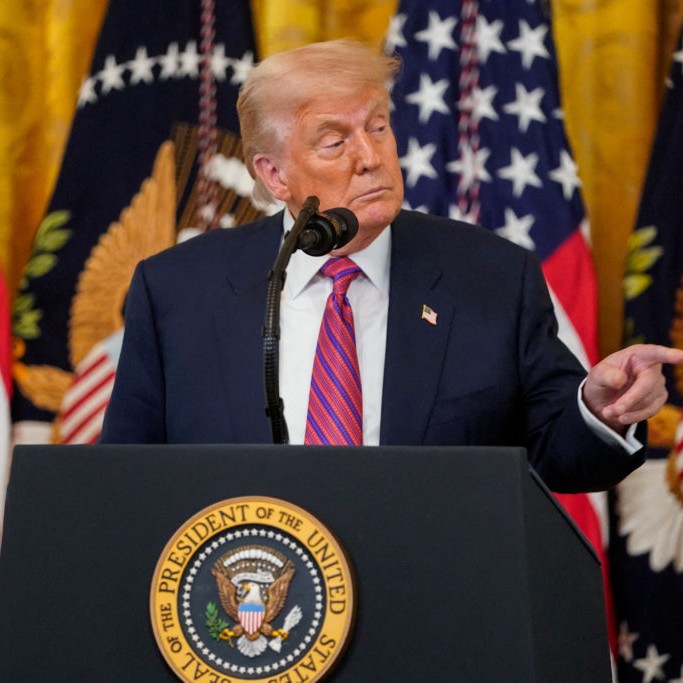
Donald Trump is telling the government to open the UFO drawers. The Pentagon has been insisting for years that the drawers do not contain aliens. So what, exactly, is supposed to spill out when the locks come off?
What You Should Know
CBS News reported that Trump directed his administration to begin identifying and releasing files related to UFOs and any alien or extraterrestrial life. The Pentagon’s All-domain Anomaly Resolution Office has said its reviews found no evidence of extraterrestrial beings or technology.
The clash is not really between believers and skeptics. It is between a political order that rewards spectacle and a national security bureaucracy that has already tried to pre-bury the story in cautious, bureaucratic language.
A Declassification Order With a Built-In Rival
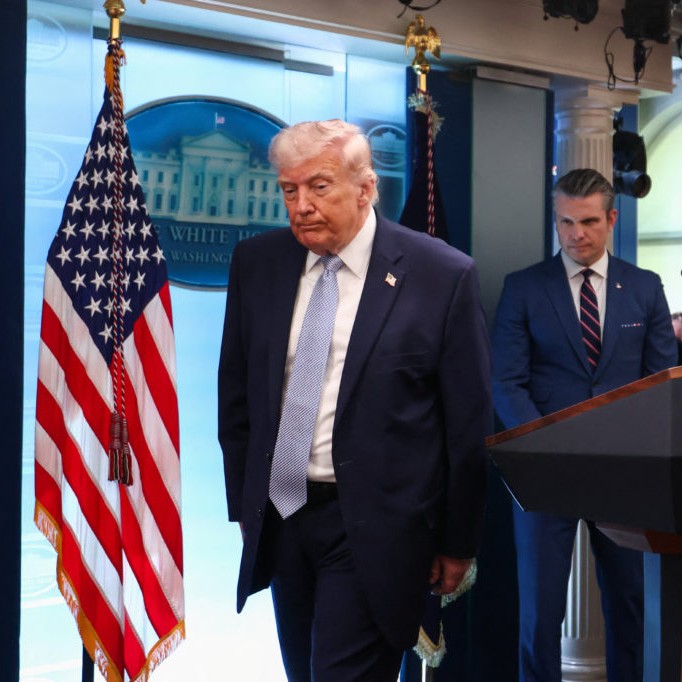
According to CBS News, Trump used a Truth Social post to tell Defense Secretary Pete Hegseth and other agency leaders to start the process of identifying and releasing relevant material. Trump also, per CBS, called for the release of any other information connected to what he described as complex matters.
In the public imagination, UFO transparency sounds like a single dramatic act. In Washington, it is closer to trench warfare: agencies arguing over what exists, what is classified, what can be redacted, and what can be released without exposing sources, methods, or ongoing programs.
That is the first tension worth watching. A president can demand sunlight. The government can comply in ways that still leave most of the room in shadow.
What the Pentagon Has Already Put in Writing
The second tension is more direct. The Pentagon has a dedicated office for this subject, the All-domain Anomaly Resolution Office, or AARO, and it has already tried to draw a bright line between public fascination and government findings.
CBS summarized that a 2024 AARO report said there is no evidence that government investigations have confirmed extraterrestrial life. That is the phrase that matters, because it is both sweeping and narrowly legalistic. It does not say every case is solved. It says the reviews have not produced alien proof.
AARO has used unusually blunt language for a topic that often gets drowned in euphemisms. In that 2024 reporting, the office said: “It is important to underscore that, to date, AARO has discovered no evidence of extraterrestrial beings, activity, or technology.”
If Trump is about to force a release of records, those records will land in a media environment where the Pentagon’s headline conclusion is already on file. The practical question is whether anything newly released changes that conclusion, or whether it simply expands the pile of unresolved sightings without producing a smoking gun.
Obama, Classified Material, and a Familiar Trump Move
There is also a political side quest baked into the rollout. CBS reported that Trump was asked about former President Barack Obama’s comments on aliens, and Trump suggested Obama “made a big mistake” and “gave classified information.” The implication was not subtle: if Obama crossed a line, Trump gets to play the decider on whether the line stays drawn.
That is an old Trump dynamic in a new costume. The UFO angle grabs attention, but the power play is about who controls classification, who is accused of mishandling secrets, and who gets to posture as the fixer.
Trump, according to CBS, even floated a kind of reverse get-out-of-jail card: “I may get him out of trouble by declassifying.”
Maybe it was a joke, maybe it was a jab, maybe it was a warning. Either way, it turns an already sensational topic into a familiar Washington currency: leverage.
UAPs Are Real, the Explanations Are Not Glamorous
Part of the reason this story refuses to die is that the underlying sightings are not imaginary. Pilots and service members have reported objects they could not immediately identify. Lawmakers have demanded briefings. Hearings have given the topic a fresh sheen of legitimacy.
CBS noted that public interest has surged in recent years, including reports of unexplained objects and questions about whether any of it could threaten safety or national security. That framing is crucial because it is the bridge between the fun-house mirror of alien culture and the sober language that keeps the Pentagon engaged.
The problem is that many explanations are boring. AARO has said a large number of reports can be tied to birds, balloons, drones, satellites, and other ordinary phenomena. That does not satisfy people who want a single grand reveal, and it does not satisfy people who suspect the government is hiding the real story. It is bureaucratic purgatory, where the answer is often, we do not know yet, and the best guess is mundane.
Still, “unresolved” is its own kind of fuel. Every case that remains open becomes a container that anyone can fill with their preferred theory.
The Stakes Are Not Just Curiosity
If this were only about curiosity, it would be easy: dump everything, let the internet argue, move on. But UFO records sit at the intersection of several high-stakes fights.
First, there is the national security stake. Even when the government concludes something is not extraterrestrial, the sensors, platforms, and collection capabilities behind the sightings can be sensitive. A document about an unidentified object can also be a document about how the military sees.
Second, there is the political stake. A promised release creates a scoreboard. If the release is thin or heavily redacted, critics will say it was theater. If it is expansive but inconclusive, critics will say it was noise. If it contains surprises, critics will ask why it was not released earlier and who fought to keep it sealed.
Third, there is the credibility stake. The government has spent years trying to sound serious about UAPs without legitimizing the alien conclusion. Trump, as CBS described, is explicitly invoking “alien and extraterrestrial life” as part of the directive. That rhetorical choice raises the risk of a mismatch between expectations and deliverables.
In other words, the release is not just a transparency moment. It is a trust moment. The administration will be judged on whether it can produce records that feel meaningful, not just technically public.
What a Release Could Actually Look Like
Even if Trump wants maximum disclosure, the mechanics matter. Agencies can comply by releasing already known material, summarizing findings, or issuing document dumps that are difficult for the public to parse. They can also stagger releases, which keeps attention cycling and keeps control closer to the center.
There is also the question of scope. Does “UFO files” mean raw incident reports from pilots? Sensor data? Internal memos? Cross-agency communications? Records from intelligence components? The public tends to imagine a single vault. The government is a maze of vaults, each with different rules and different institutional incentives.
That is why the most revealing part of CBS’s reporting may be the simplest admission: it is not clear what files might be released, or what they might contain. That uncertainty is not an obstacle to the politics. It is the politics.
What to Watch Next
The next chapter is not about whether aliens exist. The next chapter is whether the administration can produce a release that changes the official narrative, or whether it simply spotlights how firmly the Pentagon has already planted its flag.
Watch for three signals.
- Whether the release comes with a clear catalog, so outsiders can tell what is new versus recycled.
- Whether AARO’s conclusions are reiterated alongside any new material, which would suggest continuity rather than a bombshell.
- Whether political attacks about classification, including Trump’s swipe at Obama, become a bigger part of the story than the documents themselves.
If the release ends up being mostly process, that will still be revealing. It will show what the government considers safe to show, what it refuses to show, and how a topic that thrives on mystery behaves when a president tries to turn it into paperwork.