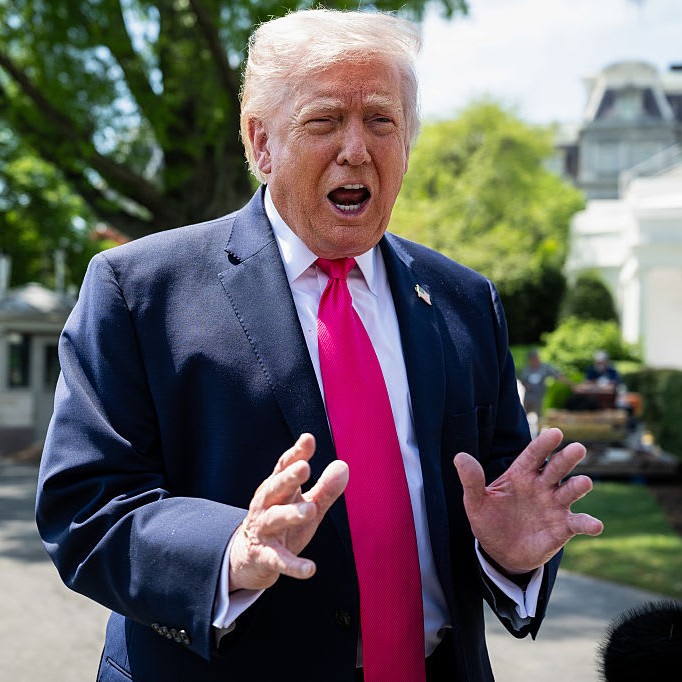
President Trump says he is stepping back from threats and stepping into a “framework of a deal” involving Greenland. The problem, U.S. allies argue, is that the off-ramp comes after a very public threat to drive straight through.
In a segment aired by PBS NewsHour, Trump described a loose outline that would let the United States build missile defense bases and pursue mineral mining under Greenland’s ice. Details were thin. Reaction abroad was not.
Trump just ruled out military force on Greenland at Davos—and announced a “framework” deal with NATO.
But Russia is watching with “glee.” Foreign Minister Lavrov compared Trump’s bid to Moscow’s seizure of Crimea: “Crimea is no less important for the security of the Russian… pic.twitter.com/mQ8iV1dhha
— Euromaidan Press (@EuromaidanPress) January 22, 2026
A ‘Framework’ With Big Stakes and Few Details
PBS NewsHour Foreign Affairs and Defense Correspondent Nick Schifrin reported that Trump announced what he called “the framework of a deal over Greenland,” after previously threatening to take over the Danish territory, “if needed, by military force.” PBS added that “there are not many details,” but said Trump framed the arrangement around missile defense basing and access to minerals.
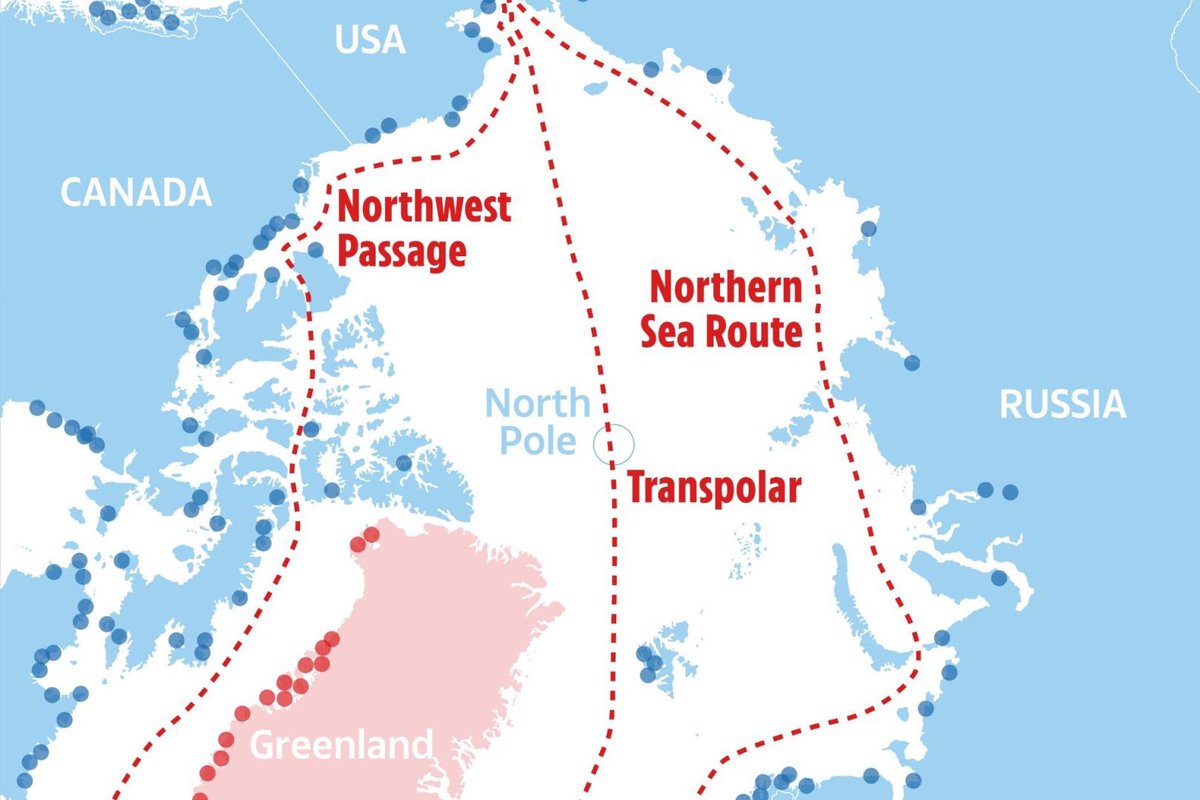
That combination is not random. Greenland sits on the strategic chessboard between North America and Europe, and it has long been tied to U.S. defense planning in the Arctic. The U.S. military operates from Pituffik Space Base (formerly Thule Air Base), a key site for missile warning and space surveillance. When a sitting U.S. president talks about adding missile defense infrastructure in Greenland, it lands in a region where the U.S. already has real hardware and real missions.
Minerals are the second hook. Greenland’s geology has been discussed for years as climate and technology pressures refocus attention on critical materials. The island’s potential has repeatedly surfaced in debates about supply chains, China’s role in Arctic investment, and whether Western governments should treat mining projects as strategic assets, not just business deals.
The Whiplash Problem: Backing Off Does Not Erase the Threat
PBS captured the core diplomatic tension in one line: even as Trump “has taken an off-ramp,” Europeans and Canadians say “the damage has already been done.” That is the hangover effect of hard-power talk. Once a threat is spoken out loud, leaders on the receiving end have to plan as if it could become policy again, even if the speaker later changes tone.
That concern is not theoretical in the Trump era. Greenland has already been a flashpoint once, when Trump publicly flirted with buying it, and Denmark flatly rejected the idea. In 2019, after Denmark’s prime minister described the concept as absurd, Trump canceled a planned trip to Copenhagen. The episode was widely covered at the time, including by the BBC, and it left a paper trail of bruised feelings and questions about how Washington views its allies.
So when PBS reports Trump moving from takeover threats to a “framework,” some allied officials and observers are likely to see not reassurance but volatility. A deal outline can be renegotiated. A threat, once normalized, becomes a precedent.
Why Greenland Hits a NATO Nerve
Greenland is part of the Kingdom of Denmark. Denmark is a NATO member. That alone makes the subject radioactive in alliance politics.
Denmark says it will not negotiate Greenland’s sovereignty but welcomes dialogue on Arctic security, following U.S. President Trump’s comments on a “framework deal,” as Greenland MP Kuno Fencker highlights confusion over shifting U.S. positions. https://t.co/co9zLCzvpp pic.twitter.com/tC8Pw9um91
— Namibia Future Media News (@FutureMedia_Nam) January 22, 2026
NATO’s founding treaty is built around collective defense among members. Public talk of seizing territory tied to a NATO ally, even if later softened, can put other governments in an awkward spot. They may want U.S. security guarantees against Russia while also needing to signal that borders and sovereignty are not bargaining chips.
It also risks turning everyday defense cooperation into a domestic political liability for leaders in Europe and North America. If voters hear “military force” and “take over,” even in a bluffing posture, they may pressure their governments to distance themselves from U.S. initiatives that had once been routine.
Missile Defense Bases: Familiar Mission, New Politics
From Washington’s perspective, adding missile defense capabilities in the Arctic fits a decades-long pattern. The U.S. has operated early warning systems tied to North American defense for generations, and the strategic logic of Arctic geography has not gone away.
But politics can overwhelm logic. Expanding basing or defense infrastructure in Greenland could be seen as a normal modernization effort if it is negotiated quietly through Denmark and Greenland’s elected leadership. The same steps, framed publicly as leverage following threats, can be read as coerced consent.
That difference matters because U.S. basing in allied territory typically depends on durability. Governments change. Coalitions collapse. Public opinion swings. A deal that looks like it was extracted after intimidation is easier for a future government to revisit, or for an opposition party to campaign against.
Mining Under the Ice: The Economic Hook That Can Complicate Everything
Trump’s minerals pitch, as described by PBS, is the kind of economic sweetener that can make a security arrangement look like a package deal. Yet resource development in Greenland has a history of controversy, including debates over environmental impact, local benefits, and foreign influence.
One reason the issue is sensitive is that mining projects are not just technical decisions. They tend to raise questions about who profits, who bears risk, and who controls the supply chain. In the Arctic, those questions often come bundled with geopolitics, particularly when governments worry about strategic competitors gaining a foothold through investment or infrastructure.
If the United States is perceived as treating Greenland’s resources as spoils attached to a security ultimatum, that can harden resistance and invite scrutiny of every detail. If the U.S. is perceived as a partner seeking mutually beneficial terms, the same projects can be debated on their merits. Tone decides which path the story takes.
Denmark, Greenland, and the Question Everyone Will Ask Next
PBS noted that Trump’s announcement came with limited detail. That vacuum will be filled quickly by two questions.
First, what exactly is in the “framework?” Is it an agreement in principle with Denmark’s government, with Greenland’s leadership, or simply an American proposal presented as a deal? Those distinctions are the difference between diplomacy and messaging.
Second, what happens to the rhetoric? Allies can negotiate basing and minerals. It is far harder to negotiate away the fear that future disputes could bring another round of threats.
In other words, the immediate story is not only whether there is a workable plan for missile defense sites or mining rights. The bigger test is whether Washington can restore predictability with partners who now have to plan for both the “framework” and the force talk.
What To Watch
Expect any next steps to revolve around documentation and process. Watch for written statements from Denmark and Greenland clarifying whether talks are real, preliminary, or nonexistent. Watch for Pentagon-level specifics on what “missile defense bases” would entail, and whether they relate to existing missions at Pituffik.
And watch the allied language closely. When officials start using words like “trust,” “sovereignty,” and “precedent,” they are signaling that the argument is no longer just about Greenland. It is about whether the alliance believes U.S. power comes with guardrails.
For now, the most revealing line may be the one PBS put front and center: Trump is offering a “framework of a deal,” but allies insist “the damage has already been done.” That is a gap a blueprint alone does not close.