

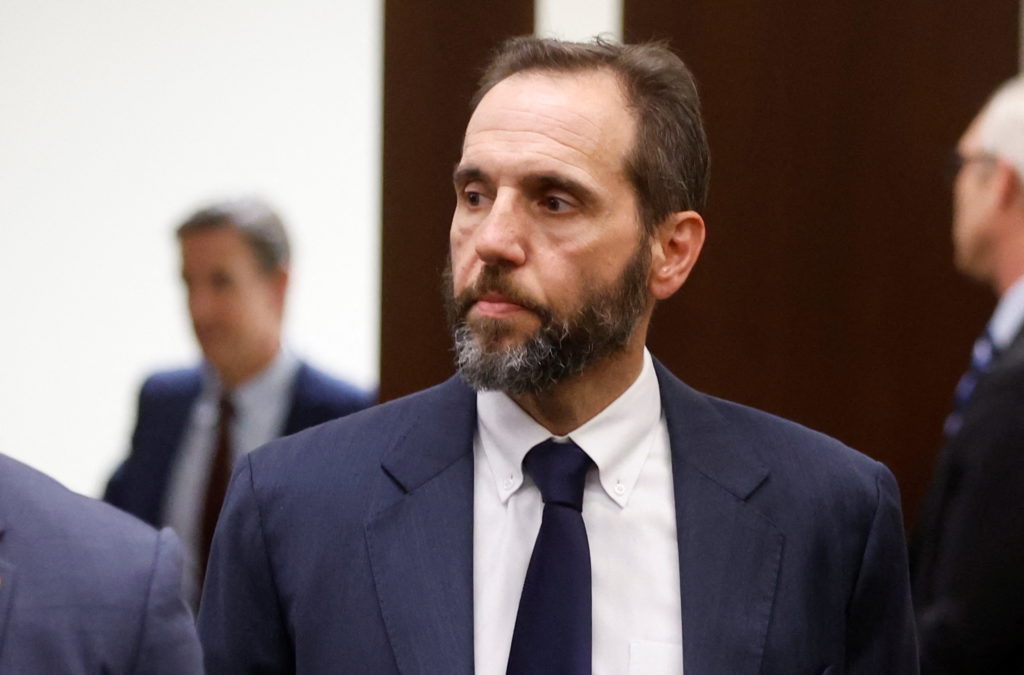
The hearing is billed as a rare moment of sunlight. But the most fought over facts in the Jack Smith versus Donald Trump saga may still sit in the shadows, sealed by courts, protected by grand jury rules, and boxed in by Justice Department policy.
That is the tension as Smith, the former Justice Department special counsel who twice indicted Trump, is set to testify before the House Judiciary Committee. Members want answers. Smith has already signaled the limits on what he can safely say.
The Setup: Two Indictments, Then a Hard Stop
Smith led two federal prosecutions against Trump, one tied to classified documents and one tied to alleged efforts to overturn the 2020 election results. Trump denied wrongdoing in both matters and repeatedly framed the cases as political.
Those prosecutions did not move to a verdict. PBS NewsHour reported that both cases were dropped once it became clear Trump would return to the White House, reflecting longstanding DOJ policy against prosecuting a sitting president. Smith testified previously behind closed doors and said he still believed the evidence was there.
In that earlier deposition, Smith told lawmakers, “Our investigation developed proof beyond a reasonable doubt that President Trump engaged in a criminal scheme to overturn the results of the 2020 election and to prevent the lawful transfer of power.” The line is now a sort of North Star for his defenders, and a red cape for his critics.
What Republicans Want: A Political Motive, a Procedural Mistake, or a Witness Crack
The House hearing gives Republicans a live microphone to press Smith on decisions that still infuriate Trump allies, including steps taken in the January 6 investigation to obtain data tied to lawmakers. Smith has argued that those choices were driven by evidence, not politics.
In the same deposition described by PBS, Smith addressed why investigators sought location and phone-related records connected to members of Congress. “I did not choose those members, President Trump did,” he said.
That is the clash to watch. Republicans are likely to frame investigatory steps as targeted, invasive, or partisan. Smith is likely to frame them as downstream of Trump’s actions and contacts, and therefore ordinary in a criminal probe.
What Democrats Want: Smith on the Record, and Trump’s Attacks Frozen in Amber
Democrats have their own incentive. They want Smith, a career prosecutor, stating plainly that he stood up a historically unusual prosecution, and that he did it based on evidence that he still says could have convicted.
They also want the public contrast between Smith’s restrained, document-heavy style and Trump’s personal attacks. PBS reported Trump has attacked Smith as a “criminal” who ought to be investigated and “put in prison.” That rhetoric matters in Congress because it tees up a second question: What price do prosecutors pay for touching a president?
Smith has hinted he is not blind to that risk. Asked in his deposition whether his testimony was compelled at the instruction of the White House, he responded, “I am eyes wide open that this President will seek retribution.”
The Biggest Problem: The Answers May Be Sealed, Not Dodged
There is a practical reality that could frustrate both sides. Smith has said much of the Mar-a-Lago classified documents investigation is under seal. Grand jury secrecy rules limit what prosecutors can reveal publicly, even when the politics are sizzling.
In federal court, grand jury matters are typically protected under Rule 6(e) of the Federal Rules of Criminal Procedure. The public may hear lawmakers demand details. The public may also hear Smith say, in effect, that he cannot legally provide them.
PBS also reported Smith cited restrictions tied to a court order from U.S. District Judge Aileen Cannon in Florida. That means this hearing can turn into a strange performance: a committee insisting it deserves transparency, and a witness pointing to court rules that treat disclosure as contempt, not cooperation.
ICYMI
Trump’s lawyers moved this week to permanently seal the release of Jack Smith’s report on the classified docs case
Judge Aileen Cannon has been holding up the release for more than a year
This prevents Smith from revealing the contents during his testimony before HJC today: pic.twitter.com/U727fnhQL0— Mona Burns (@Monaheart1229) January 22, 2026
The Mike Pence Question, and What It Signals
One of the most revealing nuggets from the prior deposition is what Smith would not confirm. PBS reported Smith would not say whether he interviewed former Vice President Mike Pence, but noted Pence would have been a strong witness if the case had gone to trial.
That single point does two things at once. It invites speculation without endorsing it, because it suggests prosecutors valued Pence’s potential testimony. It also underscores the core frustration for partisans on both sides: key witnesses and key evidence may remain partly obscured, even years after the events at the center of the case.
Why This Hearing Exists Now: A Case Dismissed, but a Campaign Issue Alive
Smith dropped both cases after Trump won a second term, according to PBS. That aligns with the DOJ Office of Legal Counsel’s long-standing position that a sitting president cannot be indicted, a view articulated in a 2000 OLC memo that is often cited in modern disputes over presidential accountability.
So Congress is left with oversight theater and political combat in the space where a courtroom might have answered factual questions. That vacuum is the real product being sold. Republicans want to prove the prosecutions were improper. Democrats want to show the prosecutions were justified and interrupted only by constitutional and institutional constraints.
What To Watch for When the Cameras Roll
Thursday, Ana Cabrera and Chris Jansing kick off coverage of former Special Counsel Jack Smith’s public testimony before Congress, with Katy Tur continuing coverage throughout the afternoon. Watch “The Trump Investigations: Jack Smith Testifies” Thurs. beginning at 10am ET on MS… pic.twitter.com/SYrvg2JL0r
— MS NOW (@MSNOWNews) January 22, 2026
1. Whether Smith reveals any fresh detail at all. If he repeats the same high-level conclusions from his prior testimony, critics will claim he is hiding. If he adds specifics, he risks tripping a legal wire involving sealed material or grand jury restrictions.
2. Whether lawmakers focus on Smith or on the case. A hearing can become a personality trial. Or it can become a forensic fight over what investigators did, what witnesses said, and why prosecutors made particular moves. PBS raised the same question: how much Republican time will be spent aiming at Smith versus chipping away at the facts and witnesses.
3. Whether the hearing shifts anyone’s view of Trump. Smith’s investigation was unprecedented. But public opinion battles do not always turn on evidence. They turn on which side looks more credible under pressure, and which sound bite spreads fastest.
The Closing Tension: A Prosecutor Who Says He Had the Goods, Facing a Congress That Cannot Unseal Them
Smith is walking into a room full of lawmakers who will demand closure. He is also walking in with legal constraints that make closure unlikely. The most memorable lines may end up being the ones he has already delivered, especially his claim of “proof beyond a reasonable doubt” and his warning that he is “eyes wide open” to retribution.
Congress can stage the showdown. Courts can keep the record locked. And Trump, now insulated by the very policy that ended the cases, can keep calling it all a witch hunt, with Smith sitting at the witness table and the evidence still out of reach.
References
-
- PBS NewsHour, “3 things to know ahead of Jack Smith’s testimony”
- U.S. Department of Justice, Office of Legal Counsel, “A Sitting President’s Amenability to Indictment and Criminal Prosecution”
- Legal Information Institute, Federal Rules of Criminal Procedure, Rule 6 (Grand Jury), including Rule 6(e)
- CourtListener docket for United States v. Trump (classified documents case docket listing)