

Federal immigration leaders are selling a simple storyline in Minneapolis: a necessary crackdown that is “well-grounded in law.” But a parallel storyline is now running through the same city, via grand jury subpoenas that land on the desks of Minnesota’s top Democrats.
Those two narratives are colliding in public, on camera, and in legal filings. One side says aggressive tactics and big arrest numbers prove the surge is working. The other side points to door-breaking entries, roadside pulls, and a fatal shooting, then asks a harder question: who is actually accountable, and who is being targeted next?
The Pitch From Federal Leaders: Big Numbers, Hard Tactics, Legal Justification
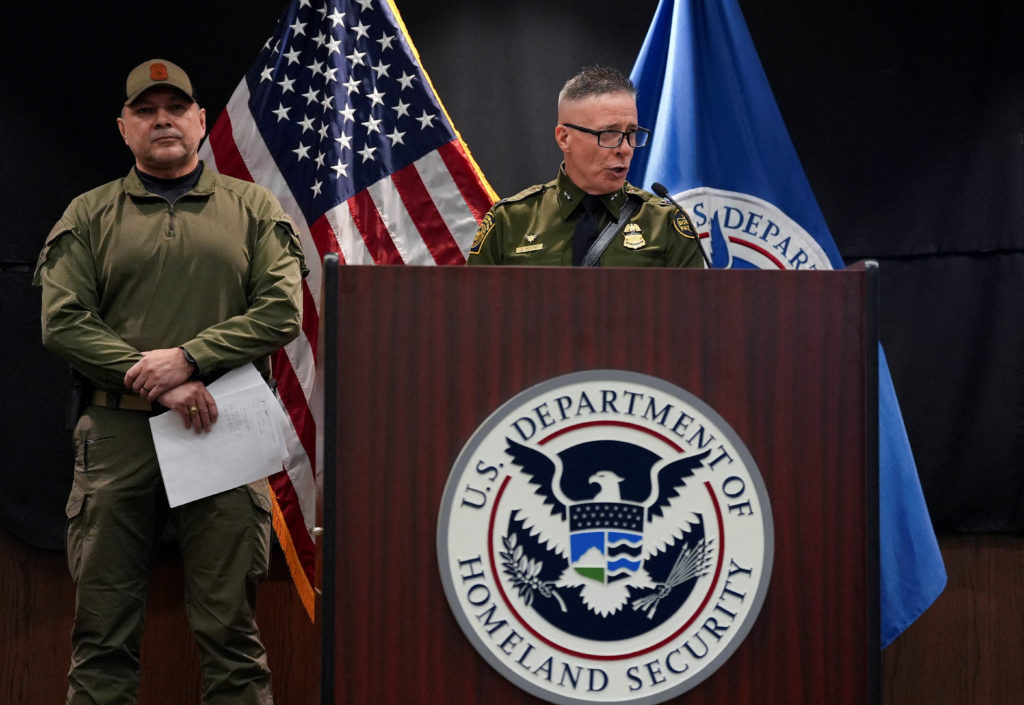
At a press conference in Minneapolis carried by PBS NewsHour and reported by The Associated Press, Border Patrol and Immigration and Customs Enforcement leaders defended how officers have operated during a recent enforcement push in the Minneapolis-St. Paul area.
Border Patrol senior official Greg Bovino touted arrest totals and framed the operations as a public safety mission. “Over the course of this administration, more than 10,000 criminal illegal aliens, as I said, have been apprehended here in Minneapolis over the past year. And in just the last six weeks, the last six weeks alone, during this most current surge, 3,000 arrests of some of the most dangerous offenders operating in Minneapolis have occurred,” Bovino said.
Alongside the numbers came a blanket defense of method. Immigration officers’ tactics were “born of necessity,” Bovino said, and “well-grounded in law.” He added: “Everything we do is legal, ethical and moral.”
The Reality on the Ground: Forced Entries, Vehicle Pulls, and Videos Everywhere
The defense comes as ICE and Border Patrol are facing growing scrutiny over the texture of day-to-day enforcement. According to the AP reporting carried by PBS NewsHour, officers have used aggressive tactics during the crackdown, including breaking down the door of a family’s home without a judicial warrant and pulling people from vehicles.
Public reaction has been loud and persistent. The AP report describes repeated confrontations between bystanders and officers, including whistles and shouted insults. Officers have responded with tear gas and chemical irritants, according to the same account.
In the smartphone era, “trust us” competes with video. Bystanders have recorded officers using a battering ram to get into a house, smashing vehicle windows, and dragging people out of cars, per the AP report. Those visuals, circulated online and discussed locally, create a second set of “receipts” that no press conference can fully control.
Advocates Challenge the Arrest Narrative: Who Is in Custody, and How Do We Know?
A core vulnerability in the federal messaging is verification. Julia Decker, policy director at the Immigrant Law Center of Minnesota, questioned whether outsiders can independently confirm who was arrested and why. Decker expressed frustration, according to AP reporting, that advocates have no way of knowing whether the government’s arrest numbers and descriptions of the people in custody are accurate.
That is not a small dispute. If the government is leaning on numbers to justify heightened force and broader discretion, critics will look for underlying details, including charges, convictions, and the accuracy of labels like “dangerous offenders.”
Federal officials, for their part, argue that operational realities require speed and control, and that legality is on their side. That “necessity versus transparency” tension is now part of the political fight, not just the policy debate.
Then Came the Subpoenas: Prosecutors Look at ‘Obstruction’ Claims
While immigration leaders defended tactics at the podium, federal prosecutors served grand jury subpoenas to Minnesota officials as part of an investigation into whether they obstructed or impeded law enforcement during the sweeping immigration operation, a person familiar with the matter told the AP.
The subpoenas sought records and were sent to the offices of Gov. Tim Walz, Attorney General Keith Ellison, Minneapolis Mayor Jacob Frey, St. Paul Mayor Kaohly Her, and officials in Ramsey and Hennepin counties, according to the AP report. The person who described the subpoenas spoke on condition of anonymity because they were not authorized to discuss an ongoing investigation.
Two people familiar with the matter previously told the AP the probe focused on whether Minnesota officials obstructed federal immigration enforcement through public statements, and that it was centered on a potential violation of a conspiracy statute.
Walz and Frey, both Democrats, have called the probe a bullying tactic meant to quell political opposition, according to the AP report. Frey’s office released a subpoena that listed a sweeping document request for a grand jury date of Feb. 3, including “any records tending to show a refusal to come to the aid of immigration officials.”
That phrasing matters. It suggests investigators are not only looking for direct interference, but also for communications that could be interpreted as noncooperation or political resistance. In a conflict already framed as federal enforcement versus local pushback, the subpoenas raise the stakes for every public statement and internal email.
A Fatal Encounter Becomes a Flashpoint, and the Legal War Spreads
The wider fight is unfolding in the shadow of a fatal shooting involving an immigration officer. Renee Good, 37, was killed on Jan. 7 as she moved her vehicle, which had been blocking a Minneapolis street where ICE officers were operating, according to AP reporting carried by PBS NewsHour.
Trump administration officials have said the officer, Jonathan Ross, shot Good in self-defense, the AP report states. The same report notes that videos of the encounter show the Honda Pilot slowly turning away from him.
After the shooting, Minnesota filed a lawsuit. The Justice Department described that lawsuit as “legally frivolous,” according to the AP account.
Put together, the ingredients are combustible: a death captured in part on video, a state lawsuit dismissed in harsh terms by the federal government, and an active grand jury subpoena campaign aimed at some of the state’s most visible elected leaders.
Why This Is Not Just Minneapolis: The Power Struggle Is the Story
This is about more than one metro area’s enforcement surge. The fight reveals a broader clash over who gets to define “public safety,” and who gets to define “obstruction.”
For federal leaders, the political upside is obvious. A crackdown with large arrest numbers is a clean headline, and a claim that everything is “legal, ethical and moral” is designed to shut down questions before they take root.
For Minnesota’s Democratic leadership, the risk is also obvious. A subpoena does not prove wrongdoing, but it forces time, legal fees, and message discipline. It also forces officials to decide whether to keep attacking the crackdown as heavy-handed or to lower the temperature and avoid feeding a narrative that prosecutors could try to characterize as interference.
And for the public, the visuals and the paperwork are both getting louder. The videos show the tactics. The subpoenas show the direction of travel. Each new document request, each new clip, and each new statement becomes another point of leverage in a fight that looks less like routine enforcement and more like a test of power between federal agencies and local governance.
What To Watch Next: The Paper Trail and the Public Record
Several next steps are already visible in the reporting. The subpoena released by Frey’s office points to a grand jury timeline, and the sweeping document demands suggest investigators want to map not only actions but motivations, coordination, and messaging.
Meanwhile, federal officials will likely keep emphasizing arrest totals and legal authority, while advocates keep pressing for verification of who is in custody and the factual basis for public safety claims. The fatal shooting of Renee Good and the Justice Department’s “legally frivolous” dismissal of Minnesota’s lawsuit ensure the dispute is not confined to a single press briefing.
For now, Minneapolis has two competing headlines, and both are backed by receipts. One is spoken into microphones. The other arrives by subpoena, with a deadline and a long list of documents.