The only Republican-held House seat inside New York City is suddenly a moving target. A state judge just tossed its boundaries, set a hard redraw deadline, and handed both parties a new battleground with control-of-Congress math in the background.
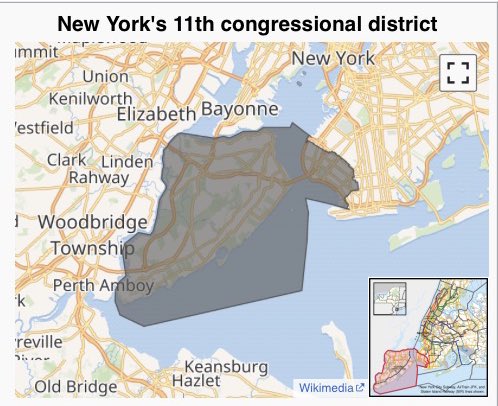
At the center is Republican Rep. Nicole Malliotakis, whose district spans Staten Island and parts of southern Brooklyn. A lawsuit argued that the lines unlawfully weaken the political power of Black and Hispanic residents. A judge agreed, and now New York has to go back to the map table, quickly.
The Ruling That Snapped the Lines
State Supreme Court Justice Jeffrey Pearlman struck down the current district boundaries and ordered a redo, according to PBS NewsHour’s report of the Associated Press story.
🚨 A New York judge has STRUCK DOWN the State’s congressional map under the NY Constitution.
Justice Pearlman orders the IRC to redraw NY-11 into a Black/Latino influence district by linking Staten Island and lower Manhattan, dismantling Republican Nicole Malliotakis’s seat. pic.twitter.com/SF5DxoUreB
— SCOTUS Wire (@scotus_wire) January 21, 2026
The judge concluded the district’s current configuration “unconstitutionally diluted the votes of Black and Hispanic residents,” per the report. The decision also described evidence of a “racially polarized voting bloc,” plus “a history of discrimination that impacts current day political participation and representation,” and “that racial appeals are still made in political campaigns today.”
Those phrases matter because they point to a core redistricting question that is not about vibes or party talking points. It is about whether the map, as drawn, denies minority voters an equal opportunity to elect candidates of their choice, a concept that often overlaps with Section 2 of the Voting Rights Act litigation nationwide.
Feb. 6 Is the Pressure Point
Instead of drawing new boundaries himself, Pearlman ordered New York’s Independent Redistricting Commission to redraw the district by Feb. 6, a deadline that forces political actors to make decisions in public and on paper, not just on cable news.
The commission is supposed to be bipartisan and to produce maps without partisan gerrymandering. But the PBS report notes a key catch from recent history: when the commission cannot agree, the process can boomerang back to Albany, where a Democratic-controlled legislature can end up with room to adjust lines.
That tug-of-war is why this ruling is more than a local Staten Island story. It is a test of who actually controls the pen when the clock is running, and how much power a “bipartisan” mechanism has when the parties want opposite outcomes.
Why This Seat Is Such a Prize
New York City is deep blue in presidential years, but Staten Island has long been an outlier. The PBS report describes it as home to around 500,000 people, and the borough’s political culture often looks more suburban than Manhattan. Government numbers back up the scale of the population. The U.S. Census Bureau’s QuickFacts page for Richmond County, Staten Island Borough, puts recent population estimates in that same neighborhood.
Malliotakis’s seat is also symbolically clean. It is the only House district anchored in New York City that is held by a Republican. If it flips, it becomes an instant talking point for both sides. Democrats can claim they “fixed” a map that a judge found unlawful. Republicans can say Democrats weaponized the court process to erase one of the last GOP beachheads inside the five boroughs.
Democrats Say ‘Communities of Interest,’ Republicans Say ‘Seat Theft’
The lawsuit was filed by an election law firm aligned with Democrats, and it argued the district lines failed to reflect growth in Staten Island’s Black and Latino population, the PBS report says. The plaintiffs pushed for a redrawn seat that could include parts of Lower Manhattan, which leans more liberal.
That proposed shift is the kind of detail that turns a legal fight into a political street fight. Move a boundary a few blocks, and you can change the whole coalition. Keep it as is, and you lock in a different set of voters.
Malliotakis called the case partisan gamesmanship. In her post-ruling statement, she said, “This is a frivolous attempt by Washington Democrats to steal this congressional seat from the people, and we are very confident that we will prevail at the end of the day,” according to PBS.
Democratic leaders framed the ruling as a fairness step. House Minority Leader Hakeem Jeffries said the decision “is the first step toward ensuring communities of interest remain intact from Staten Island to Lower Manhattan. The voters of New York deserve the fairest congressional map possible,” per the PBS report.
Read those two quotes side by side, and you can see the collision course. One side is describing a voting-rights correction. The other is describing a pure power grab. The next phase of the case will decide which story survives contact with appellate judges and a ticking deadline.
The Appeal Threat and the National Context
Republicans are expected to appeal, PBS reports, which means the map may be litigated while the commission is simultaneously being told to draw a replacement. That is a messy overlap, but it is not unusual in redistricting, where courts, commissions, and legislatures can all be in motion at once.
Zoom out and New York is not alone. PBS framed this decision as a new front in a national fight over House lines, pointing readers to a separate case in which federal judges allowed California to use a new map ahead of the midterms. That story is here: PBS NewsHour’s report on California’s U.S. House map.
The combined takeaway is blunt. District lines are not settled just because an election passed. They can snap back into court when populations shift, when commissions deadlock, or when parties see an opening and have lawyers ready.
New York’s Map History, and Why This Feels Like Deja Vu
New York’s congressional lines have already been a political headache in recent cycles. PBS reports that Democrats drew the current map after rejecting a proposal crafted by the bipartisan commission. The goal, according to the report, was to help Democrats in battleground districts ahead of the 2024 elections. Democrats picked up seats, but Republicans still won a House majority.
That history matters because it changes how every new map move gets interpreted. When a state has recently been accused by both sides of pushing lines for advantage, even a court-ordered redraw can look, to suspicious eyes, like a second bite at the apple.
And hovering over all of it is the question of what rules actually constrain the next map. New York’s redistricting framework and commission process are rooted in the state constitution. Readers who want the language can find it in the New York State Constitution text hosted by the New York State Senate, including provisions related to redistricting and the commission process.
What To Watch Next
Three things are worth tracking.
First, whether an appeal pauses or reshapes the Feb. 6 deadline in practice. The ruling creates urgency, but appeals can create uncertainty.
Second, whether the Independent Redistricting Commission reaches an agreement. If it does, the political temperature drops slightly because a bipartisan product, even a disputed one, has a different public posture than a legislature-built map.
Third, what the new lines actually do. The loudest claims will be about fairness and representation. The quietest but most consequential story will be the voter math, which neighborhoods get moved, and who gains a realistic shot at winning.
The judge has already signaled what he thinks the legal problem is. Now the commission and the courts have to decide whether the fix is a surgical adjustment or a redesign that turns New York City’s lone Republican House seat into a memory.
References
-
- PBS NewsHour, via Associated Press: “Judge strikes down district boundaries of New York City’s only Republican House seat”
- PBS NewsHour: “Federal judges allow California to use new U.S. House map ahead of 2026 midterms”
- U.S. Census Bureau QuickFacts: Richmond County (Staten Island Borough), New York
- Cornell Law School Legal Information Institute: 52 U.S.C. 10301 (Voting Rights Act, Section 2)
- New York State Senate: New York State Constitution text