First, the saber-rattle. Then the retreat. Then the question NATO capitals hate most: what, exactly, is the plan?
In a PBS NewsHour interview, Hudson Institute senior fellow Rebeccah Heinrichs mapped out the fast-moving U.S. drama after President Donald Trump called off tariff threats he had floated in connection with securing ownership of Greenland, while also backing away from the idea of a military invasion of the territory.
World stocks recovered following a U-turn by President Trump on tariffs for Greenland, which highlighted the erratic nature of U.S. policymaking.
More Here → https://t.co/MZzrNG7bOK pic.twitter.com/7dDHsGNtXG
— PiQ Newswire (@PiQNewswire) January 22, 2026
Her core read was blunt: Trump tested the room, got hit with pushback, and recalculated. In her words, he decided “the juice wasn’t worth the squeeze.”
The Pressure Point Was Greenland, but the Real Fight Was Alliance Trust
The conversation, anchored by PBS NewsHour’s Geoff Bennett, framed the episode as a crisis over Greenland that spilled into a broader argument about Arctic security and alliance reliability. The interview is presented as a transcript of their exchange, with Heinrichs speaking as a senior fellow at the Hudson Institute.
Heinrichs argued that two things happened at once.
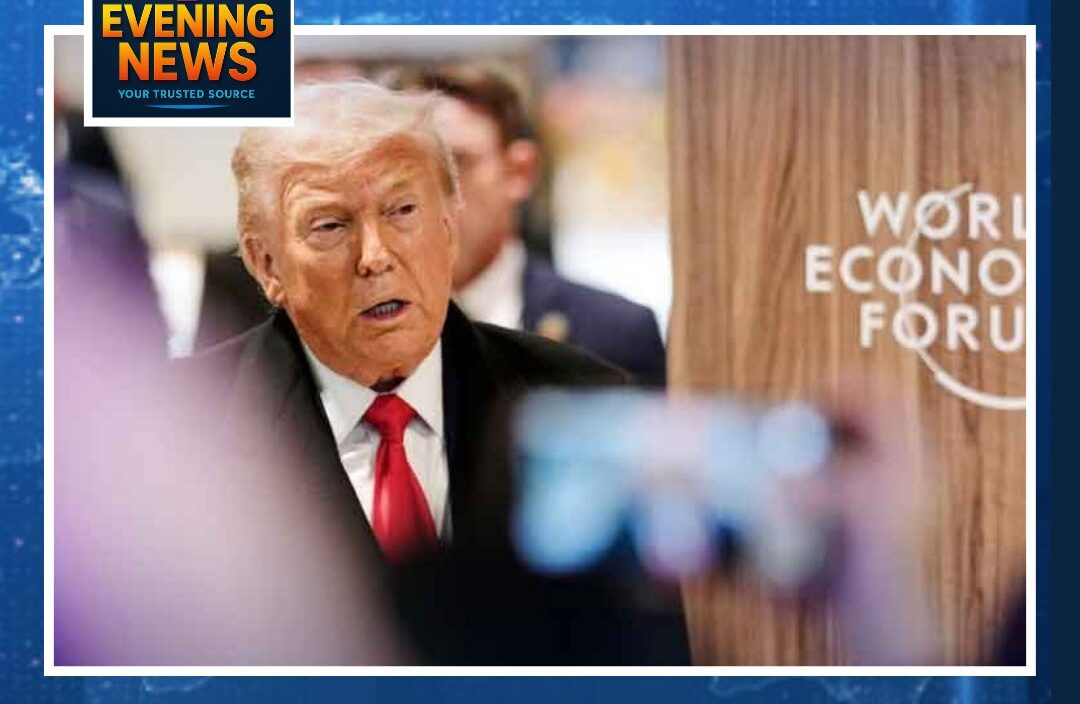
First, she said Trump used a public moment at Davos to try to “disabuse anybody of the notion that the United States was credibly thinking of using military force against Greenland,” suggesting the loudest fears were not the administration’s endgame.
Second, she described the tariff threats as leverage aimed at allies Trump believed were “potentially threatening the United States,” until clarification arrived that allied troop movements were a response to a Russia-linked threat Trump had raised.
Her telling makes the episode sound less like a clean strategy and more like a chain reaction. Allies deployed within an “alliance framework.” Trump took that as a win. Then, after conversations “on the sidelines at Davos,” he called off the tariffs. The transcript and context appear in PBS NewsHour’s segment posting and transcript.
Markets, Republicans, and ‘No Appetite’ for Annexation Talk
Bennett pressed Heinrichs on what skeptics were already whispering: was this a tactical reset after blowback from markets and allies?
Heinrichs did not deny the pattern. She framed Trump’s approach as iterative and reactive, saying he advances “attempts to effect policy” and watches for response. When the response is severe, he adjusts.
In this instance, she pointed to pushback coming from both parties, specifically noting Republicans as well as Democrats objected to even an implied threat of using military force or forcibly annexing Greenland “by some other means.” She also said that pushback came from the House and Senate.
Then came the political gut-check: public opinion.
Heinrichs said there were “a couple of different polls” and claimed there was “no support or appetite across any political faction in the United States” for a move like forcibly taking Greenland. PBS did not name the polls in the transcript, but Heinrichs presented them as part of the pressure campaign that helped bring Trump to a different conclusion.
President Donald Trump announced January 21, 2026, that he will not impose tariffs on European nations next month after forming a framework for a future Greenland deal with NATO Secretary General Mark Rutte at the World Economic Forum in Davos, Switzerland.
Trump dropped his… pic.twitter.com/HvltTX6aq1
— USA News (@USAtodayX) January 22, 2026
That conclusion was the line that is now echoing far beyond the PBS studio: “President Trump was convinced the juice wasn’t worth the squeeze and decided to look for a more productive way to meet our security needs in the Arctic.”
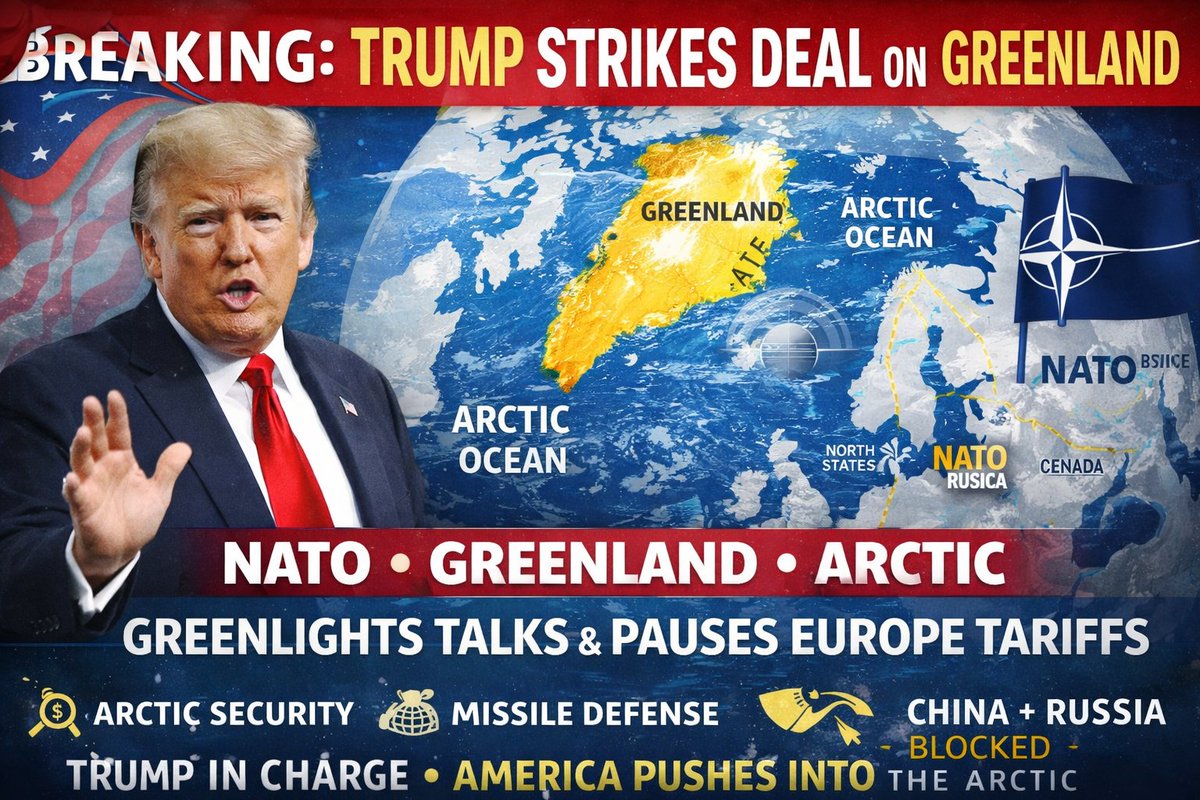
If you are tracking what changed, Heinrichs’s answer is simple. The White House got a loud readout from allies, lawmakers, and the public, then decided to pivot.
NATO’s nightmare scenario is not just a threat; it is the volatility.
Even after the tariff threats were called off, Bennett raised the underlying headache for NATO planners: how do you plan around day-to-day shifts in tone?
Heinrichs acknowledged volatility on two fronts. One is Trump’s unpredictability. The other is that adversaries do not wait for Washington to settle its messaging.
She listed a “diverse set of threats,” including the Chinese Communist Party and the Russian Federation, and noted Russia’s ongoing war against Ukraine. Her point was not that allies should accept chaos as normal, but that they should build a process to manage it.
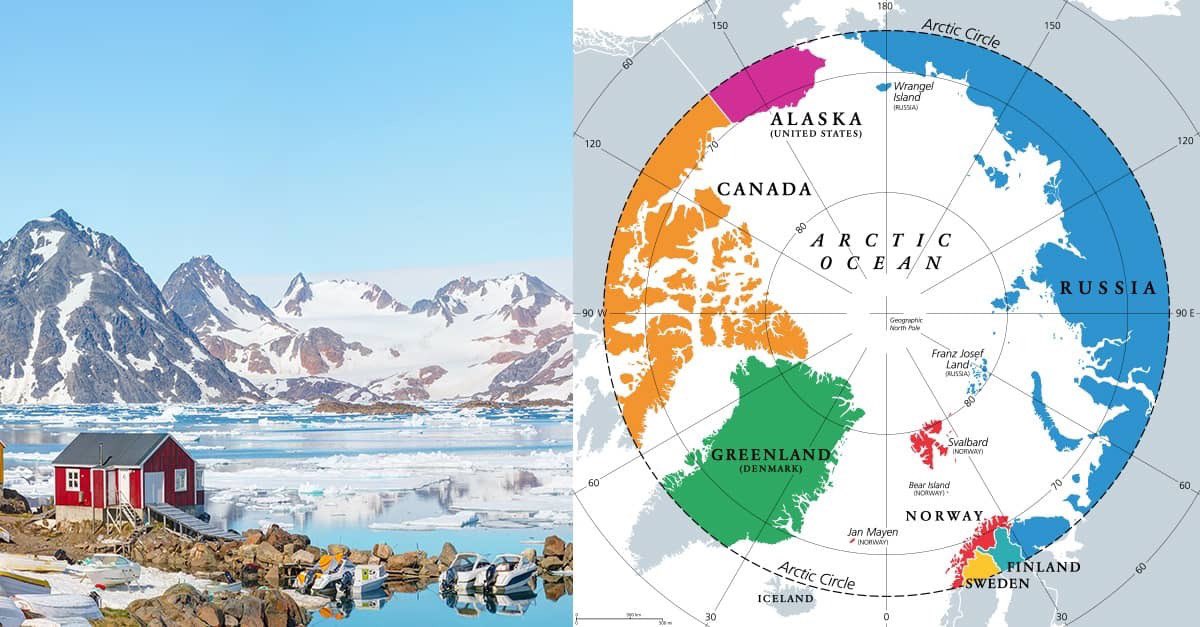
Her advice, as presented in the transcript, was procedural and revealing. When Trump surprises them, she said, allies should “take a beat” and look for a “calm and a prudent way forward,” while giving the president “lots of options” that lead to a collaborative path.
That is a diplomatic way of saying NATO governments may need to treat Washington like a swinging door that still controls the locks.
Does Greenland talk damage the postwar order? “It’s damaging.”
Critics, Bennett noted, argue that even talking about acquiring allied territory destabilizes NATO and the broader postwar order.
Heinrichs did not play cute with that criticism. “I would say it’s damaging,” she responded.
She argued that one of the core benefits of being aligned with the United States is that U.S. power is supposed to be directed outward, not inward at friends. In her phrasing, “if you’re a friend and ally of the United States, we pose no threat to you.”
She called it something Washington should “cultivate carefully,” and described the Greenland episode as “regrettable.” Still, she suggested allies might treat it as an “aberration,” not a new standard operating procedure.
That “aberration” claim is a pressure-release valve. It tries to keep the alliance intact by labeling the damage as temporary, even as everyone watches how quickly a pressure campaign can appear, then disappear.
Carney at Davos, and a Warning About Hedging Toward China
The interview took another sharp turn when Bennett referenced remarks from Canada’s Prime Minister Mark Carney at Davos. Bennett summarized Carney’s message like this: the postwar bargain, where smaller countries depend on U.S. leadership in exchange for protection, “no longer works” if the U.S. uses protection as leverage, even against allies.
Heinrichs said some of Carney’s frustration was understandable. But she also signaled alarm at parts of what she said she heard in his speech, comparing it to how former German Chancellor Angela Merkel handled the first Trump era.
In particular, Heinrichs criticized the idea of hedging toward Beijing if a country claims it cares about “the rule of law,” “national sovereignty,” and individual liberty. She framed that as incompatible with courting the Chinese Communist Party.
Her bottom line: Canada, like other allies, needs to be “realistic” about what it must do to defend itself and contribute more to collective security.
Read together, the Greenland spat and the Carney speech reveal the same fear from different angles. America’s allies are not only tracking Russian activity in the Arctic. They are tracking how quickly U.S. policy can be dialed up, then dialed down, and what it signals about leverage inside the alliance.
What To Watch Next
Heinrichs’s account suggests the immediate escalation cycle has ended. Tariff threats are off, and the talk has shifted toward “a more productive way” to meet Arctic security needs.
But the larger question remains unresolved, and it is the one that lingers after the cameras cut.
If allies now believe the best response to surprise moves is to “take a beat” and hand Washington a menu of options, that is not just an Arctic playbook. It is a new survival tactic for a very old alliance.
And the episode’s most memorable line still hangs over the whole mess, because it can be read as reassurance or warning depending on where you sit: “the juice wasn’t worth the squeeze.”