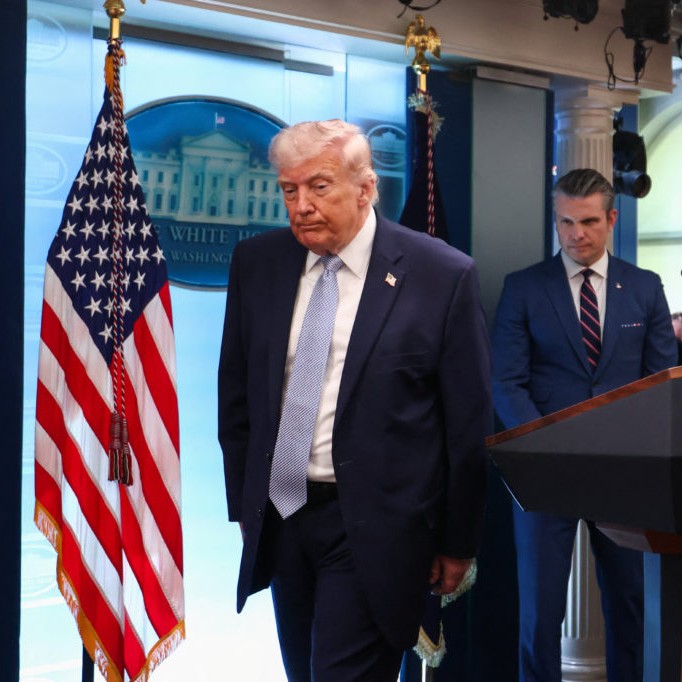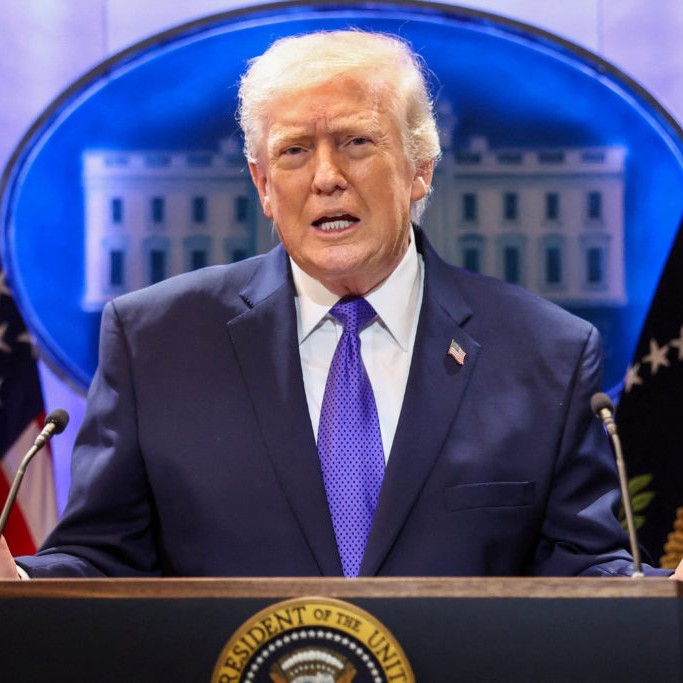
Two-thirds of Americans are looking at Washington’s push and pull and concluding the guardrails are failing. The twist is who is losing faith, and what President Donald Trump is saying he will do when a court tells him no.
What You Should Know
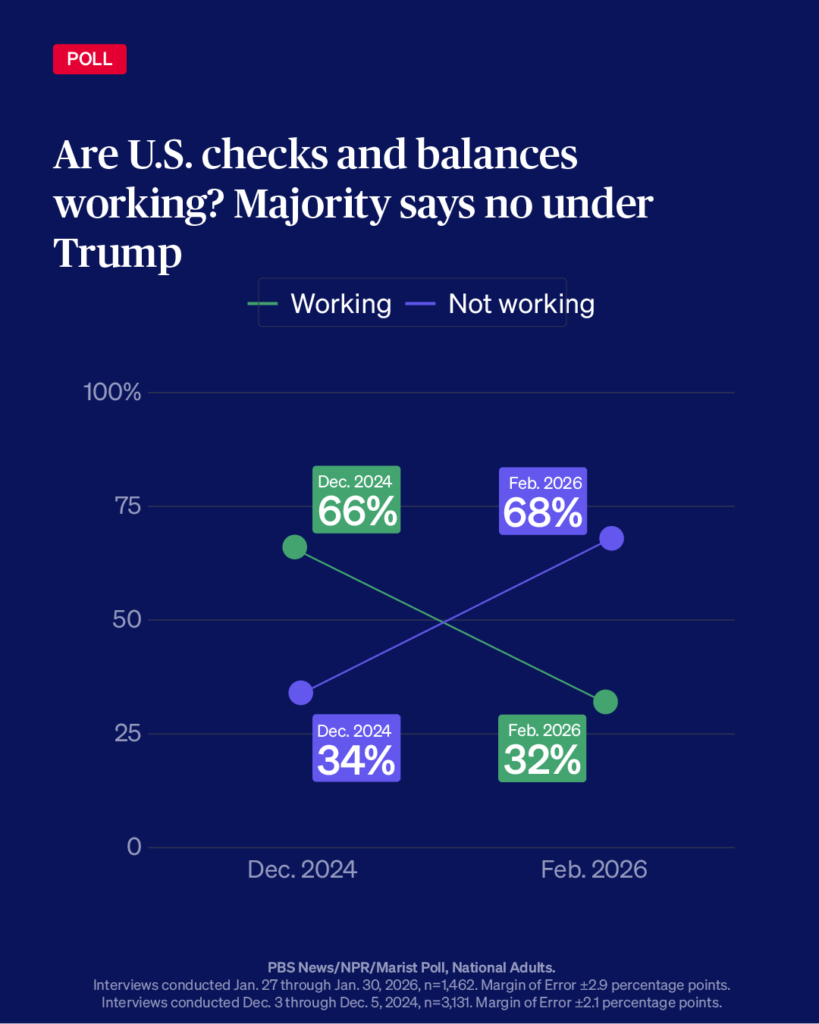
According to a PBS NewsHour report published February 23rd, 2026, the latest PBS News/NPR/Marist Poll finds that about two-thirds of Americans say checks and balances are not working well. PBS also reported the Supreme Court struck down Trump’s sweeping tariffs, and Trump said he would look for a new legal justification.
The poll lands on the eve of Trump’s State of the Union address, a moment built for maximum presidential leverage, and it comes as the White House, Congress, and the courts are publicly testing how much resistance still exists inside the system.
A Poll Number That Both Parties Should Fear
In the PBS NewsHour write-up, the topline number is blunt: about two-thirds of Americans say the system of checks and balances is not working well. That is not a niche complaint from one side. It is a broad, cross-party signal that the basic separation-of-powers script is not matching what voters think they are seeing.
PBS reported the share of Americans expressing doubt rose 12 points from the prior year, and that since December 2024, it doubled. If that timeline holds, it means the confidence drop is not drifting. It is snapping.
The party breakdown is where the story gets sharper. PBS reported Democrats and independents swung dramatically, by 45 and 34 points, respectively, since December 2024. But Republicans also slid, with a 19-point drop, even though the GOP controls the White House and holds majorities in both chambers of Congress.
That last detail is the contradiction that matters. In theory, unified party control is supposed to produce satisfaction among the winners. In practice, the poll suggests a chunk of the winning coalition is watching the same institutions and deciding the machinery is not behaving as it should.
When the Court Says No, Trump Hints at a Workaround
PBS framed the Supreme Court as one of the biggest checks on Trump’s second-term agenda so far, reporting the justices struck down his sweeping tariffs on foreign goods in a 6-3 decision. The poll, PBS noted, was conducted days before that ruling was announced, which matters because it suggests the skepticism is not simply a reaction to one headline-making decision.
After the loss, PBS reported Trump went after the justices personally, and he tossed in a line that reads like a test of the room: “I couldn’t care less if they attend my speech on Tuesday.”
Then came the bigger institutional tell. PBS reported Trump suggested the court defeat would not be the end of his tariff push, saying he would find a new legal justification and again bypass congressional input. The message is simple, even if the legal theory is not: if one route is blocked, another route will be attempted.
That is where checks and balances stop being a civics-class phrase and become a power contest. Courts can stop a specific action, but they cannot force a president to stop trying. Congress can write clearer laws, but it has to want the fight. Voters can punish overreach, but only if they agree on what overreach looks like.
Why Republicans Are Losing Confidence, Too
It is easy to file the poll under partisan polarization, but the Republican decline in confidence, as PBS described it, complicates the lazy take. If Republicans are running the elected branches, why are Republican voters less convinced the system is working?
One possibility is that the poll is picking up a different kind of dissatisfaction: not that the system is restraining Trump, but that the system is unstable, unpredictable, or too reliant on hardball tactics and litigation to settle what used to be settled through legislation.
Another possibility is that Republican voters are split between two instincts that do not peacefully coexist. One instinct is to want the president to move fast and bulldoze obstacles. The other is to distrust institutions, including courts and Congress, when they produce outcomes that feel like elite control. When your party controls the levers, those instincts collide.
That collision has consequences. If the public starts treating constitutional constraints as just another partisan weapon, the incentive becomes simple: win the next fight, even if the rules take damage.
The Stakes Behind a Civics Phrase
Checks and balances are often sold as a comforting design feature, but the design is actually confrontational. According to Cornell Law School’s Legal Information Institute, checks and balances describe how each branch can limit the powers of the others. That is not a bug. It is the point.
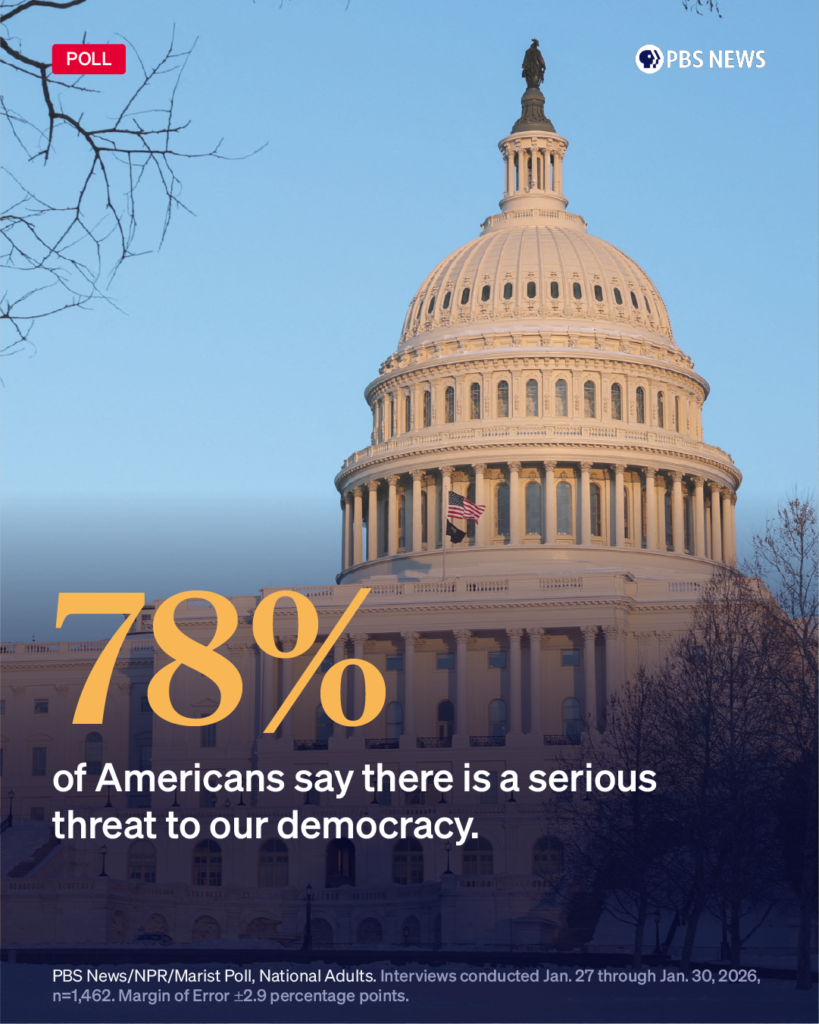
The question the poll raises is whether Americans still believe those limits are being applied in a recognizable way, and whether they still think the limits are legitimate when they land.
PBS quoted constitutional law scholar Kimberly Wehle, a University of Baltimore School of Law professor, sounding less like a partisan and more like someone watching the structure bend: “It is hard to exaggerate the extent to which the last year has degraded, if not demolished, the basic pillars of constitutional democracy.”
Wehle’s line is not a verdict from a court, and it is not a data point from the poll. It is a warning from a specialist about cumulative stress. In politics, cumulative stress is what turns normal friction into a legitimacy crisis.
There is also a long-running backdrop to the poll’s findings. Gallup has tracked Americans’ confidence in major institutions for decades, and its results have repeatedly shown broad erosion in trust across many parts of public life. That trend does not prove checks and balances are failing in a legal sense, but it helps explain why a large poll number can appear and stick. A public already primed to distrust institutions is quicker to believe the system is not working.
What People Think Trump Is Doing to the Country
PBS also reported a second set of numbers that adds stakes to the first: 55% of Americans said Trump is changing the country for the worse through the policies he is prioritizing, while 37% said for the better, and 8% said there has been no real change.
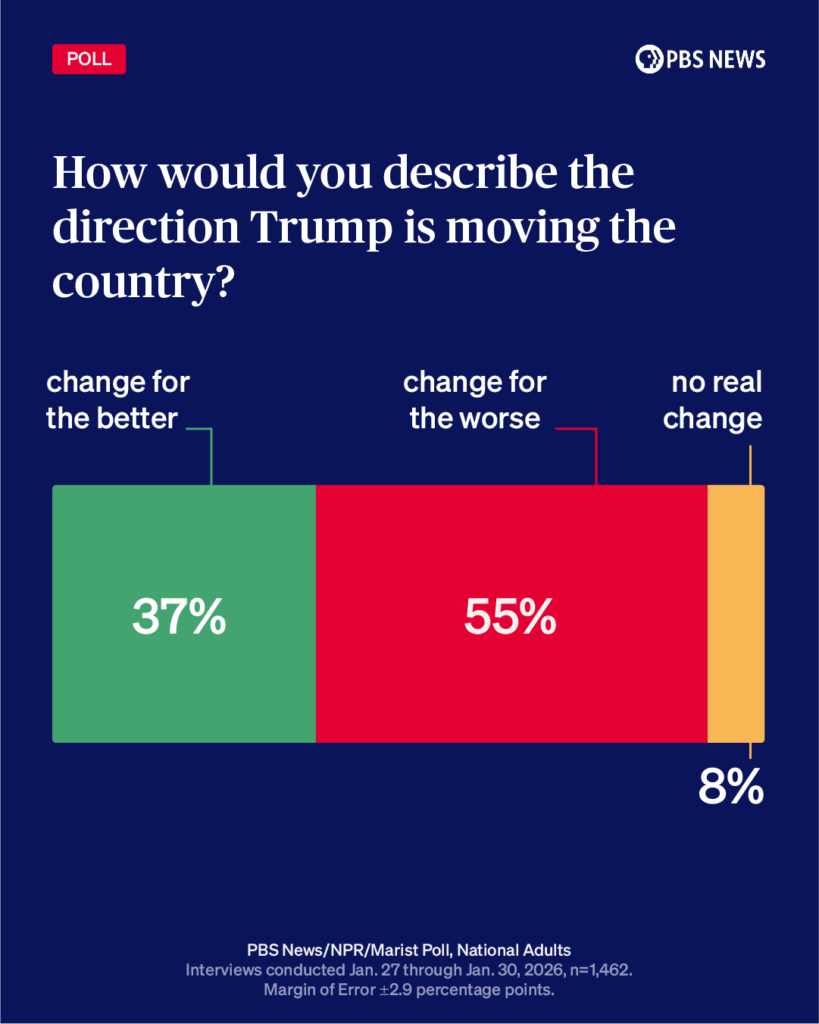
Those are not abstract feelings about process. They are judgments about the outcome. If a majority believes the country is being steered in the wrong direction, then the argument over checks and balances becomes more urgent, because the procedural brakes are only valuable if they can actually slow down decisions people think are harmful.
PBS further reported that the share of Americans who worry about the changes Trump is making rose 7 points from last March, hitting the highest level of either of his terms in office. That helps explain why a court ruling on tariffs is not just about trade policy. It becomes another test case in whether any institution can still set a boundary that holds.
So Who Is Supposed to Stop Whom?
The Constitution does not assign one branch the job of permanently dominating the others. It forces negotiation, and when negotiation fails, it forces conflict in controlled forms: votes, vetoes, lawsuits, confirmation battles, appropriations fights, and oversight hearings.
But that control depends on consent. Congress has to actually use its tools. Courts have to retain legitimacy for their decisions to matter beyond the courtroom. A president has to calculate that defiance carries a cost.
The poll PBS reported suggests millions of Americans are not sure those costs still exist, or at least not in a way that feels consistent. The moment the system looks optional, the incentives change for everyone inside it.
For Trump, the incentive is speed and spectacle. For lawmakers, the incentive is to avoid being seen as disloyal. For judges, the incentive is to defend the institution without turning it into a political actor. For voters, the incentive is to treat every institutional move as a partisan act, which can become self-fulfilling.
What to Watch Next
Three pressure points follow from PBS’s reporting, and they are all measurable.
First, does the White House actually pursue a new legal pathway for tariffs, as PBS reported Trump suggested? The difference between a threat and a strategy is paperwork, and paperwork leaves a trail.
Second, does Congress respond as an institution, not as a collection of party spokespeople? If lawmakers believe the courts are doing the checking for them, they may stay quiet. If they believe the presidency is grabbing their authority, they may not be able to avoid the fight.
Third, do public opinion numbers stabilize, or do they keep sliding? Polls do not enforce the Constitution, but they shape the political price of enforcement. A system of checks and balances cannot run on parchment. It runs on consequences.