

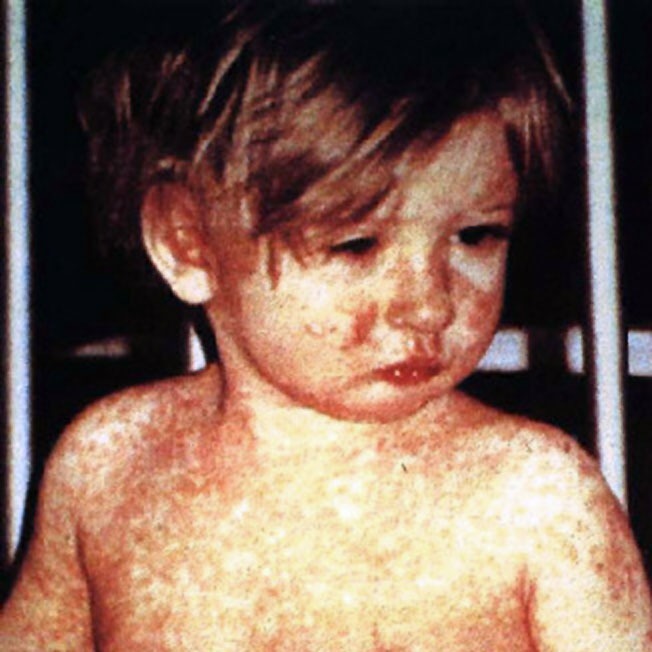
Measles. This child shows a classic day-4 rash with measles. Photo courtesy of CDC/NIP/Barbara Rice. Public domain.
The measles outbreak in South Carolina is spiraling out of control, with over one hundred confirmed cases and hundreds more people reportedly quarantined in the upstate region alone. This surge is part of a broader national crisis that threatens to undo decades of progress in eradicating the disease in the United States. As the outbreak accelerates, public health officials are sounding alarms, while Secretary of Health and Human Services Robert F. Kennedy Jr. remains a controversial figure, defending his approach amid growing criticism.
A Growing Crisis in South Carolina and Beyond
South Carolina’s Department of Public Health reported 111 measles cases concentrated in the northwest part of the state, including Greenville and Spartanburg counties. The number of cases jumped by 27 in just a few days, a spike attributed to holiday travel and gatherings combined with low vaccination rates. The K-12 vaccination rate for the measles-mumps-rubella (MMR) vaccine in Spartanburg County was 90%, and 90.5% in Greenville County for the 2024-25 school year, both below the 95% threshold experts say is necessary to prevent outbreaks, as reported by NBC News.
The outbreak has reportedly forced 254 people into quarantine, many of them students at schools and members of a church in Spartanburg County. Some students are now facing a second 21-day quarantine since the school year began, but those in their second quarantine do not represent a significant proportion. This means some students could miss up to 42 days of classroom time, significantly disrupting education.
This outbreak is not isolated. The Centers for Disease Control and Prevention (CDC) reported 1,912 measles cases nationwide in 2025, according to NBC News. Other states facing outbreaks include Arizona with 176 cases and Utah with 115, where recent infections have been linked to schools, childcare facilities, and public spaces.
The Stakes: Losing Measles-Free Status
The United States officially eliminated measles as an endemic disease in 2000, thanks to widespread vaccination efforts. However, the current wave of outbreaks, which began in West Texas nearly a year ago, threatens to reverse that status. If outbreaks continue into 2026, the U.S. could lose its measles-free designation, a milestone that public health experts reportedly warn would have serious implications for disease control and public confidence.
Robert F. Kennedy Jr.: A Polarizing Figure in the Measles Debate
At the center of the controversy is Robert F. Kennedy Jr., the Secretary of Health and Human Services, whose tenure has been marked by vaccine skepticism and policy shifts that have drawn sharp criticism. Kennedy, a longtime critic of vaccines, has publicly defended his handling of earlier outbreaks, including those in Texas, framing CDC actions as effective while simultaneously promoting alternative treatments and inconsistent messaging.
Kennedy’s approach has evolved over time. Initially, he downplayed the severity of outbreaks, calling them “not unusual” and emphasizing vitamins and nutrition over vaccination, as reported by The Hill. Later, he pivoted to touting the CDC’s response and acknowledging the importance of the MMR vaccine. This shift has been seen by some as strategic amid mounting backlash from scientists, lawmakers, and agency staff.
His leadership has also been marked by internal turmoil. According to Gizmodo, the CDC’s Advisory Committee on Immunization Practices (ACIP) recently voted to remove the recommendation that all children be vaccinated against hepatitis B at birth, a move linked to Kennedy’s influence and the appointment of anti-vaccine activists to key advisory roles. This decision has raised concerns about the erosion of established vaccine policies.
Public Health Experts Sound the Alarm
Health officials warn that measles is the most contagious virus known, capable of lingering in the air for hours and infecting nearly everyone who is unvaccinated and exposed. The South Carolina Department of Public Health reportedly deployed mobile clinics to provide MMR vaccines, but uptake was low, with only a small number of doses administered at each clinic.
Symptoms of measles include high fever, cough, runny nose, red eyes, white spots inside the mouth, and a rash that spreads from the scalp down the body. Approximately 11% to 12% of cases require hospitalization, and three deaths have been reported in the U.S. this year, including two children.
The outbreak’s spread in schools and community settings has led to significant quarantines, disrupting education and daily life. Public health officials emphasize that vaccination remains the most effective protection, with two doses of the MMR vaccine providing 97% protection against the virus.
The Role of Anti-Vaccine Activism
The resurgence of measles in the U.S. has been linked to the rise of anti-vaccine activism, which gained momentum with Kennedy’s appointment and the influence of his Make America Healthy Again movement. According to Gizmodo, Kennedy has made unsubstantiated claims linking vaccines to allergies and other health issues, and has installed like-minded individuals in influential positions within the CDC.
This activism has reporteldy contributed to declining vaccination rates in some communities, creating pockets of vulnerability where outbreaks can take hold. The South Carolina outbreak, with vaccination rates below the recommended threshold, exemplifies the risks posed by these trends.
Looking Ahead
As the measles outbreak continues to spread, public health officials face the challenge of containing the virus while navigating a complex landscape shaped by vaccine skepticism and political controversy. The situation in South Carolina and other states underscores the importance of vaccination and the consequences of declining immunization rates.
Kennedy’s evolving stance and the internal shifts within the CDC highlight the tensions between public health priorities and political influences. The coming months will be critical in determining whether the U.S. can maintain its measles-free status or face a setback with lasting public health implications.
For now, the measles outbreak remains a stark reminder of the delicate balance between science, policy, and public trust in America’s health system.
References: South Carolina measles outbreak is ‘accelerating,’ driving hundreds into quarantine | Hundreds quarantined in South Carolina measles outbreak | Measles Outbreak Nears Grim Milestone as Hundreds Quarantine in South Carolina | Kennedy sends mixed vaccine messages amid Texas measles outbreak