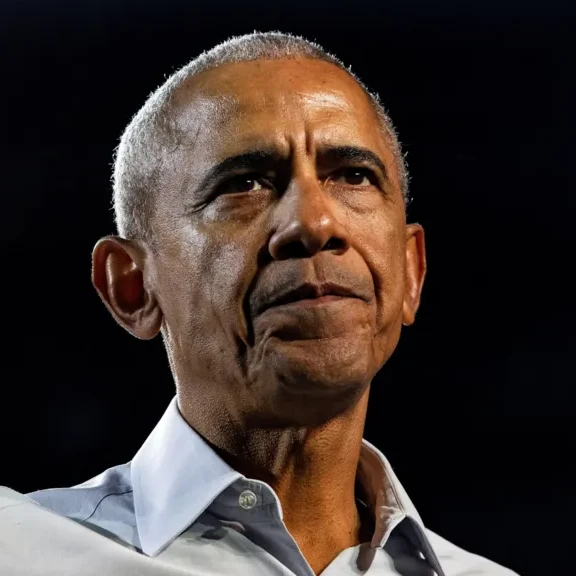
Barack Obama has spent years navigating wars, debt ceilings, and the unforgiving physics of cable news. Still, a quick podcast speed round managed to corner him into the one place presidents hate most: the clip economy, where one line becomes the whole story.
What You Should Know
Barack Obama clarified on Instagram that the chances Earth has been visited by aliens are low, after a podcast answer about aliens being real spread widely online. He said he saw no evidence of extraterrestrial contact while he was president.
The sequence is simple. Obama joked through a lightning round on a podcast, the internet grabbed the punchline, and the former president responded with a tighter, more careful explanation that tried to shut down the usual Area 51 frenzy.
A Speed Round, a Serious Aftertaste
On the podcast hosted by Brian Tyler Cohen, Obama was hit with the kind of question designed for laughs and shares: Are aliens real?
Obama replied, “They’re real but I haven’t seen them,” and then kept going, adding, “They’re not being kept in Area 51. There’s no underground facility unless there’s this enormous conspiracy and they hid it from the president of the United States.” According to BBC News, the exchange drew major attention online after the interview was published.
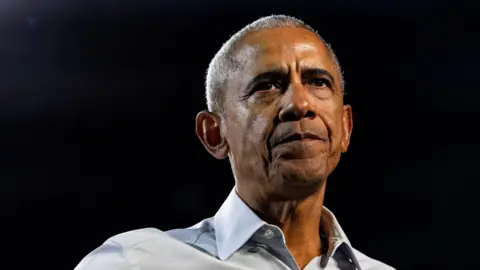
This is the trap door beneath modern media. A former president can be riffing, but a single sentence can get detached from tone, context, and the follow-up lines that actually contain the point.
So Obama did what public figures do when a clip starts living on its own: he tried to pin it back to the wall with a clarification, posted under his official Instagram account.
Obama’s Clarification Was Not a Walk-Back, It Was a Reframe
In his Instagram caption, Obama framed the whole thing as a format problem, not a sudden confession about secret visitors. “I was trying to stick with the spirit of the speed round, but since it’s gotten attention, let me clarify,” he wrote, per BBC News.
Then he delivered the more deliberate version of the thought. “Statistically, the universe is so vast that the odds are good there’s life out there. But the distances between solar systems are so great that the chances we’ve been visited by aliens is low, and I saw no evidence during my presidency that extraterrestrials have made contact with us. Really!”
It is a classic Obama move: concede the cosmic math, deny the tabloid conclusion, and use humor as a punctuation mark. The political subtext is familiar, too. He is protecting the credibility of the office he used to hold, even while he is no longer bound by it.
Why This Keeps Happening to Presidents
Presidents and ex-presidents occupy a strange position in the UFO, now UAP, conversation. They are assumed to know everything, and then criticized when they say they do not. The mythology is that there is always a deeper vault, a deeper briefing, a deeper hangar. Obama’s Area 51 line was aimed directly at that assumption.
However, the UAP debate has changed in a way that makes even jokes feel loaded. In recent years, the U.S. government has released official assessments that acknowledge reports of unidentified aerial phenomena, while stopping well short of endorsing extraterrestrial explanations.
One of the most-cited examples is the Office of the Director of National Intelligence’s preliminary assessment released in 2021, which said most UAP reports lacked enough data for firm conclusions and did not present findings as proof of alien contact. That document is dry, cautious, and very much not a movie script, but it gave mainstream permission for the topic to be discussed without immediate ridicule.
So when Obama says, in effect, life elsewhere is plausible but alien visits are unlikely, he is landing closer to the official posture than many viral interpretations admit.
The Power Dynamic Hidden Inside the Joke
The funny part of Obama’s original riff is also the revealing part. He suggested that if there were an enormous conspiracy, it would have to be powerful enough to keep the truth from the president.
That is not just a punchline. It is the whole thesis of modern institutional distrust, packaged as banter. The public story is that presidents are all-knowing commanders. The conspiratorial story is that presidents are brand ambassadors, while the real authority lives elsewhere.
Obama’s clarification tries to put the toothpaste back in the tube. He is saying: I was the president, I looked, I saw no evidence. The counterforce is that a portion of the audience treats that exact sentence as proof that the president was not allowed to see it.
This is why alien talk is politically sticky. It is not only about aliens. It is about who controls information, who gets briefed, and who gets left holding the bag when the public wants certainty.
What the Record Shows, and What it Does Not
Start with what is concrete. Obama says he saw no evidence of extraterrestrials making contact during his presidency, which ran from 2009 to 2017. That is a direct claim about his experience in office.
There is also a public record showing that the U.S. government has, at times, investigated unusual sightings and collected reports, sometimes through classified channels. Reporting by The New York Times in 2017 described a previously undisclosed Pentagon program focused on UFO reports. That story helped pull the subject out of the purely fictional realm and into the national security frame, even as it did not prove an extraterrestrial origin for the sightings it described.
Then there is what remains unresolved. Government assessments have consistently emphasized limitations: incomplete data, inconsistent reporting, and the fact that many sightings can have conventional explanations once better information is available. The gap between “unidentified” and “alien” is where speculation moves in.
Obama’s posts and jokes tend to live in that gap, which is why they travel so fast. He is famous enough to make the topic feel legitimized, but careful enough to avoid endorsing the conclusion that conspiracy communities want him to validate.
The Real Stakes Are Reputational and Algorithmic
No one is launching a congressional inquiry because an ex-president joked about Area 51. The more immediate consequences are about how narratives form and how quickly they harden.
For Obama, the risk is not that people think he believes in aliens. The risk is that a widely shared clip makes him sound like he is teasing hidden knowledge, which drags him into a culture-war adjacent arena he usually tries to manage with distance and humor.
For media and politics, the risk is that the public keeps getting trained to treat short, entertaining fragments as the full file. A speed round is built for rhythm, not precision. Instagram clarifications are built for cleanup, not depth.
Obama tried both in the same 48-hour cycle. The internet, as usual, got both versions, picked the funnier one, and kept scrolling.
What to Watch Next
This story will not end with Obama’s caption. The larger UAP debate is ongoing, and every official report, hearing, or leaked video clip refreshes the public’s appetite for a famous person to say the forbidden sentence.
Obama’s position is now on the record in a form that is harder to twist: life elsewhere is statistically plausible, alien visits to Earth are unlikely, and he saw no evidence of contact while in office. That is not a cosmic revelation. It is a former president trying to keep a joke from turning into a belief system.