Congress says it wants daylight on Jeffrey Epstein’s network. Ghislaine Maxwell just answered with silence, and a not-so-subtle hint about who could flip the switch.
What You Should Know
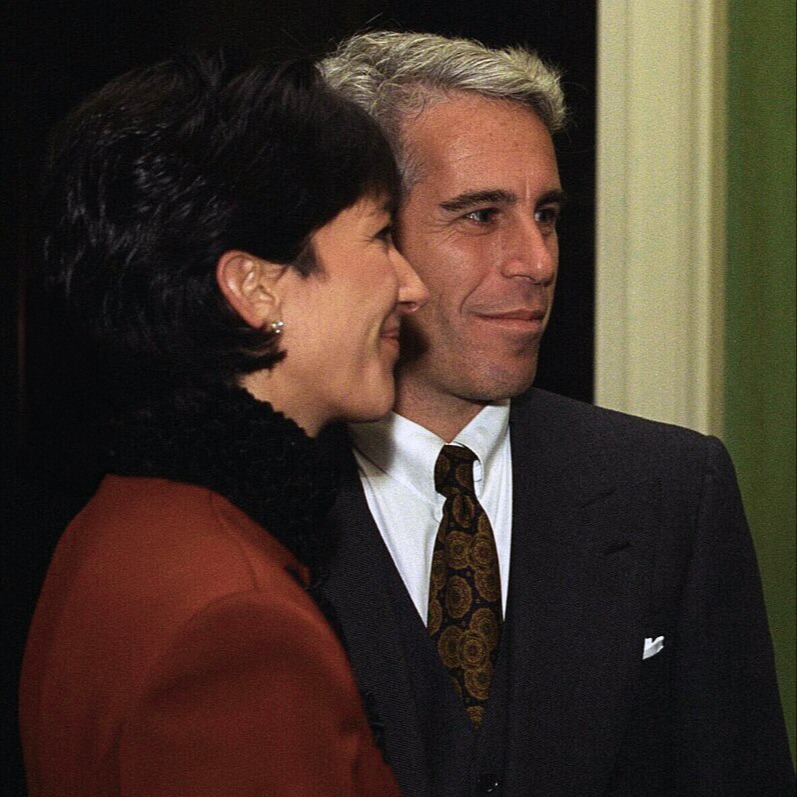
On February 9th, 2026, Ghislaine Maxwell invoked the Fifth Amendment in a House Oversight Committee deposition as lawmakers were granted access to view unredacted Epstein files. Her attorney said she would want to answer questions if President Trump grants her clemency.
Maxwell, Epstein’s longtime associate and a convicted sex trafficker serving a 20-year sentence, appeared by video from federal custody in Texas, according to PBS NewsHour. The political backdrop is getting louder: two lawmakers said unredacted names exist, and the committee is also pursuing interviews with Bill and Hillary Clinton.
A Closed-Door Deposition, a Public Power Play
Maxwell’s move was simple on paper. She declined to answer questions, citing the Fifth Amendment protection against self-incrimination. The optics, however, landed like a gauntlet thrown at Washington’s feet.
The House Oversight Committee did not get a headline-grabbing confession. Instead, it got a reminder that the Fifth is not just a legal shield. In a story like this, it can also function as leverage.
That is where the clemency comment detonates. PBS reported that Maxwell’s lawyer framed her silence as conditional, suggesting there is a world where she talks, but only if the president intervenes.
“[She would] very much like to answer questions if President Trump grants her clemency.”
That line, delivered on a day lawmakers were simultaneously being shown unredacted files, forces two tracks to collide: a congressional transparency push and a presidential power that operates by discretion, not subpoena.
What the Fifth Amendment Actually Buys You
The Fifth Amendment is often simplified into a TV trope: plead the Fifth, case closed. The real-world function is narrower and sharper. As Cornell Law School’s Legal Information Institute explains, it protects a person from being compelled to provide testimonial evidence that could incriminate them.
Maxwell is already convicted and sentenced, which invites the obvious question: incriminate her in what? Congress did not spell it out in public, and Maxwell did not give the committee any help. But the Fifth is commonly invoked when a witness believes answers could expose them to additional criminal liability, complications tied to other investigations, or new charges not covered by an existing conviction.
The committee may see the Fifth as obstruction-by-lawyer. Maxwell’s side can frame it as basic constitutional hygiene. The tension is that both can be true at the same time, and the public still learns nothing new.
The Unredacted Names Tease, and Congress Keeps Its Cards Facedown
If lawmakers wanted to show momentum, they picked an unusual strategy: hint at what they saw, then refuse to say it.
According to PBS, Reps. Thomas Massie and Ro Khanna said they viewed the names of six men that were redacted in the public version of the materials, and they suggested those names could be incriminating. They did not identify the six men.
Massie, per PBS, described the group only in fragments. One was a U.S. citizen, one was a foreign national, and one was “pretty high up in a foreign government.” The rest, he said, could not be pinned down by nationality from the names alone.
That is the kind of detail that spikes curiosity while preserving maximum legal safety for the speaker. It also inflames the central contradiction in this saga: transparency is constantly promised, but it arrives in controlled drips.
Khanna and Massie also pitched their effort as something bigger than partisan theater. In PBS’s telling, they framed the goal as exposure with consequences, not a political hit job.
“So our push is, how do we expose this and have accountability, not how do we score political points or have retribution?”
That is a noble mission statement. It is also a convenient one, because it positions any criticism of their strategy as a defense of secrecy.
The FBI Summary Claim Adds Another Layer of Confusion
PBS also reported a detail that does not sit comfortably with years of public reporting and survivor accounts: an FBI summary written in 2025 that said there were “four or five Epstein accusers” alleging abuse by men and women, but not enough evidence to federally charge those individuals, so the matters were referred to local law enforcement.
Even presented carefully, that description creates immediate friction. Many more survivors than “four or five” have publicly come forward over time. So what is that number describing? A subset of cases tied to specific alleged perpetrators? A limited set of allegations within a particular investigative lane? A summary narrowly scoped to a specific question?
PBS did not present the underlying FBI document in full in the segment described here, and Massie and Khanna did not publicly connect their six unnamed men to that summary. Still, the implication hangs in the air: the government may have looked at certain allegations, decided it could not make federal cases, and passed the baton down the chain.
If your goal is accountability, that is not closure. It is a jurisdictional shrug with a paper trail.
Trump, Clinton, and the Political Gravity of Clemency
Maxwell’s attorney did not just dangle clemency as a concept. He also tried to pre-litigate the reputational blast radius around two former presidents.
“Both President Trump and President Clinton are innocent of any wrongdoing. Ms. Maxwell alone can explain why and the public is entitled to that explanation.”
That quote, as aired by PBS, is doing several jobs at once.
First, it attempts to inoculate Trump and Bill Clinton in the same breath, which is an unusual positioning in the current political climate. Second, it asserts that Maxwell has uniquely valuable information. Third, it frames the public as the rightful audience for her account. And finally, it ties the whole package to a presidential decision that is inherently political.
PBS reported that when Trump was previously asked about a potential pardon for Maxwell, he said he would not rule it in or out. That is not a commitment. It is not a denial, either. In a scandal ecosystem built on insinuation, an open door is its own headline.
Meanwhile, the committee’s net is not limited to Maxwell. PBS reported that Bill Clinton has agreed to appear before the committee, and that Hillary Clinton is also slated for a separate closed-door interview. But there is a twist inside the twist: PBS reported that Bill Clinton does not want his deposition videotaped, and would prefer a public hearing that people can watch in real time.
That preference matters because it is another fight over narrative control. Closed-door video preserves a record, but it also lets clips become weapons later. A public hearing puts the performance on the record immediately, with fewer opportunities for selective release, but far more political theater.
Why This Is Becoming a Test of Who Controls the Story
Strip away the names, and the power dynamic is straightforward:
- Congress wants to look tough on secrecy while controlling what it reveals.
- Maxwell wants to protect herself and maybe improve her position while signaling she has something to sell.
- The White House controls clemency, a tool that can look like mercy, strategy, or favoritism, depending on who receives it and when.
That triangle is why Maxwell’s Fifth Amendment invocation is not just a legal footnote. It is a choke point.
If Maxwell never talks, lawmakers can keep teasing redacted names and hinting at dramatic revelations without ever having to litigate them in public. If Maxwell does talk, the immediate question becomes: under what deal, with what incentives, and at what cost to credibility?
And if clemency becomes the price of testimony, the political consequences multiply. Clemency would invite scrutiny of motive. Denying clemency could be framed as refusing to let the public hear her account. Either way, someone gets accused of protecting someone.
What to Watch Next
Three next steps will matter more than any cable-news frenzy.
First, whether the House Oversight Committee produces anything that can be evaluated outside a closed room. Names are one thing. Verifiable documentation, timelines, and corroboration are another.
Second, whether Maxwell’s team escalates the clemency pitch from a lawyerly quote into a direct public campaign. If that happens, expect a familiar cycle: selective hints, maximal insinuation, and careful avoidance of specifics that can be checked.
Third, the format of the Clintons’ appearances. A closed-door deposition versus a public hearing is not just a process. It shapes what becomes quotable, what becomes clip-able, and what becomes deniable.
For now, the loudest fact is the simplest one. On February 9th, 2026, Maxwell was given a microphone by Congress, and she chose the Fifth. Her lawyer, on the other hand, did not.