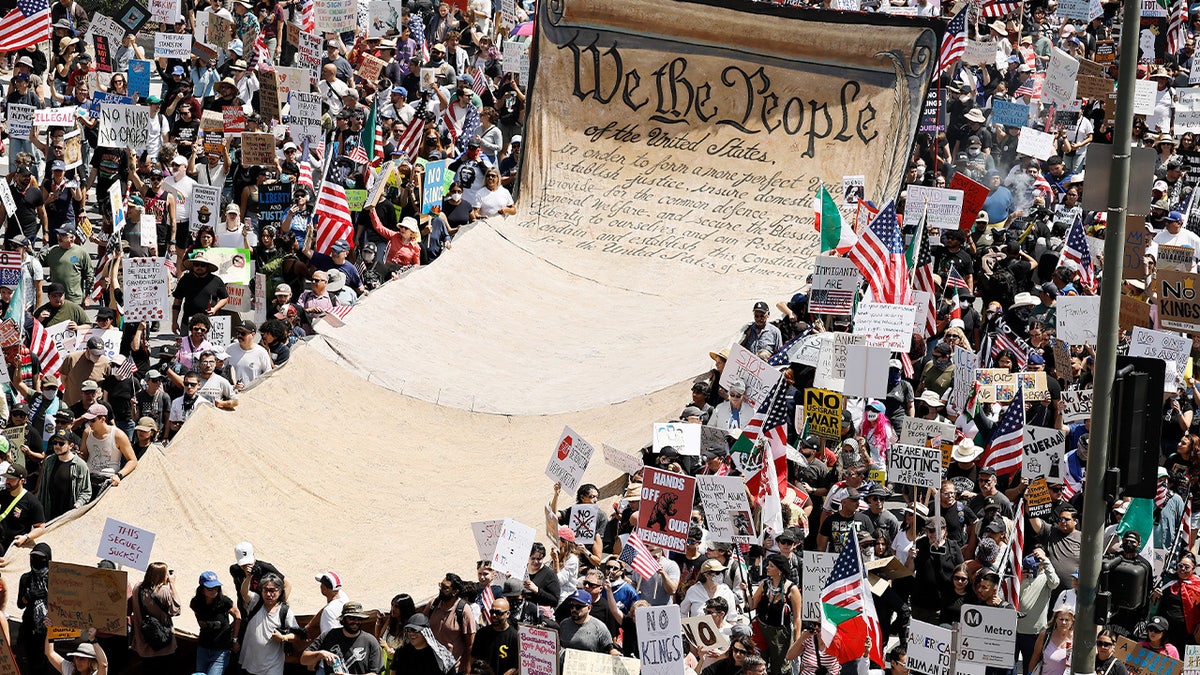
The signs said “No Kings,” but the night ended with handcuffs in Los Angeles. The loudest question now is not what the protesters meant, but who gets to decide when a message becomes a problem.
What You Should Know
The Hill reported that a “No Kings” protest in Los Angeles resulted in arrests, putting police tactics and crowd-control decisions back under scrutiny. The episode is fueling a second fight over video clips, official explanations, and accountability.
The label “No Kings” is a simple, old-world slogan with modern uses, a blunt rejection of concentrated power that has shown up across ideologically mixed protest scenes. In Los Angeles, it collided with a city that sells itself on free expression, while also running on permits, barricades, and enforcement discretion.
The Arrests Put the LAPD in the Spotlight Again
According to The Hill, police detained and arrested people during the Los Angeles demonstration. The immediate facts are straightforward: a crowd gathered, police intervened, and some participants wound up in custody.
The harder part is the decision-making in between. When arrests occur at a political demonstration, the public usually gets two stories at once: organizers describing a peaceful gathering, and authorities citing safety, compliance, or operational necessity.
A Protest Slogan Meets a City of Permits and Curfews
Los Angeles is not new to protest surge dynamics, and neither is its police department. The practical leverage lies with the state because it controls the physical space, the traffic plan, the dispersal orders, and the power to make arrests.
That is why the legal baseline matters, even when nobody in the crowd is quoting case law. The First Amendment begins with a clean promise: “Congress shall make no law … abridging the freedom of speech … or the right of the people peaceably to assemble.” The fights usually erupt around that single word, “peaceably,” and who gets to define it in real time.
The Real Fight Is the Postgame Narrative
In 2026, the consequences of a protest arrest are not confined to a booking sheet. Videos, official statements, and organizer claims move fast, and each side knows that an early narrative can harden into the version that donors, voters, and potential jurors remember.
What happens next is rarely dramatic but is decisive: whether charges stick, whether oversight bodies request reports, and whether civil claims follow. The slogan on the poster was about power, and the after-action debate is, too.